Air for Wine
Decanting & Aeration
Decanting sounds like a ceremony, but it actually serves two quite different purposes: keeping sediment out of an old bottle, or giving a young, tight wine more air. Confusing the two often does the wine more harm than good.
Two Reasons, One Word
Old red wines drop a fine sediment of pigments and tannins over the years, which tastes bitter and gritty when drunk. Here, decanting simply means pouring cleanly. The bottle should stand upright for a day beforehand so the sediment settles at the bottom. Then pour slowly against a light source, stopping as soon as the first cloudy streaks appear in the neck.
With young, powerful wines, it's about oxygen rather than clarity. A tight, tannic wine often seems closed and rough right after opening, because the tiny surface area at the neck barely lets any air in. Only significantly more oxygen gradually softens the sharper edges of the tannins and lets the fruit step forward.
How Much Air Different Wines Can Handle
Young wines with firm structure, such as a young Bordeaux or a powerful Syrah, can handle vigorous pouring. They can splash around a bit, as this brings as much surface area into contact with air as possible. Half an hour to two hours in an open decanter is often enough for the fruit and tannin to noticeably soften.
Old, delicate wines, on the other hand, can barely handle any air without tiring quickly. A twenty-year-old Pinot Noir can lose its fruit within minutes if swirled vigorously like a young Cabernet. With such bottles, a gentle pour to leave behind the sediment is enough; after that, the glass should reach the mouth as quickly as possible.
Which Vessel for Which Purpose
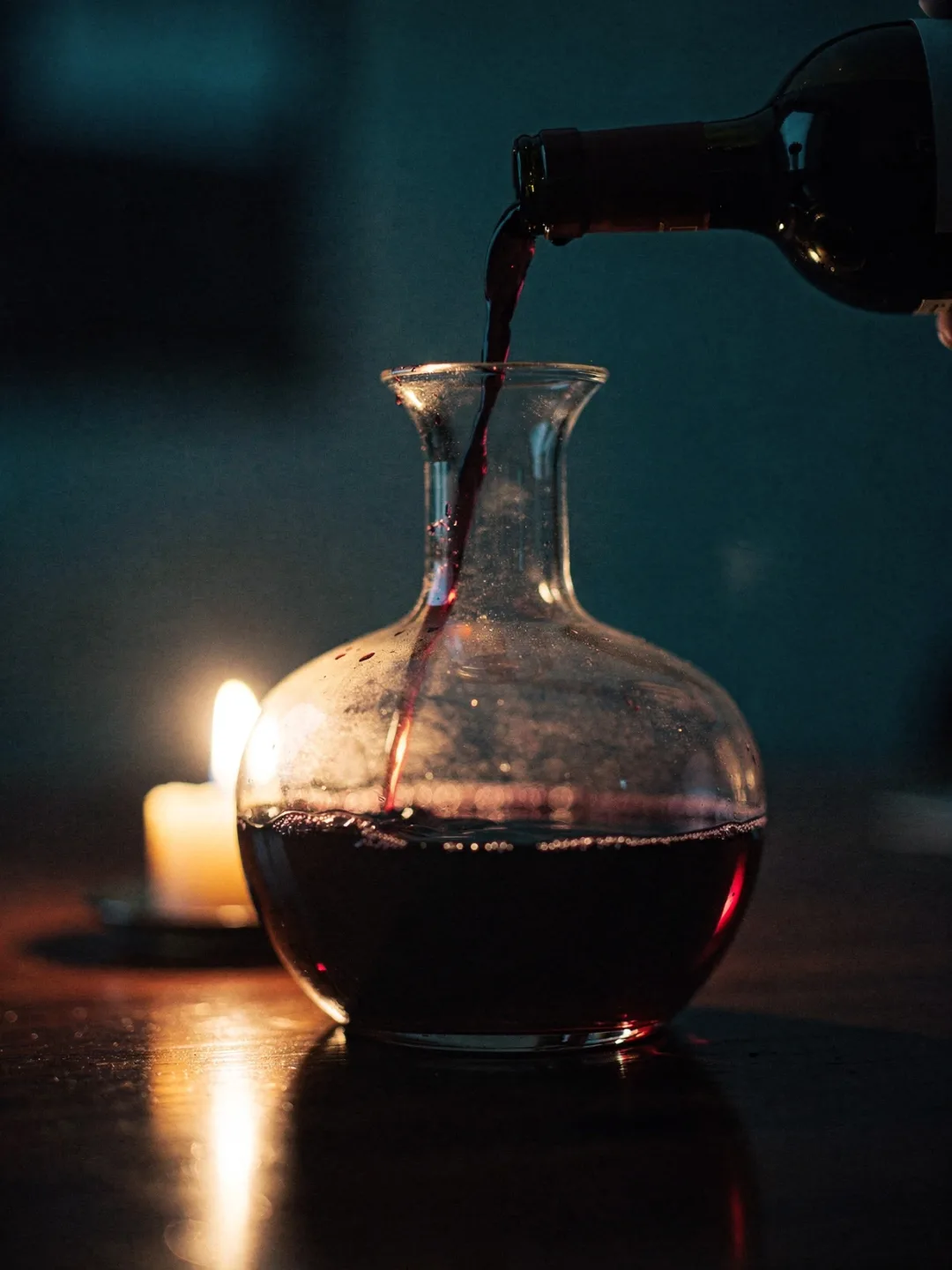
A decanter with a wide, flat belly creates the largest surface area and is therefore ideal for young, firm wines that need plenty of oxygen. A narrow decanter with a long swan neck, on the other hand, barely disturbs the wine while pouring and suits old, delicate bottles better, where only the sediment would be a problem.
If you don't own a dedicated decanter, a simple glass carafe works too, as long as it's clean and odor-free. More important than the shape of the vessel is watching your own glass. A quick taste test after twenty minutes reliably shows whether a wine still needs more air or has already reached its peak.
When It's Better to Skip It
Not every wine benefits from decanting. Light, spontaneously drunk white wines or delicate rosés tend to lose freshness rather than gain from too much air contact. Their aromas are naturally more fleeting than those of full-bodied red wines. Here, simply opening the bottle is entirely sufficient.
With very old, fragile bottles, caution beats ambition too. Some wines hold their best form for only a few minutes after opening before fading fast. In such cases, quickly pouring into several glasses matters more than a long, patient rest in the decanter.
The Difference from Simply Swirling in the Glass
Some consider swirling in the glass a mini version of decanting, but the effect is far weaker. A glass offers only a small surface area compared to a wide decanter, even with vigorous swirling. For a very closed, young wine, swirling alone often isn't enough to bring in noticeably more air.
Swirling works better as a small finishing touch after decanting, right before drinking, to refresh the last poured amount. As a substitute for proper decanting of a truly tight, young wine, though, it barely helps, no matter how long you swirl the glass.
Decanting as a Ritual at the Table
In some restaurants, pouring is deliberately turned into theater, with a candle held under the neck of the bottle so the sediment becomes visible through the glass. This display has a genuine practical core, even if it also sets a mood. Without a light source, it's easy to miss the exact moment when the first cloudy remnants would run into the decanter.
At home, a simple flashlight or a mobile phone's light works just as well as a candle, held beneath the neck while pouring. The only thing that matters is that light shines through the glass rather than glaring from above, so the transition from clear wine to cloudy sediment is clearly visible.