Care and storage
Glass care
A flawless glass is not a matter of price, but of care. That's no exaggeration. Dish soap residue, lint from a towel, or a hint of spice from the cupboard are enough to make even the most expensive wine taste dull.
Why dish soap is the biggest enemy
Dish soap is designed to repel fat and residue, and it's exactly this property that becomes a problem with wine. Even tiny residues in the glass lower the surface tension, making a wine seem flatter. A sparkling wine loses its carbonation even faster because of this, since the fine bubbles burst prematurely on invisible fat residues.
Anyone who regularly uses their glasses for wine is therefore best off rinsing them only with hot water. At most, a tiny drop of mild detergent may be added, provided it's rinsed out completely. In the dishwasher, the rinse-aid program should run without extra rinse aid, or delicate glasses should generally be washed by hand.
Drying without lint and streaks
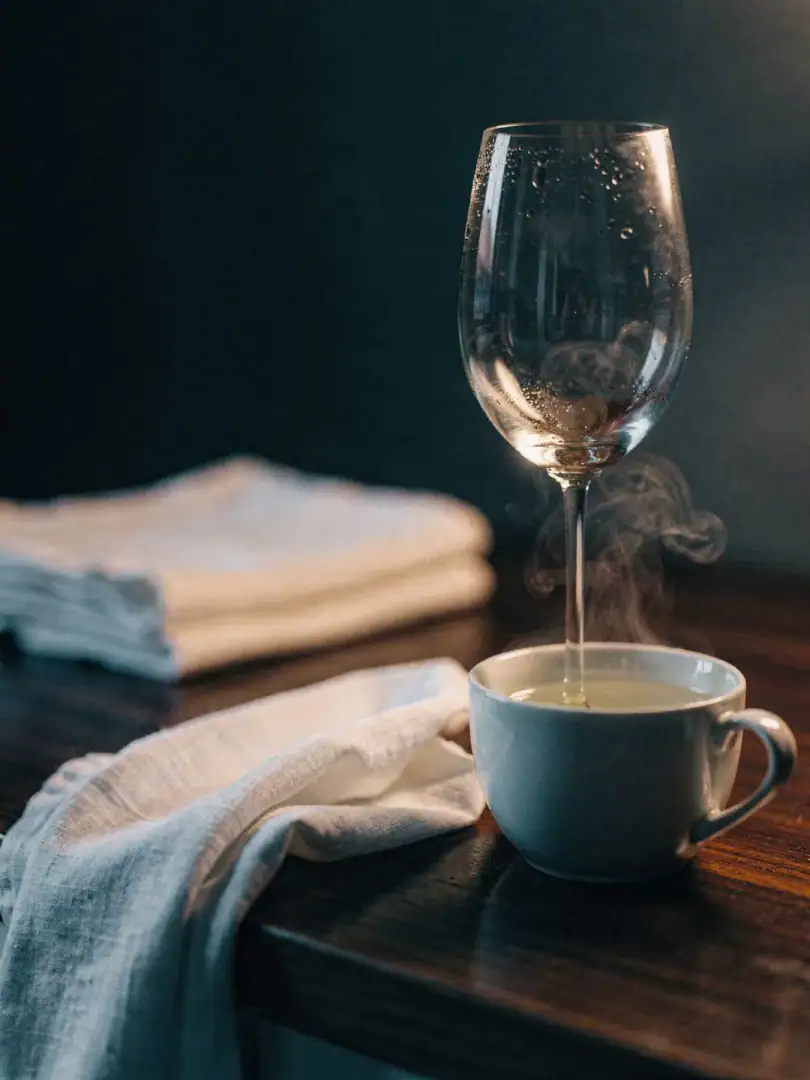
Letting a wet glass air-dry sounds gentle, but often leaves behind limescale streaks as the water evaporates. A clean, lint-free linen or microfiber cloth is better. Polish the glass while it's still warm, while the water vapor keeps the surface soft and streaks wipe away easily.
When polishing, hold the glass by the stem, not the bowl, so as not to leave new fingerprints. Anyone who often prepares glasses for guests holds them briefly over hot water before finishing with the cloth. The steam loosens dried water spots that dry rubbing alone can't remove.
Storing correctly
Glasses stored upright easily collect dust and kitchen odors in the bowl, especially if the cupboard also holds spices or cleaning products. Hanging storage by the stem protects the rim from scratches and keeps the interior free, but it costs shelf space that not every kitchen has.
Anyone who stores glasses upright should briefly rinse them with warm water before use and polish them with the cloth afterward, even if they look clean. A smell test helps more than a visual check: briefly sniffing the empty bowl before pouring reliably reveals foreign odors.
Scratches, limescale, and the effect on sparkling wine
Fine scratches on the bottom of the glass are barely visible to the naked eye, but for sparkling wine they act like tiny anchor points for carbonation. That's why some glasses for sparkling wine and Champagne deliberately etch a tiny point into the base. This creates an even string of bubbles instead of them rising randomly wherever.
Too many such scratches, caused for instance by hard dish brushes, make sparkling wine foam too quickly and unevenly, causing it to lose its vibrancy. Limescale spots from hard water can usually be dissolved with a splash of vinegar water, briefly swirled in the glass before the final rinse.
Glasses for the dishwasher
Not every glass tolerates the dishwasher equally well, even if the manufacturer officially advertises it as dishwasher-safe. High temperatures and aggressive detergents attack thin crystal glass over the years. It then appears cloudy or dull, even if not a single crack is visible. Anyone who wants to keep their best glasses for a long time is therefore better off washing them by hand, even if the packaging promises otherwise.
For everyday glasses, on the other hand, little speaks against the machine, as long as the program isn't set too hot and there's enough rinse aid in the system. What matters most is the spacing between glasses in the rack. If they stand too close together, they clatter against each other during the wash cycle and develop fine cracks. These sometimes only show up weeks later as a sudden break.
When a foreign smell remains
Sometimes a freshly washed glass still smells strange, usually of the kitchen cupboard it was stored in, or of the dish towel it was last dried with. A simple trick helps in most cases. Crumple up some newspaper and place it in the glass overnight; it absorbs odors well and neutralizes them without leaving behind any moisture or chemicals of its own.
More stubborn cases, for instance after prolonged storage near spices, can be treated with a splash of vinegar and hot water. Swirl the mixture briefly in the glass, then rinse thoroughly with clear water afterward. Anyone who wants to be absolutely sure simply sniffs the empty bowl briefly before pouring. This simple test takes only seconds, but it prevents a good wine from being ruined by a bad-smelling glass.