Cool to warm
Serving temperature
The wrong temperature ruins more wines than a bad glass. Too cold, a wine tastes muted and sour; too warm, it feels heavy, and the alcohol pushes itself in front of every aroma. The right range lies in a different spot for each wine type.
Why temperature shifts the taste
Cold slows down how quickly aroma molecules release from the glass. That's why an ice-cold wine often smells of little, while the same bottle, ten degrees warmer, suddenly shows fruit and blossom. At the same time, cold sharpens the impression of acidity and makes sugar seem less sweet, which is quite intentional for a crisp white wine.
Warmth reverses this effect. It releases aromas, but also makes alcohol more noticeable and makes tannins feel coarser, because warmth intensifies the sensation of astringency in the mouth. A red wine meant for the room temperature of an old house quickly feels too warm in a modern, heated apartment.
The ranges for the most important types
Sparkling wine like Champagne or Sekt belongs at the coldest point on the scale, at six to eight degrees. This keeps the carbonation fine and prevents it from shooting aggressively out of the glass. Light, fresh white wines and rosé follow at eight to ten degrees, while fuller-bodied white wines with barrel aging can handle ten to twelve degrees without seeming dull.
Light red wines like a young Spätburgunder taste liveliest at twelve to fourteen degrees, noticeably cooler than plain room temperature. Full-bodied, tannic red wines may be served at their warmest at sixteen to eighteen degrees, but even in a warm room they should never climb much above eighteen degrees.
The Room Temperature Myth
The old rule of serving red wine at room temperature dates back to a time when living spaces were rarely warmer than eighteen degrees. In modern homes with twenty degrees or more, the same rule leads straight to overheated wine. It then tastes flabby and alcoholic, even though the bottle itself might have been perfectly good.
If you don't own a wine fridge, there's an easy fix. Put red wine in the refrigerator twenty minutes before serving, and take white wine back out ten minutes before drinking if it came straight from the fridge. This brings both closer to the ideal range without needing a thermometer.
Quick Chilling and Its Limits
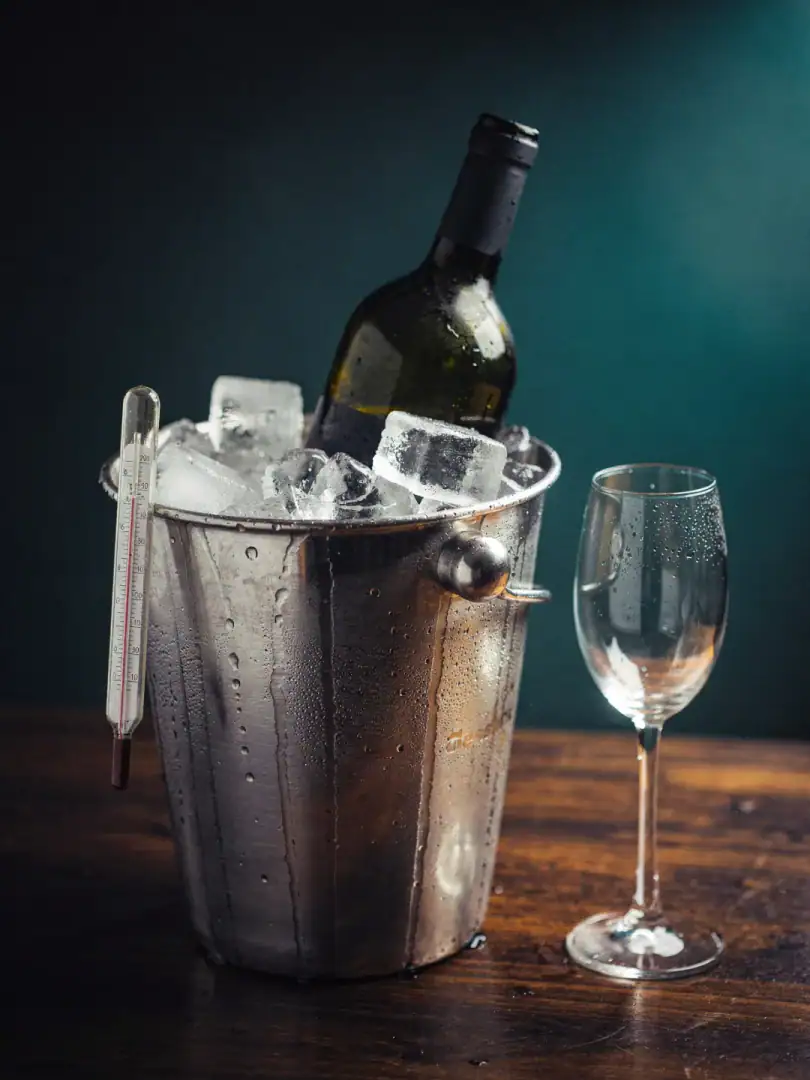
An ice water bath chills a bottle noticeably in about twenty minutes, much faster than the freezer, where a bottle is easily forgotten. Water with ice conducts cold better than plain air in the fridge, since it surrounds the entire bottle evenly instead of just blowing on it from outside.
Most experts still advise against using the freezer. Just a few minutes too long, and the wine cools unevenly or freezes at the neck, which can push the cork out. Setting a timer for quick chilling isn't overkill—it protects a bottle you may have just bought.
Wine in Summer and Winter
In midsummer, a glass of wine on the table warms up far faster than it would indoors in a cool room, especially with direct sun hitting the table. If you're serving outside, it makes sense to chill white wine one or two degrees colder than the usual recommendation. That way it stays within the target range while drinking, instead of turning lukewarm after just a few minutes.
The opposite applies in winter: a cold room or an unheated terrace often cools red wine faster than you'd think, so the aromas barely get a chance to open up. A brief moment cupped in the hand or a gently pre-warmed glass can help, without artificially heating the wine itself. Direct heating on the stove or in the microwave, however, is off-limits.
Why Some Wines Are Served Deliberately Cooler
Some full-bodied red wines with lots of fruit and little tannin, such as a light Gamay from Beaujolais, taste more vibrant and fresh when served deliberately cool, even though they're classified as red wine. The lower temperature here highlights the zippy fruit rather than letting it turn heavy under too much warmth, much like with a robust rosé.
Orange wines are also made from light-skinned grapes like white wine, but with skin contact like red wine. They often benefit from a temperature between the classic ranges, usually around twelve to fourteen degrees. If you're unsure, try two glasses of the same wine at slightly different temperatures. Then deliberately choose whichever tastes better, rather than sticking rigidly to a single number.