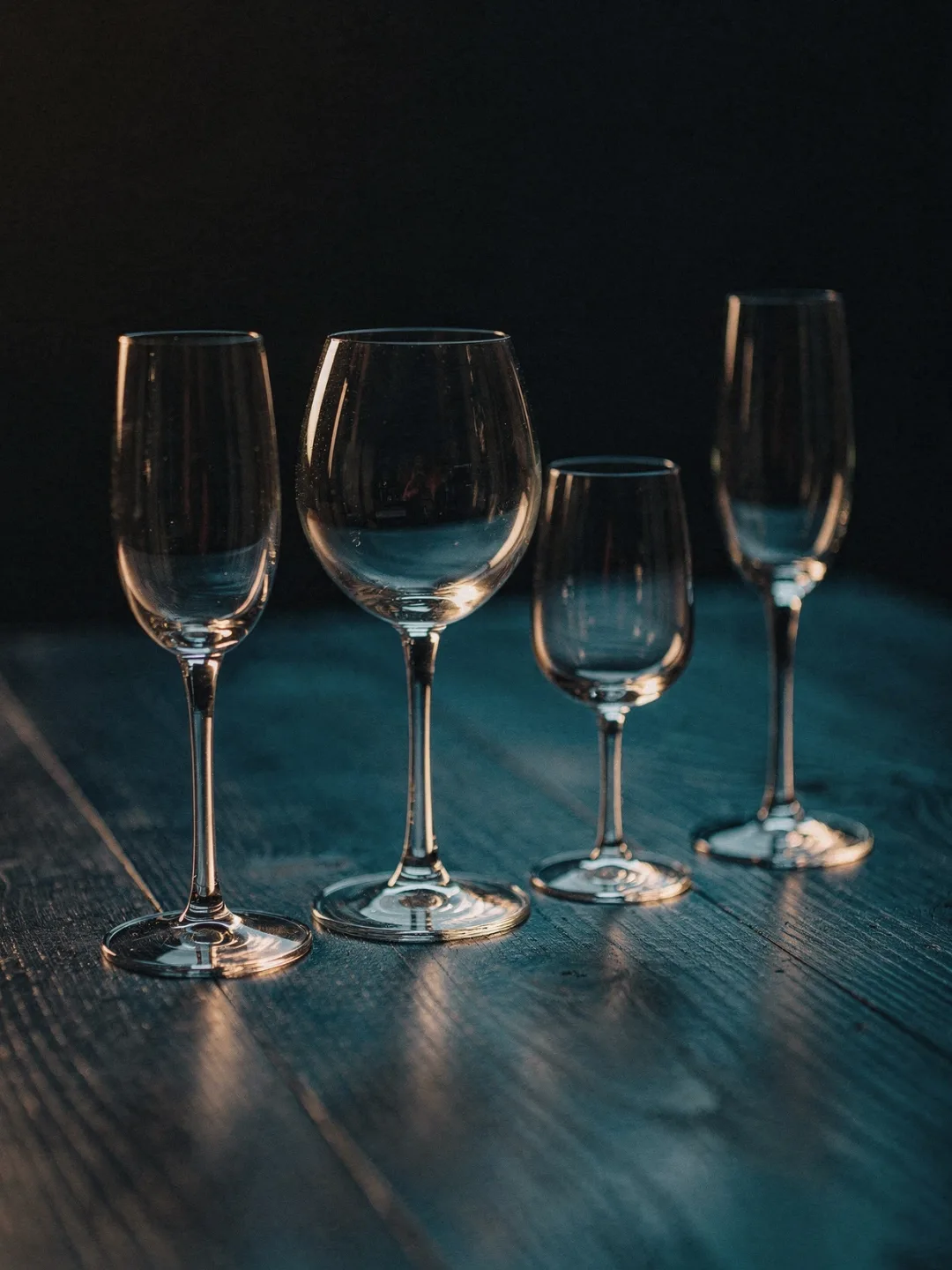
The five basic shapes
Glass types
Not every glass suits every wine. Bordeaux glass, Burgundy glass, white wine glass, an all-purpose glass for everyday use, and a dedicated glass for sparkling wine: five basic shapes cover almost every bottle. Each one emphasizes a different side of the wine.
The Bordeaux glass for full-bodied red wines
The Bordeaux glass is tall, with a broad bowl that narrows only slightly toward the top. This shape gives full-bodied, tannin-rich red wines like Cabernet Sauvignon or Syrah plenty of surface area for oxygen to work on. This softens harsh tannins somewhat already in the glass. The long path from the bowl to the nose also allows some alcohol vapors to dissipate before you smell it.
The wide swirling space is no accident, but the actual function of the glass. Swirling the wine in a Bordeaux glass multiplies the surface area in contact with air within seconds. In young, firm wines, this is exactly what makes the difference between a closed-off and an open first sip.
The Burgundy glass for delicate aromas
Burgundy glasses look like a balloon: very wide in the bowl, but with a narrow opening that curves inward. This shape is intended for delicate, aromatic red wines like Pinot Noir. Their scent is somewhat volatile and should rise quickly without getting lost in the room.
The large surface area in the bowl brings a lot of wine into contact with relatively little air, while the narrow opening concentrates the fine aromatic compounds before they reach the nose. One drawback remains the size: a full Burgundy glass needs noticeably more space on the table than any other wine glass.
White wine glass and all-purpose glass
White wine glasses are smaller and slimmer than red wine glasses, with a more upright shape. The smaller volume keeps the wine cooler for longer, because less liquid is exposed to the warmer room air. The narrower shape also directs fresh, acid-driven aromas, as in Riesling, specifically forward rather than spreading them throughout the bowl.
A good all-purpose glass strikes a compromise between both worlds: a medium-sized bowl, slightly tulip-shaped, usable for both red and white wine alike. Anyone who wants to keep just one glass model at home rarely goes wrong with this, even though specialized glasses still get more out of individual wines.
Glasses for sparkling wine
The classic, narrow flute keeps the sparkling wine's strings of bubbles visible the longest, because the narrow shape gives them little surface area to escape through. But that's also its weakness: little surface area means little room for scent, which is why Champagne from a flute often stays quiet.
More and more winemakers and sommeliers therefore pour Champagne into a slender, slightly tulip-shaped glass reminiscent of a small white wine glass. It holds the carbonation almost as long as the flute but opens up enough surface area for brioche and yeast aromas to actually reach the nose.
If there's only one glass in the house
Not everyone needs five different glass shapes in the cupboard. For most evenings, a single, well-chosen all-purpose glass is entirely sufficient, as long as it's neither too small nor too large. In the end, size matters more than variety of shapes. A glass that's too small prevents swirling and pushes the nose almost into the wine. An oversized glass, on the other hand, feels unwieldy. It lets precious wine evaporate faster than it can even be drunk.
Anyone wanting to slowly build a small collection is best off starting with two basic shapes: a somewhat larger glass for red wine and a smaller one for white wine. Only after that do specialized shapes such as the bulbous Burgundy glass or a dedicated sparkling wine glass become worthwhile, budget and shelf space permitting. These two simple basic shapes already cover most evenings without needing to acquire an entire range right away. Everything beyond that remains more of a hobby than a real necessity for everyday wine enjoyment at home.
Glasses for rosé and dessert wine
In some households, rosé wine gets its own slender glass, similar in shape to a white wine glass but often flared slightly wider at the opening. This shape shows off the wine's pale, often delicate color particularly well. At the same time, it directs its fine, often floral or fruity aromas purposefully forward to the nose. Anyone without a dedicated rosé glass doesn't need to go out and buy one, though. A regular, slender white wine glass serves nearly the same purpose and saves cupboard space.
Sweet dessert wines like Port or a nobly sweet Auslese, on the other hand, are usually served in noticeably smaller glasses, since only a small sip is drunk anyway. A small volume concentrates scent and sweetness more than a large bowl. This intensifies the character of such wines without requiring you to empty half a glass of it. Small glasses also visually suit the small quantities typically served with strongly sweetened or fortified wines. As a result, they look more fitting than a large, half-empty wine glass.