Proximity to water
Rivers, lakes, the sea
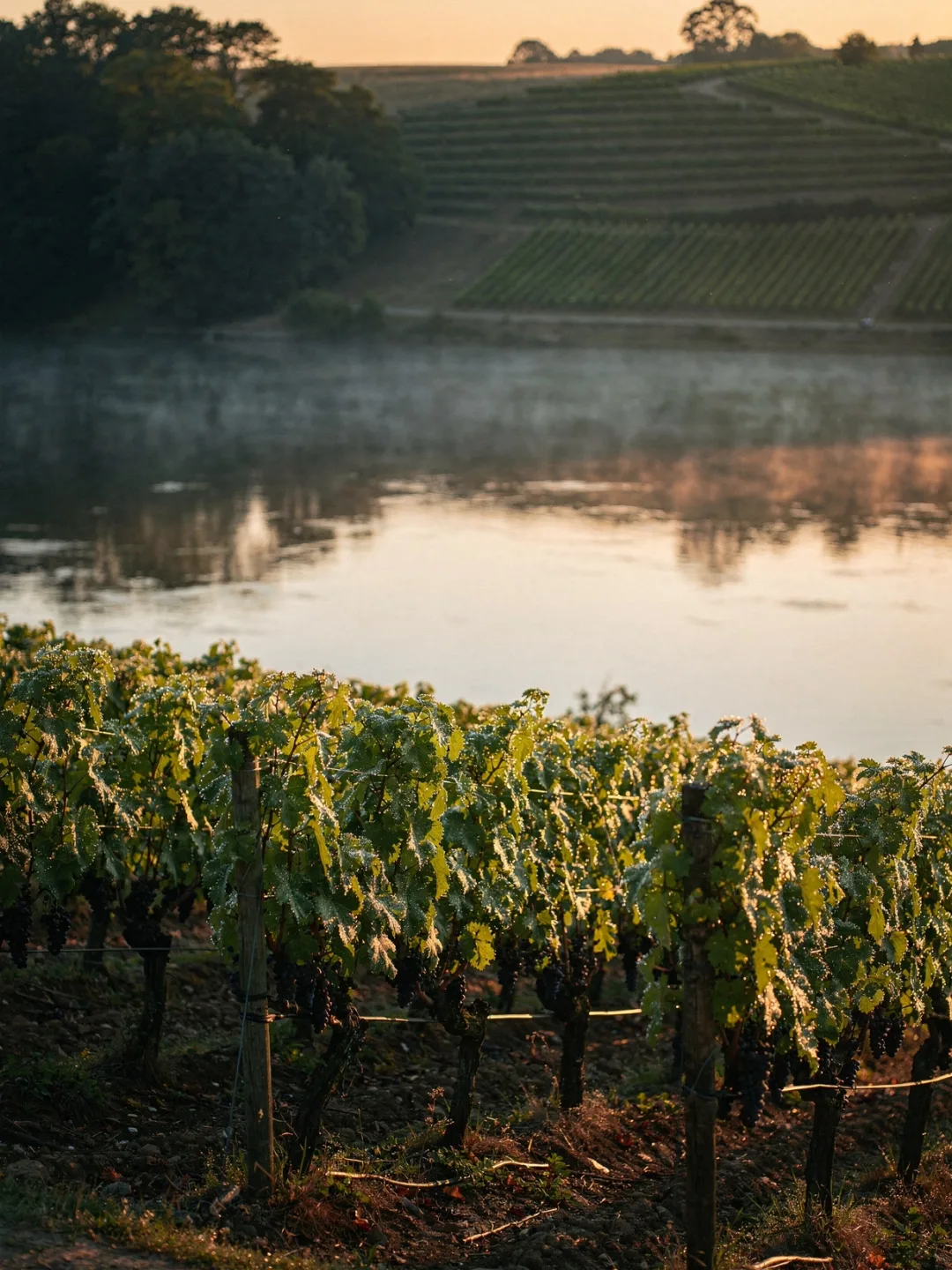
A large river, lake, or the sea nearby often shapes a vineyard's climate more strongly than any soil type. Water stores heat differently than land, and this very difference decides in many places whether viticulture is even possible at all.
Why water evens out temperatures
Water warms up more slowly than land, but also holds onto its heat much longer. A lake or a wide river therefore acts like a giant heat reservoir. In spring, it protects the surrounding area from late frost. In autumn, it extends the ripening period, because the mild air coming off the water lingers longer than over dry land. Without this buffering effect, many northern wine regions simply wouldn't be conceivable.
Lake Constance illustrates this effect especially clearly in Germany. Along its shores, vines ripen that would barely stand a chance just a few kilometers inland. Without the buffer of the large lake, the necessary warmth simply wouldn't be there. The Finger Lakes in the US state of New York owe their viticulture to exactly the same principle. The deep, narrow lakes there moderate winters that would otherwise be too harsh for sensitive grape varieties.
Rivers as climate corridors and sun mirrors
A river cools its surroundings, but that's not all it can do. It also delivers extra light. Steep vineyards above a river benefit because the water's surface reflects sunlight back onto the opposite slopes. On a clear, calm day, this effect is easy to observe. Along the Mosel or the Douro, this reflected light further boosts ripening on slopes that are already steep and sun-exposed.
Rivers also often carve a kind of air corridor through a landscape. Cool evening air flows down the valley along the riverbed. This creates noticeable temperature differences between day and night, which benefit above all the aromatics and acidity of the grapes. Winegrowers therefore often speak of a distinct river climate. It differs from the climate further inland, even though both places may lie just a few kilometers apart.
Fog as a natural air conditioner
Along the California coast, dense fog forms over the cold Pacific almost every morning. It drifts inland overnight and only clears again by mid-morning. Regions like Napa Valley or the Sonoma Coast owe their cool nights and mild mornings to this fog, right in the middle of an otherwise warm California summer. Without the Pacific right next door, the fresh, elegant wines these sites are known for would hardly be possible.
Proximity to the sea also brings risks
As helpful as water is for climate, it also carries drawbacks. Proximity to the sea usually raises humidity. Humid air, in turn, favors fungal diseases like downy and powdery mildew on the vines. Salty sea winds can also literally burn young shoots. Many coastal vineyards therefore need windbreaks in the form of hedges or rows of trees. Closeness to water is thus a trade-off: less frost and milder extremes in exchange for more humidity and fungal pressure.
That's why many of the best coastal sites don't sit directly by the water. They lie some distance behind it, often shielded from the open wind by a hill or forest. These sites still receive enough of water's moderating effect. What they no longer experience, though, is the full force of the salt wind and the highest humidity.
A lake can save an entire region
Lake Erie, on the border between the US and Canada, shows how powerfully a single body of water can shape a wine region. The Niagara Peninsula sits at roughly the same northern latitude as southern Germany. Without the lake, winters there would be too cold for most European grape varieties. The lake stores summer warmth for a long time. The most dangerous frosts therefore only hit the vines once they're already in winter dormancy, protecting the sensitive buds from budding too early in spring.
Three paths, one principle
Whether river, lake, or sea, the underlying physical principle is always the same: water takes longer to warm up and longer to cool down than land, and this inertia alone is enough to make a climate noticeably milder and more even, sometimes even viable for viticulture in the first place. The effect is invisible. Yet it often determines the fate of an entire growing region.