The Right Moment
Harvest: Hand-Picking or Machine
Harvest is the moment when an entire wine year is decided. Whether grapes are picked by hand or by machine depends on the vineyard site, the variety, and the budget. But in both cases, one thing matters most: getting the timing right between sugar, acid, and aroma.
When Is a Grape Truly Ripe?
Ripeness isn't a single value but an interplay of several factors that move in opposite directions during the final weeks of ripening. Sugar content rises almost right up until the last day, while acidity continues to decline steadily, and with it, how fresh or how soft the wine will eventually taste. Winegrowers refer to a third, harder-to-measure factor as phenolic ripeness: the condition of the tannins and pigments in the skin and seeds. In red wine, these compounds need to be ripe and soft. Otherwise the finished wine tastes green and bitter, even if the sugar level is already high enough.
That's why experienced winegrowers taste berries from different plots every day in the weeks before harvest. They chew the seeds, check the skin between their fingers, and supplement this impression with a lab measurement of must weight. Harvesting based on sugar level alone often yields technically ripe but flavor-wise unfinished grapes. Waiting too long, on the other hand, risks a wine with too much alcohol and too little freshness, because acidity has by then dropped too far. Between these two mistakes lies a narrow window for each site and each vintage, often just a few days wide.
Hand-Picking: Slow but Selective
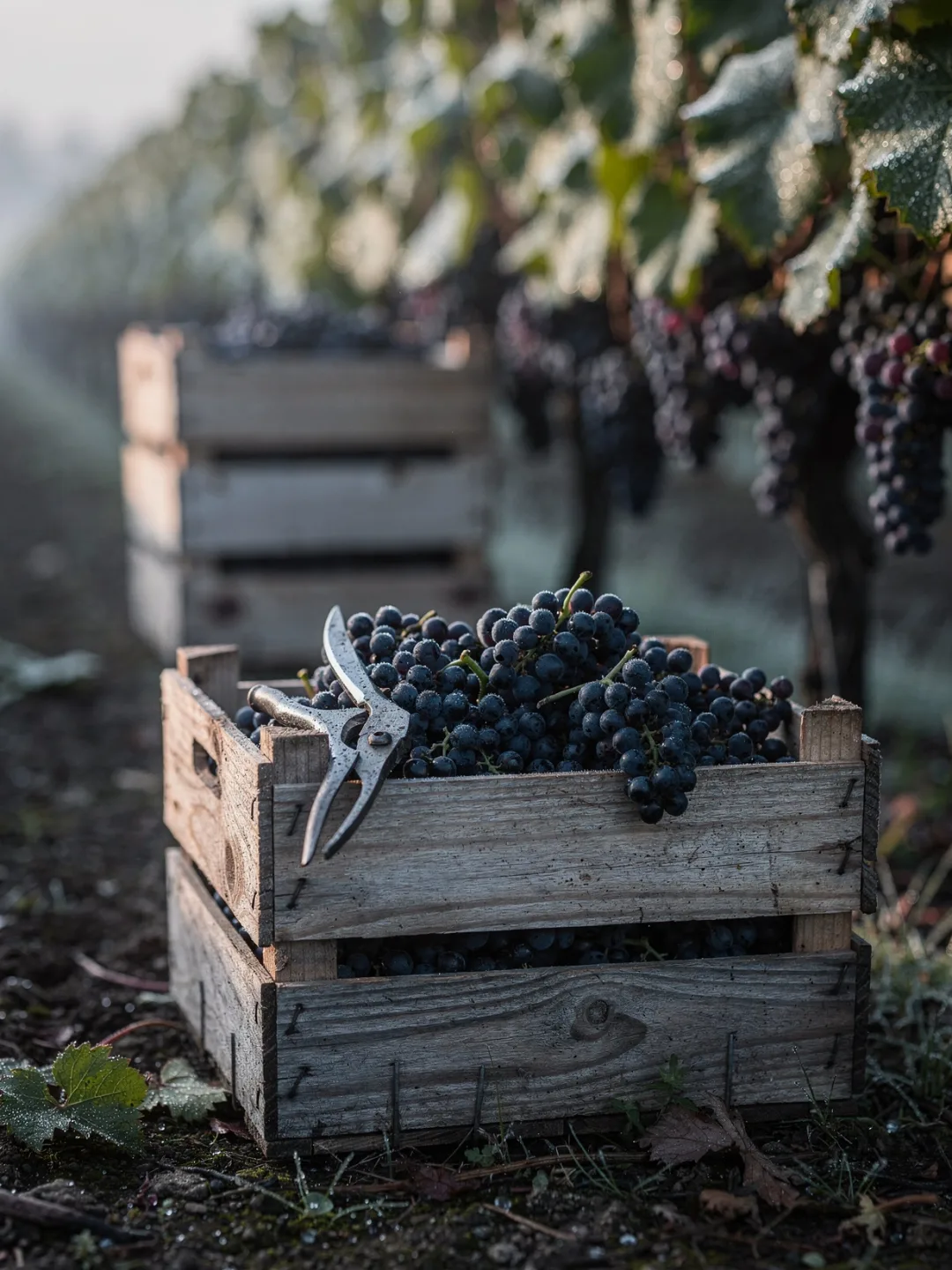
In hand-picking, harvest workers cut each cluster individually from the vine with small shears and place it in crates or buckets. It's slow and labor-intensive, but it allows for a level of selection no machine can match. Rotten, underripe, or damaged clusters are left on the vine or sorted out on the spot. Especially on steep slopes, where no vehicle can fit between the rows, hand-picking often remains the only way to harvest at all.
Another advantage of hand-picking lies in the grape itself: it stays whole when cut, with an intact skin, and is only processed further in the cellar. For sparkling wine, where the first, gentle pressing of juice is especially important, this is often essential. The downside is cost. Hand-picking costs a multiple of what machine harvesting does and depends on the availability of harvest workers, who are often in short supply during harvest season in many countries.
Machine Harvesting: Fast and Weather-Independent
A harvesting machine drives along the row and shakes the vines with beater or striker rods. Ripe berries fall off and land on a catching belt beneath the plant. In just a few hours, a machine can do what would take a team of pickers an entire day. That makes it unbeatable when bad weather is approaching and harvest needs to happen fast, or when an area is simply too large for hand-picking.
The downside: during shaking, some berries burst, juice leaks out right at the vine, and immediately starts reacting with oxygen. Modern machines with gentler technology and rapid cooling of the harvested fruit have significantly reduced this drawback, though it hasn't disappeared entirely. For simple, everyday wines, this is usually not a problem. For premium wines meant for long aging, many estates therefore still prefer hand-picking, even though it's considerably more expensive.
Night Harvesting and the Question of Timing
What time of day the grapes are picked is no minor detail. At high temperatures, grapes in the sun quickly heat up past thirty degrees Celsius, and warm juice oxidizes and starts fermenting on its own faster than cool juice does. That's why many estates in warm regions harvest at night or in the early morning hours under artificial light, while the grapes are still cool from the day before. This saves energy for cooling later in the cellar and protects delicate aromas that dissipate more quickly in the heat.
As different as hand-picking and machine harvesting are, both only supply the raw material. What becomes of the harvested grapes is decided in the cellar, and there, white wine and red wine take different paths from the very first minute. How a light-colored wine emerges from pale grapes, even though some of them actually have a reddish skin, is the next question on this journey.