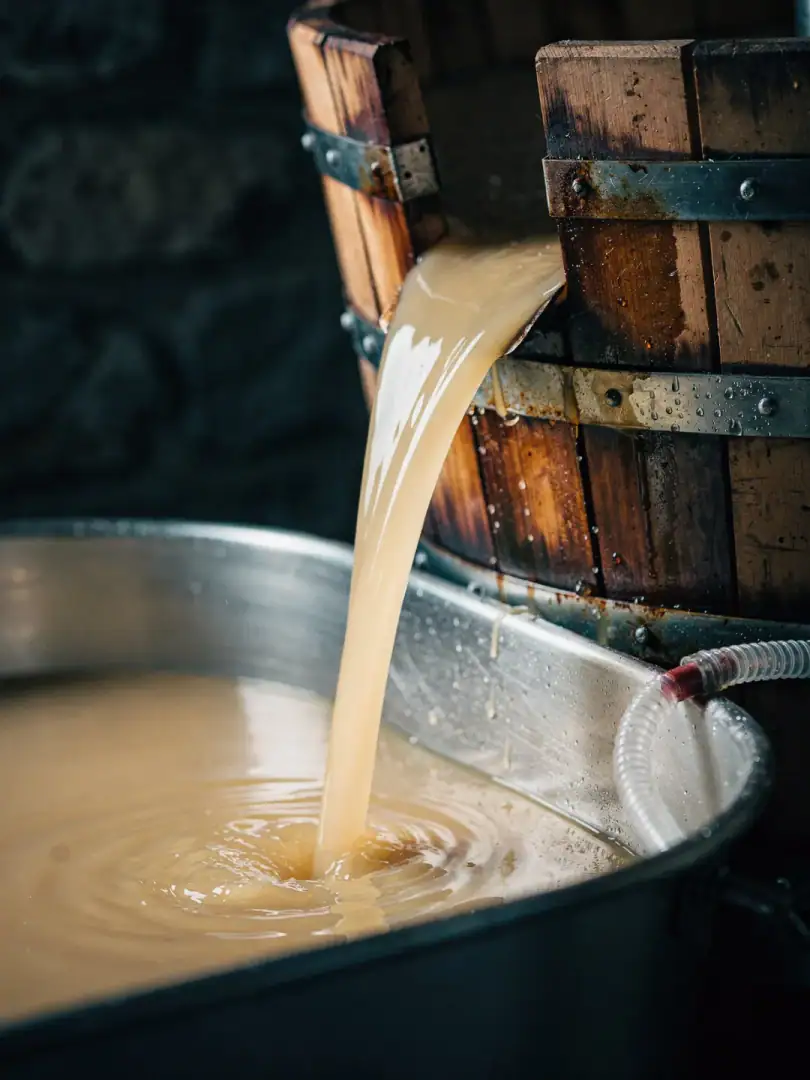
Juice Without Skins
How White Wine Is Made
White wine doesn't need white grapes—what it needs, above all, is juice with as little contact with skin and seeds as possible. From pressing to cool fermentation, white winemaking follows one basic principle that protects freshness and aroma instead of extracting color and tannin.
Why the Skin Stays Out During Pressing
The most important difference from red winemaking appears within the very first hour in the cellar, because white grapes are usually pressed directly, often as whole, unbroken clusters. A pneumatic press is frequently used for this, applying even, gentle pressure via an inflatable rubber membrane. The juice flows gently out of the pulp, while the skins and seeds mostly remain behind in the press cake. This separation is crucial, because pigments and most of the tannins are found in the skin, not in the juice itself. That's really all it takes. Even grapes with reddish skins can yield a pale juice this way, as long as it doesn't stay in contact with the skin for long.