Mixing with Purpose
Blending and Cuvée
Most wines in the world aren't made from a single grape variety or a single barrel. They're a deliberate blend. Blending and cuvée are sometimes seen as a compromise, but in truth they're one of the oldest and most powerful tools in the wine cellar.
What Blending and Cuvée Actually Mean
Blending refers to mixing different wines or wine lots together into a single finished wine. This can involve different grape varieties, but also grapes from different vineyard sites, barrels, or even different vintages. The French term cuvée literally means something like the contents of a vat. In English, it's often used specifically for high-quality blends, whether single-variety or multi-variety. Such wines are usually sold as distinct, often specifically named bottlings, frequently at a higher price than comparable single-variety bottlings from the same winery.
Blending's reputation is a mixed one. On one hand, many people associate it with simple bulk wine, where cheap lots are simply stretched further. On the other hand, the world's most celebrated wines often represent the exact opposite. They're based on deliberate blending formulas, often refined over decades. Each individual variety or lot makes a specific contribution to the whole, whether it's color, acidity, fruit, or structure. Nothing in the mix is left to chance.
Why Blend at All?
Individual grape varieties have typical strengths and weaknesses. One variety might bring strong color and structure but seem harsh and one-dimensional on its own. Another might deliver fruit and aroma but lack structure and aging potential. When the two are deliberately combined, they balance each other out. The result is often a more harmonious wine than either variety could ever be on its own, because the weaknesses of one are offset by the strengths of the other.
A classic example is co-fermenting a small proportion of white grapes with red ones. In some regions, a splash of the aromatic white variety Viognier is fermented together with red Syrah. This lends the finished red wine extra aromatics and a brighter, more luminous color. Blending is therefore also a tool for deliberately adding qualities that a single variety alone can't provide. Even just a few percent of a complementary variety is often enough.
Blending Across Vintages and Barrels
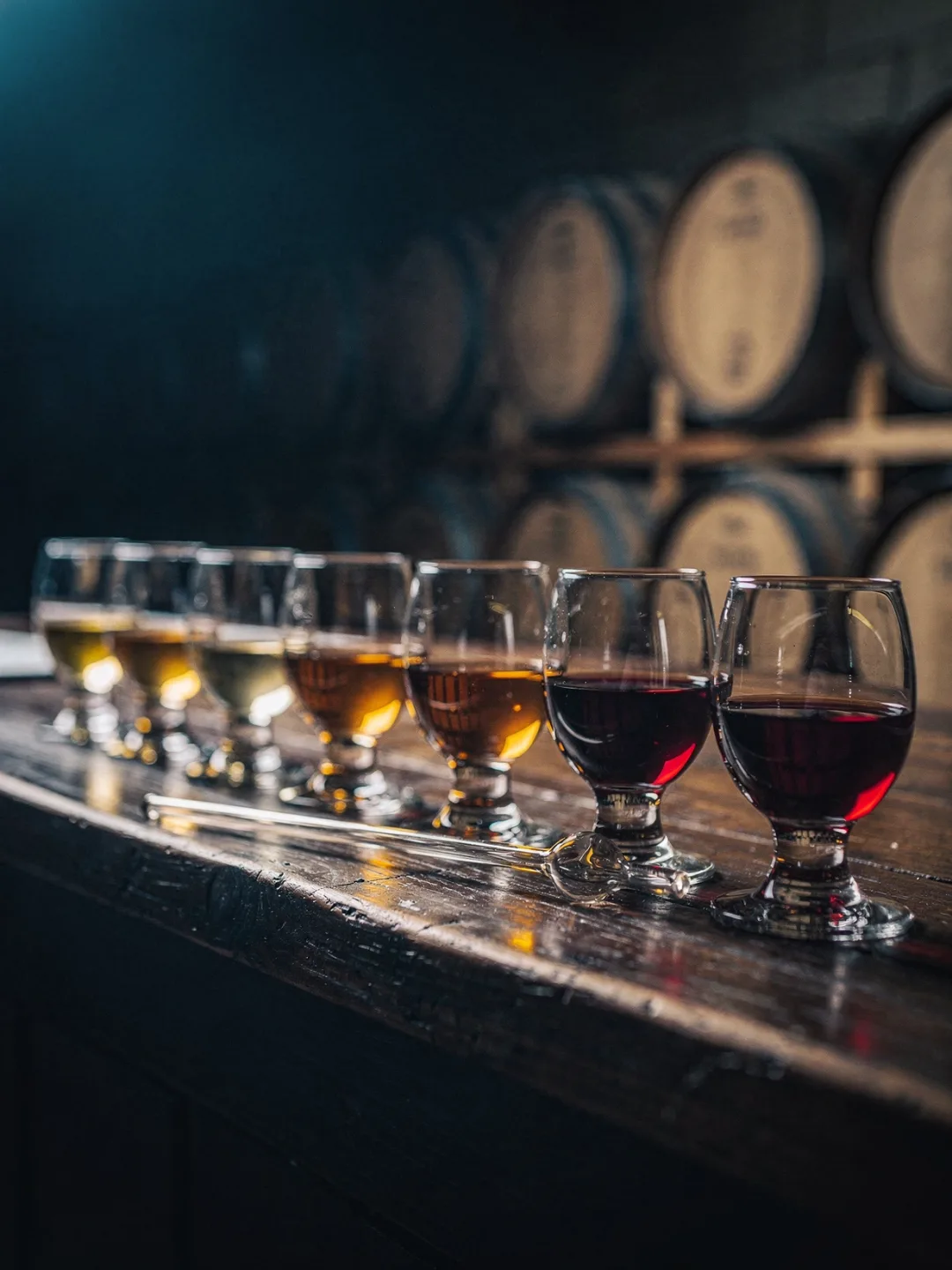
Not every blend involves different grape varieties. Many wines are made from several barrels of the same variety and the same vintage that nevertheless differ slightly from one another. The reason: every barrel has its own small microclimate of wood, temperature, and yeast, even if all the barrels come from the same cooperage. The cellar master's job is then to assemble ten, twenty, or a hundred slightly different barrels into a coherent, harmonious overall composition. This work can take days.
For some wines, sparkling wine above all, blending goes even further. To guarantee a consistent style year after year, many houses blend so-called reserve wines from earlier vintages into the current base wine. This preserves a brand's recognizable character over decades, even if each individual vintage would have turned out differently on its own. That's exactly what customers expect from a familiar bottle, regardless of whether the weather favored that particular year or not.
The Art Lies in Getting the Ratio Right
How a blend ultimately tastes depends almost entirely on the exact mixing ratio. Even a few percentage points more or less of one component can shift the entire character of a wine. That's why, at many renowned wineries, a small team spends days or weeks tasting through countless mixing ratios before arriving at a final cuvée. Every single variant is recorded, often with precise percentages down to the decimal point.
This careful balancing act reaches its most elaborate point with sparkling wine. There, the so-called assemblage, made up of often several dozen base wines, determines how the finished sparkling wine or Champagne will taste. This all happens before the second fermentation even begins, the one so typical of sparkling wine. That very second, decisive fermentation is the subject of the next stop on this long journey through the wine cellar.