Extraction, barrel, aging
Red wine styles
A light, fruity red and a dense, tannic wine can come from the very same grape. This station shows how maceration time, aging, and barrel size determine just how powerful a red wine ultimately turns out to be.
Maceration time: how long the skins stay in contact
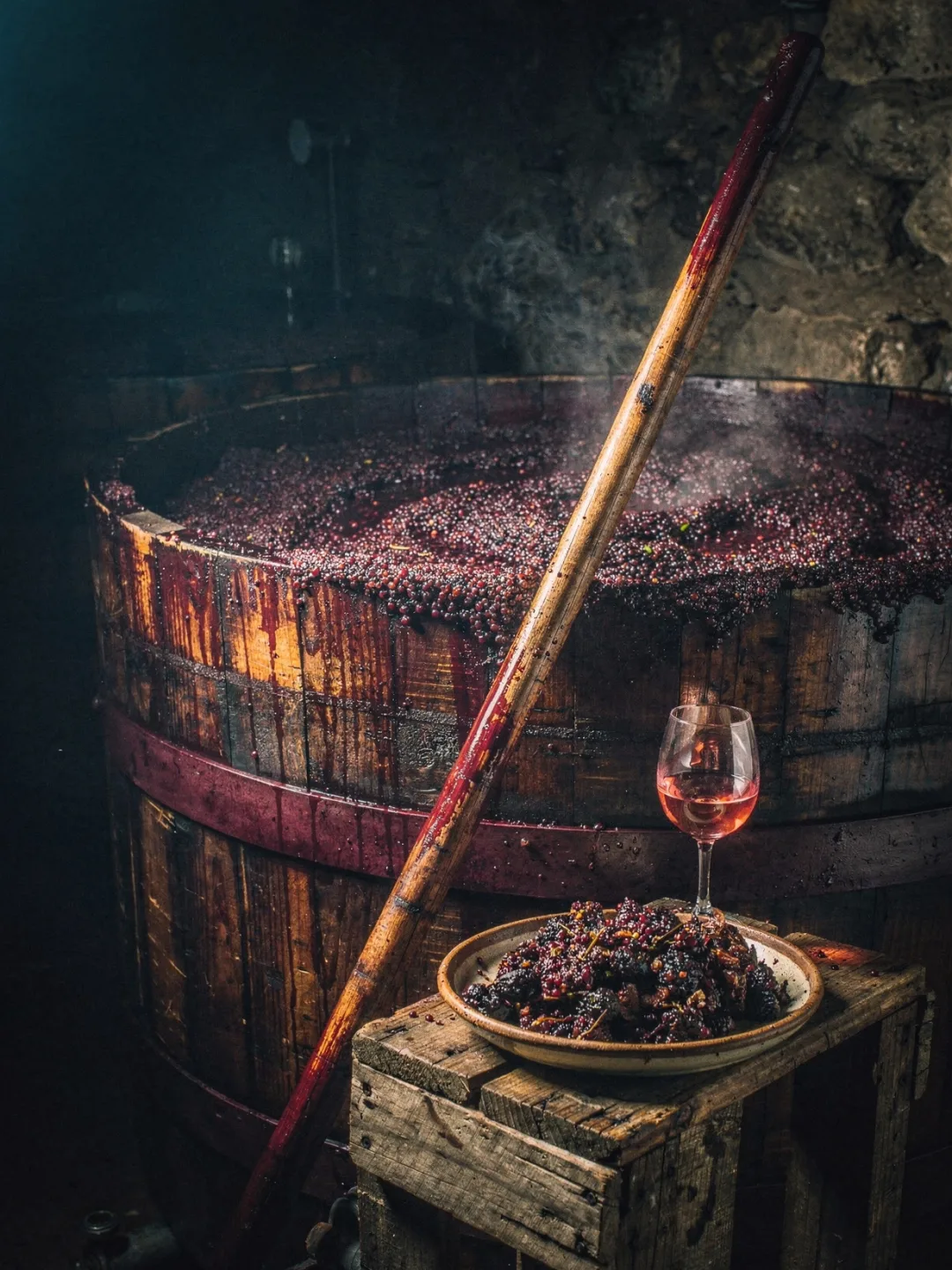
Red wine is made by fermenting the must together with the grape skins. This is the only way color and tannin end up in the glass at all. How long this contact lasts is called maceration time, and it largely determines the finished wine's power. Short maceration of just a few days produces pale, approachable wines. Weeks on the skins, on the other hand, yield dense, long-lived reds. In warmer growing regions with very ripe, thick-skinned grapes, a shorter maceration time can sometimes achieve the same tannin level as a longer one in cooler regions.
During fermentation, the carbon dioxide produced pushes the skins upward, forming a "cap." Winemakers regularly punch this cap back down. This is done either by hand with a plunger or with a pump. Doing so continues to extract color and tannin from the skins instead of letting them float uselessly on top. Some traditional producers still deliberately avoid pumps to this day, working the cap by hand only, believing this handles the skins more gently.
Carbonic maceration: fruity rather than tannic
In carbonic maceration, known in French as macération carbonique, whole, unbroken grapes are placed in a container filled with carbon dioxide. The grapes are therefore not crushed. Fermentation begins inside the berries themselves, entirely without added yeast. It mainly produces fruity aromas, often reminiscent of banana or bubblegum, while releasing hardly any tannin. Because almost no oxygen reaches the must with this method, the grapes' original fruitiness—often reminiscent of fresh red berries—stays especially vivid.
The best-known example of this style is young Beaujolais Nouveau, bottled just weeks after harvest. The contrast with a Cabernet Sauvignon that's spent months on the skins is enormous, showing just how broad the range of red wine styles can be, even though both are technically red wine. Some winemakers outside Beaujolais now experimentally use this method on other grape varieties too, deliberately aiming for an unusually light, easy-drinking red style.
Large old oak versus small barrique
Barrel size also markedly changes a red wine's character. A large, old wooden cask, often called a fuder, lets oxygen reach the wine through its pores but by this point gives off hardly any flavor of its own. The wine becomes softer while largely keeping its own fruit character. A small, new barrique, by contrast, has far more wood surface relative to the volume of wine, so it imparts noticeably more toasty, roasted aromas. Some producers even use three or four different barrel sizes at once, simply to have as many different flavor building blocks as possible on hand for the final blend.
Winemakers therefore often combine both types of vessel. Sometimes they age only part of the harvest in new oak. This avoids overloading the entire wine with vanilla and toasty notes. Just how much tannin remains perceptible in the end depends on several deliberate choices, not on the grape alone. This decision is usually made by the cellar master months before bottling, often after numerous tastings from individual barrels.
Aging as the final polish
After élevage, a red wine keeps changing in the bottle. Tannins slowly bond together, so over the years they feel rounder rather than sharp. Fruit aromas transform into more complex notes of leather, forest floor, or dried fruit. This process runs considerably slower in tannic varieties like Cabernet Sauvignon than in delicate ones like Pinot Noir. For especially tannic, young red wines, sommeliers often recommend careful decanting so the wine gets a bit of air before the very first sip.
How long a wine should ideally be laid down often reveals itself in its structure even while young. Plenty of tannin and acidity are a promise of long aging potential. A soft, fruit-forward wine, on the other hand, usually tastes best while still young. Anyone who opens a young, very powerful red too early often mistakes its youthful rough edges for a fundamental quality flaw, when in truth there is none.