Nose, Aromas, Faults
Smell
The nose distinguishes thousands of times more nuances than the tongue. That's exactly why most of what we later call a wine's 'flavor' actually comes from smell. Two brief steps are enough to notice significantly more.
First Nose, Second Nose
Before you even swirl, it's worth taking a first, calm sniff of the still glass. Tasters call this the first nose. It reveals the most volatile aromas, often floral or very bright fruit notes that quickly disappear once you swirl. Swirling itself comes next. It draws air into the wine, releases bound aromas from the liquid, and carries them to the nose in a larger cloud. How vigorously you swirl isn't a matter of belief. It's best to keep the glass on the table while turning it in small, circular motions; two or three turns are usually enough. Swirling the glass freely in the air is more likely to spill wine on yourself than to release noticeably more aroma.
The second, deeper sniff that follows is fittingly called the second nose. It brings out denser, often darker notes, such as ripe fruit, spice, or, in aged wines, leather and dried herbs. Anyone who only takes one quick sniff misses a large part of this development. The nose needs a few seconds to adjust to a new cloud of aroma.
Where the Aromas Come From
Experts distinguish three layers of aromas that build up over time. Primary aromas come from the grape itself, such as the gooseberry note in Sauvignon Blanc or the rose-scented component in Gewürztraminer. Secondary aromas arise only during fermentation, such as buttery or yeasty notes when a wine undergoes malolactic fermentation. Tertiary aromas, finally, develop only in barrel or in bottle, such as vanilla from oak or roasted and nutty notes from years of aging.
In total, analyses have identified well over eight hundred individual aroma compounds in wine. Of these, only a handful are actually perceptible in any given wine. The American researcher Ann Noble first organized such terms into an aroma wheel in 1984. It moves from broad categories like fruit or earth to increasingly specific terms, and it still hangs in tasting courses worldwide today.
How much of this comes through for any one person also depends on their own nose. People differ genetically in which smell receptors they carry, and some barely perceive certain aroma compounds even though they stand out clearly to others. A well-known example is thiols in Sauvignon Blanc, which, depending on concentration, smell like grapefruit or blackcurrant bud. Anyone who simply can't find this note doesn't necessarily have a worse nose, just sometimes a different one.
When a Smell Signals a Fault
Not every unusual smell is a stylistic choice; some are a clear fault. A musty smell reminiscent of wet cardboard almost always comes from TCA, a compound that forms in bad corks and makes a wine 'corked.' A whiff of rotten eggs points to sulfur compounds that form when there's too little oxygen contact during aging, a condition known as reduction.
Both faults can be told apart once you know what to look for. Reductive notes often disappear after vigorous swirling or a few minutes of air exposure, since the wine then absorbs oxygen itself. A corked note, by contrast, persists and tends to grow stronger over time. This difference is exactly what determines whether sending a bottle back at a restaurant is justified or not.
The Nose Can Be Trained
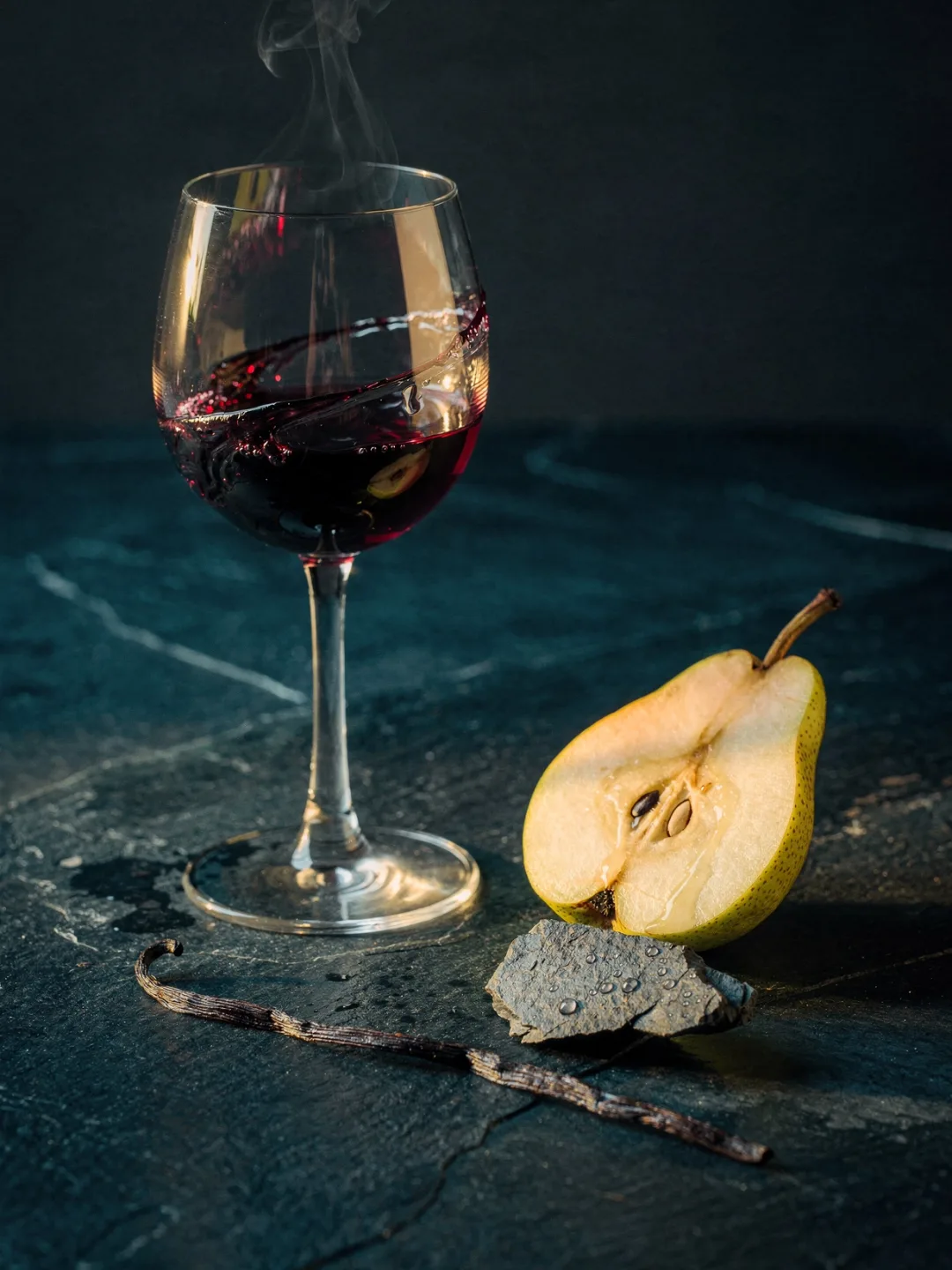
Anyone who tastes more often will notice they smell noticeably more over time, because the nose above all needs one thing: reference material. Anyone who knows what a ripe pear, wet gravel, or freshly cut grass smells like will recognize such notes in the glass more quickly. Names from a book alone help less. Professional aroma kits bundle reference scents in small vials, but reaching into your own fruit bowl or spice rack works just as well to start.
A second trick helps too: say out loud what you smell, even if your first guess is wrong. Simply naming it sharpens your memory of a scent for next time, even if you end up correcting yourself. Anyone who just nods silently, on the other hand, often forgets the impression again within minutes.