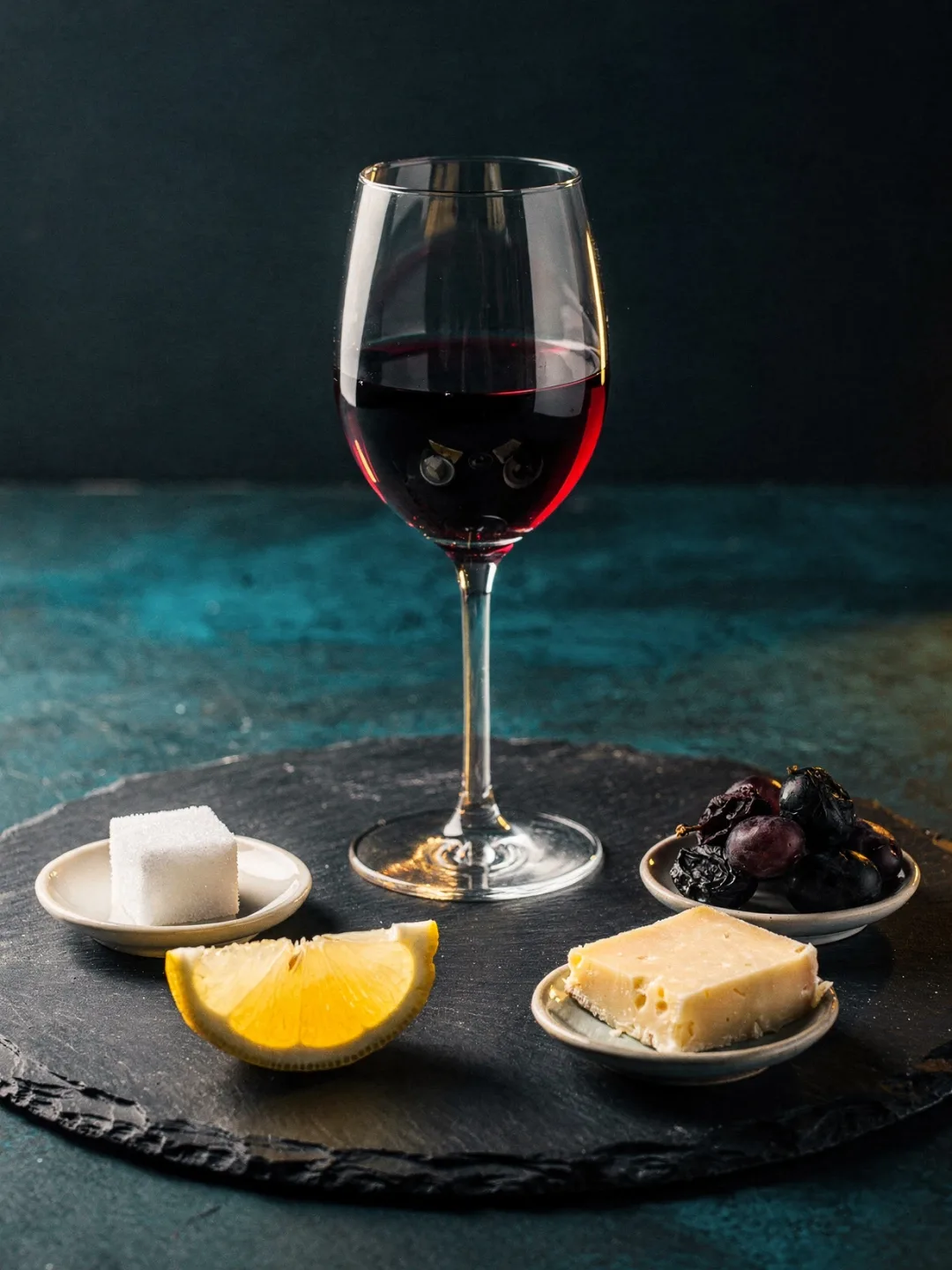
Sweetness, Acidity, Tannin
Key
In the mouth, all the impressions that eye and nose have already prepared come together. A few new ones join in: sweetness, acidity, bitterness, and a sensation that isn't a taste at all, but a feeling in the mouth.
Four Tastes, One Myth
In the mouth, it comes down first to the basic tastes that really matter in wine: sweet, sour, bitter, and, more rarely, salty. Sweetness comes from residual sugar left over after fermentation. Sourness comes from the fruit acids in the grape. Bitterness, meanwhile, can come from seeds, stems, or long aging in oak. One old idea persists stubbornly: that sweetness is only tasted at the front of the tongue and bitterness only at the back.
This so-called tongue map has been considered outdated in taste research for decades. Taste buds for all the basic tastes are distributed across the entire tongue surface, only in slightly different densities. So if you're tasting and specifically angling your tongue toward the back to detect bitterness, you can save yourself the trouble and just let your whole mouth do the work.
Tannin Is Not a Taste
The rough, slightly drying sensation a young red wine leaves in the mouth isn't a taste at all, but a tactile sensation. Tannins, the compounds from skins, seeds, and oak barrels, bind with certain proteins in saliva and cause them to clump together. The mouth perceives this as dryness and slight roughness, quite similar to very strong, unsweetened black tea. Experts call this puckering sensation astringency, to clearly distinguish it from the actual tastes.
How strongly tannin acts depends heavily on how ripe the grapes were. Green, unripe seeds deliver hard, angular tannins that almost scratch in the mouth. Ripe seeds and skins, on the other hand, produce softer, more finely woven tannins that barely register as a distinct sensation anymore, blending instead into the overall impression.
Body in the Mouth
Beyond taste and mouthfeel, weight also matters—how heavy a wine feels in the mouth, its body. Alcohol, glycerin, residual sugar, and the overall dissolved compounds in a wine together determine its body. It can feel light like skimmed milk or heavy and creamy like cream. A wine with fourteen percent alcohol almost always feels fuller than one with eleven percent, even if both are made completely dry. That's because alcohol is perceived in the mouth as a kind of oily volume.
Body alone says nothing about quality—it's just one of several characteristics that together create an overall picture. A light wine can be just as balanced and refined as a heavy one, simply in a different weight class.
How components alter each other
None of these characteristics arrives in isolation; they influence one another, often in surprising ways. Sugar softens perceived bitterness and acidity, which is why an off-dry wine can taste noticeably fresher than its measured acidity would suggest. Conversely, high acidity makes a wine seem less sweet than its residual sugar would otherwise indicate. That's why some German Rieslings taste refreshing rather than cloying despite noticeable sweetness.
Alcohol also plays a role. It intensifies the perception of bitterness and warmth in the throat. A wine high in alcohol often seems sharper and less refined as a result, even though the analytical values for acidity and sugar remain unremarkable. How these dials are set relative to one another ultimately determines whether a wine feels harmonious or whether individual edges stick out unpleasantly.
Temperature shifts the impression
The temperature of the wine itself also affects taste, independent of the wine itself. Cold slightly numbs the tongue and mutes sweetness and fruit aromas, while acidity and tannin come across as sharper and harder. That's why a red wine served too cold often tastes tight and unwelcoming, even though the wine itself is not at fault.
Warmth reverses this effect. It brings sweetness and alcohol more to the fore and makes aromas seem more intense. But this can also cause a wine to taste clumsy and alcohol-heavy once it sits too warm in the glass. Anyone who tastes a wine at different temperatures—straight from the fridge, then again ten minutes later—experiences almost two different wines. Both come from the same bottle.