Wide bowls, served cool
Glassware
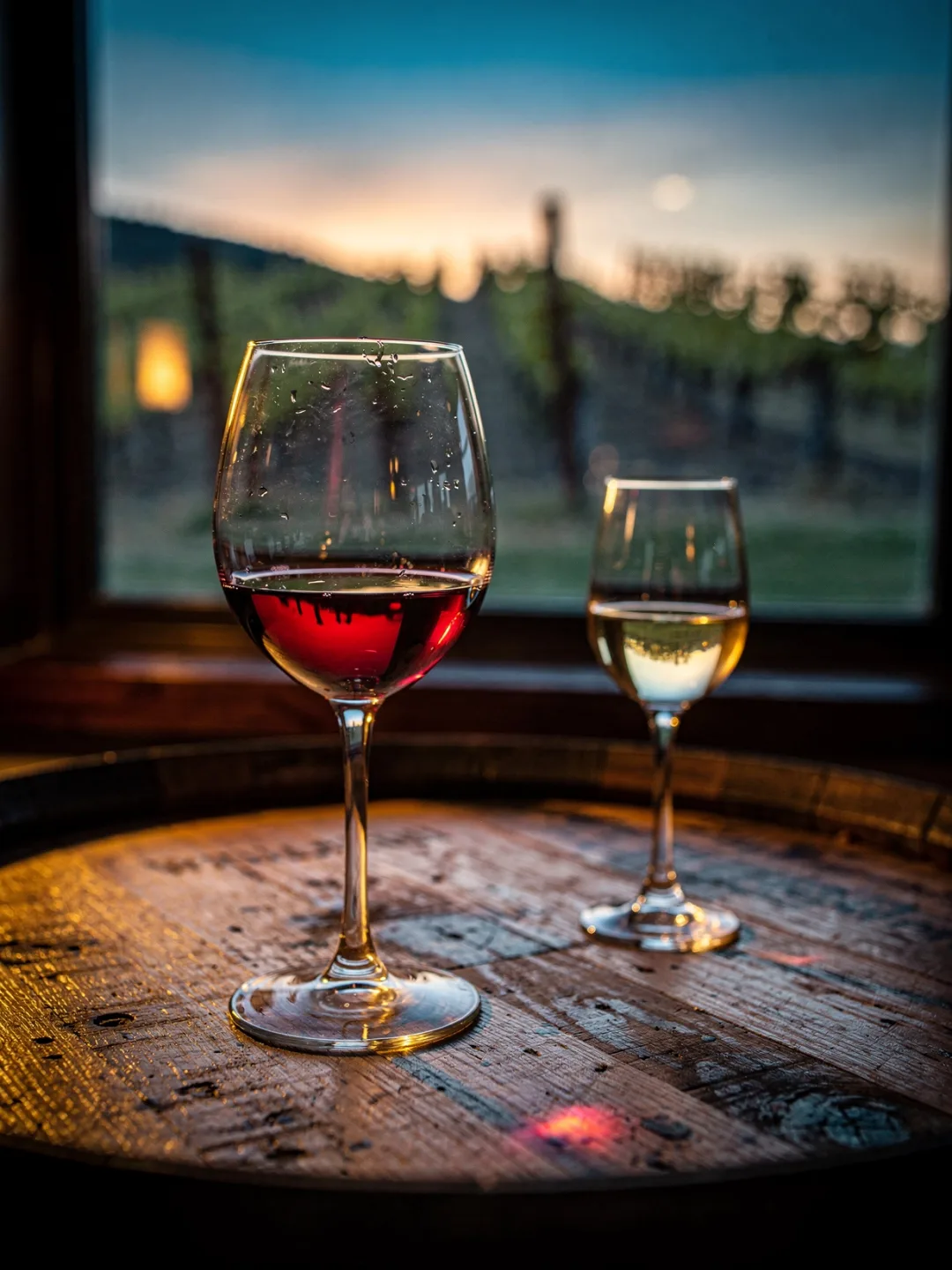
An Oregon Pinot Noir needs room before it reveals anything. Its color is pale, almost translucent. Its aromas – cherry, wet leaves, sometimes a whiff of smoke from the forest floor – sit deep beneath the surface until enough air reaches them. That's why, across the Willamette Valley, it's almost always served in the same glass: a large, round bowl that narrows toward the top.
The wide bowl does two things. It gives the wine surface area so the alcohol and delicate aromatic compounds can evaporate, while simultaneously gathering those compounds in the narrowing rim instead of letting them simply disperse. With a bolder wine from a warmer climate, the same shape would overemphasize the acidity. With a cool, pale Oregon Pinot, it instead brings out exactly the freshness that defines these wines.
It's served cooler than many expect. Between 13 and 15°C (55–59°F), noticeably colder than room temperature and only slightly warmer than a white wine. Served too warm, an Oregon Pinot loses exactly the freshness that sets it apart from the warmer Pinot Noirs of California, and its delicate earthy notes quickly tip into alcohol.
Pinot Gris gets the opposite treatment. It goes into a narrower, smaller glass. This holds the temperature and concentrates the fruit, so the pear and citrus aromas don't get lost in too large a bowl. Yet when tasting wines from Jory and Willakenzie soils side by side, both still go into the same wide glass. Only that way can the rounder cherry note of one and the tighter, saltier edge of the other actually be noticed in direct comparison.