Without Native Peat
Malt & Peat
Peat takes millennia, cool climates, and standing water to form, none of which occur in hot, dry Israel. There are no peat bogs here like on Islay or in the Scottish Highlands, so most M&H whisky is naturally unpeated.
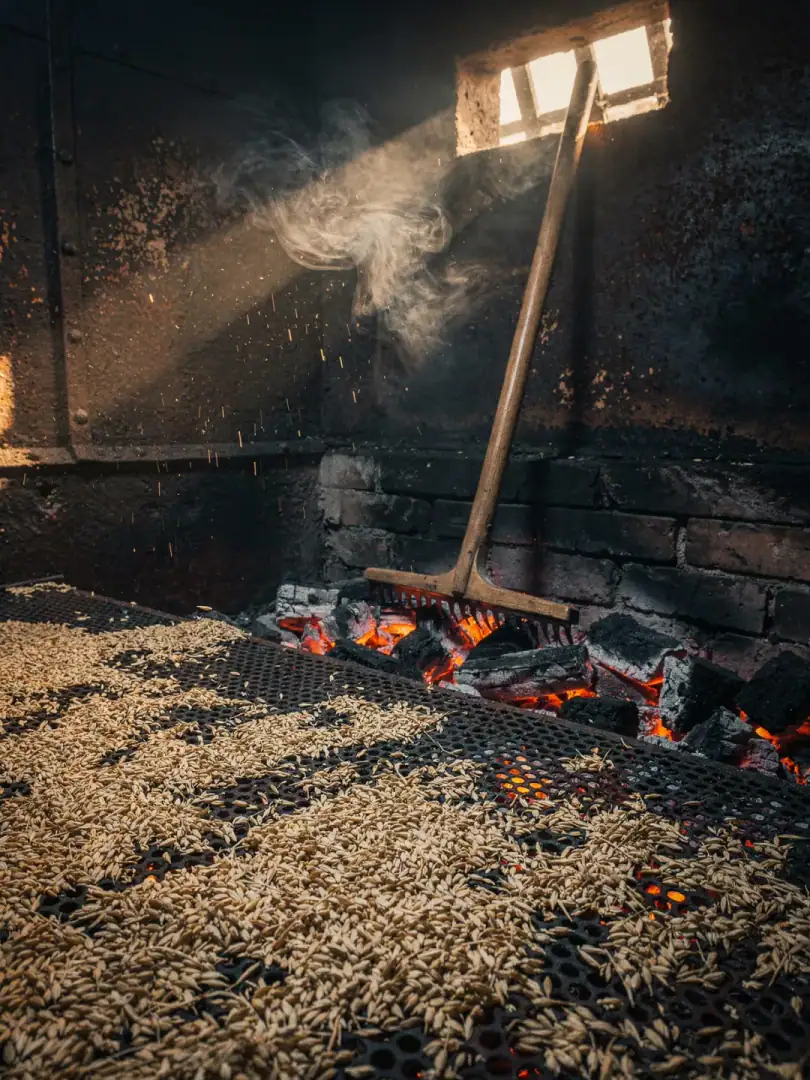
Twice a year, though, for about two weeks each time, the distillery switches to smoke. For this, malt peated to forty ppm is specially brought into the country. Ppm stands for parts per million and measures how much phenol, meaning smoky flavor, the malt contains. During these weeks, the same two copper pot stills that M&H otherwise uses for unpeated whisky are put to work, since the small distillery can't yet justify a second setup just for peated malt. The peated malt travels from Great Britain like the rest of the grain, as no Israeli distillery currently runs its own malthouse.
What Israel does provide instead are completely distinct layers of water beneath the land. They shape the distillery almost as strongly as a peat bog would shape a Scottish coastal distillery. Beneath Tel Aviv, rainwater collects in sandy kurkar rock; in the mountains around Jerusalem, it seeps through porous limestone karst; and closer to the Dead Sea, the ground becomes salty and mineral-rich.
An Israeli malthouse for whisky barley isn't on the horizon yet, as the domestic market is still too small for that. Until that changes, peat will remain the exception in Israeli whisky, not the foundation. The country's true signature is written through water and climate in the warehouse, not through the kiln.
loose, sandstone-like coastal soil that lets rainwater drain quickly
The root: supplies the soft groundwater that M&H uses for its mash in Tel Aviv