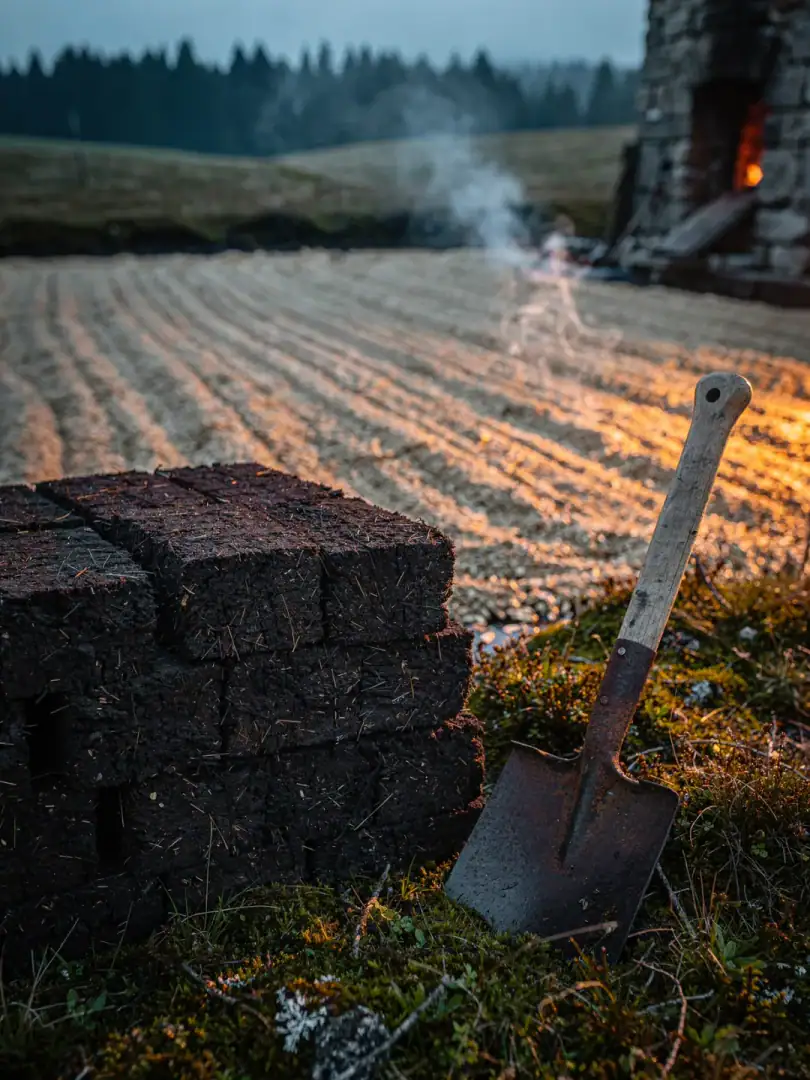
Peat Bog at the Alpstein
Malt & Peat
Peat smoke is the exception in Switzerland, not the rule. Most distilleries malt without peat. Native peat is rare, and many bogs are protected nature reserves. One of the few exceptions lies in Appenzell country at the foot of the Alpstein, where the Locher brewery uses peat from the Appenzell high moors for part of its malt.
A raised bog grows from the top down, or rather: it only grows at the top. Right at the surface lies a living layer of peat moss that constantly regenerates. Beneath it, the layers die off and slowly compress into peat. When this peat is burned, it produces the smoke that later permeates the damp malt, giving it an earthy note.
During kilning — the drying of germinated malt over heat — the amount of peat determines the intensity of the smoke. Swiss distilleries rarely publish exact phenol levels in parts per million, unlike many Scottish producers. What's clear is this: peated malt from Appenzell country gives a milder, mossier smoke than malt from the coast of Islay. The raised bog there simply grew differently than a coastal bog.
For most other Swiss distilleries, peat remains the exception. They rely on unpeated malt and let cask and climate shape the whisky's character. This is a deliberate counterpoint to the smoky reputation many people associate with whisky before trying their first glass from the Alps. So every peated bottle from Switzerland remains a small exception among many unpeated neighbors.
Peat moss that keeps regenerating, securing the ongoing supply of peat.
The root: Without this layer, there would be no Appenzell peat left for kilning within a few decades.