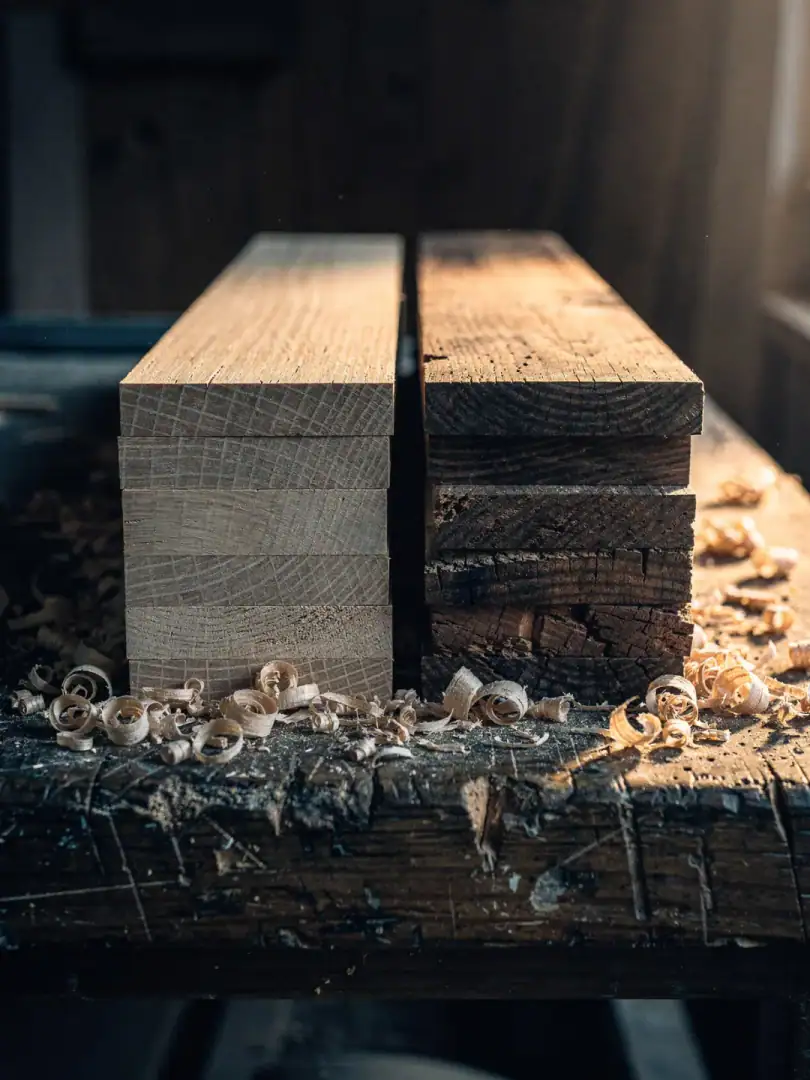
Wood Type Determines Aroma
What's the difference between American and European oak?
American and European oak give the very same whisky completely different aromas, from vanilla and coconut to clove and dark fruit. Which wood a distillery chooses helps determine both the price and character of every cask.
Two tree species, two aromas
Quercus alba, the American white oak, grows widely across the USA and Canada and supplies the wood for most bourbon casks. It contains many vanillin precursors and comparatively few tannins, which is why whiskies from American oak often taste of vanilla, coconut and caramel.
European oak, usually Quercus robur or Quercus petraea from Spain or France, has a more open, coarser wood structure and considerably more tannins. It delivers spicier, drier notes such as clove, leather and dark fruit, which is why it's mainly used for sherry casks.
Why origin determines the price
American oak grows faster and is harvested in large, strictly managed forests, which keeps the price comparatively low. European oak grows more slowly and is often reserved first for winemaking before any casks are even made for whisky.
In practice, this means: the vast majority of whisky casks worldwide are made of American oak, usually via the detour of used bourbon casks. Casks made of European oak, especially fresh sherry butts, are among the most expensive vessels in the entire industry, often many times the cost of a used bourbon cask.
What the cask staves release
American oak delivers particularly high amounts of lactones, responsible for the typical coconut and creamy note, along with a usually tighter wood grain that releases aromas slowly and evenly. European oak contains more ellagitannins, responsible for bitterness, spice and faster colour uptake, typically with a more open, coarser grain.
This more open structure lets aromas and oxygen pass through the wood more quickly, so a European oak cask can shape a whisky more strongly in a shorter time than an American one. Some distilleries therefore monitor such casks especially closely, so the wood doesn't mask the true character of the new make spirit too quickly.
Other woods, rare exceptions
Some distilleries experiment with rarer woods, such as Japanese Mizunara oak, which gives fine sandalwood and incense notes but, due to its porous structure, is harder to build watertight and more expensive to work with. Such special casks remain exceptions alongside the two major standard woods.
Which oak a cask is made from, however, says nothing yet about what it held before. Most casks don't arrive fresh from the cooperage for whisky, they've already stored something else beforehand, as the next stops will show.
Where cask wood really comes from
Many decades pass before a tree even becomes a cask. American white oak is usually felled at sixty to a hundred years old. European oak often takes even longer, sometimes over a hundred and fifty years, before the trunk is thick enough. Foresters deliberately select straight, knot-free trunks, since only these can later be split into clean staves. Crooked or knotty trees are barely suitable for cask-making.
The staves aren't sawn but split, so the wood breaks along its natural grain. Only this way does it stay tight enough to hold liquid for decades. After splitting, the fresh wood is often seasoned outdoors for one to three years. Rain and sun wash out bitter tannins that would otherwise make the whisky taste too harsh. Only afterwards does the cooperage take over the wood for actual cask-building.
Because both oak species regenerate at a limited rate, their harvest is strictly controlled in many countries. In the US, forestry authorities regulate how many trees may be felled each year. Spain and France protect their old oak forests in similar ways, precisely because winemaking and the whisky industry compete for the same wood. Sustainable forestry has long since stopped being a pure marketing question and become an economic necessity for the whole industry.
Some cooperages mark every stave with its origin and felling date, similar to a provenance record for wine. This makes it possible to trace exactly which forest and which year a particular cask came from. For distilleries that place special value on traceability, this is an important quality marker. In the end, every cask carries its own small story, long before the first drop of whisky ever flows in. Those who look closely sometimes find such details even on a small plaque on the cask head.