Texture matters too
Palate & Mouthfeel
After the nose comes the mouth, and there it's about more than just taste. How a whisky feels, oily or thin, creamy or sharp, is just as much a part of tasting as its aroma.
The first sip is an invitation, not a test
Take just a little for your first sip, just enough to coat your whole tongue. Let the whisky sit in your mouth briefly, move it gently back and forth, almost as if chewing, before you swallow. These few seconds are enough for the flavors to spread throughout the mouth and for the back of the nose to kick in via the throat.
A big, hasty gulp, on the other hand, overwhelms the senses with alcohol before anything else can register. Small sips, several in a row, usually reveal more than one big one.
Texture: what the tongue senses beyond flavor
Some whiskies feel almost creamy in the mouth, like cream, while others feel thin and watery. This is exactly what's meant by mouthfeel: how a liquid feels, independent of its taste. This texture depends partly on cask strength and on the distillation method. The natural fatty compounds also play a role when they remain in the finished whisky instead of being removed during filtration.
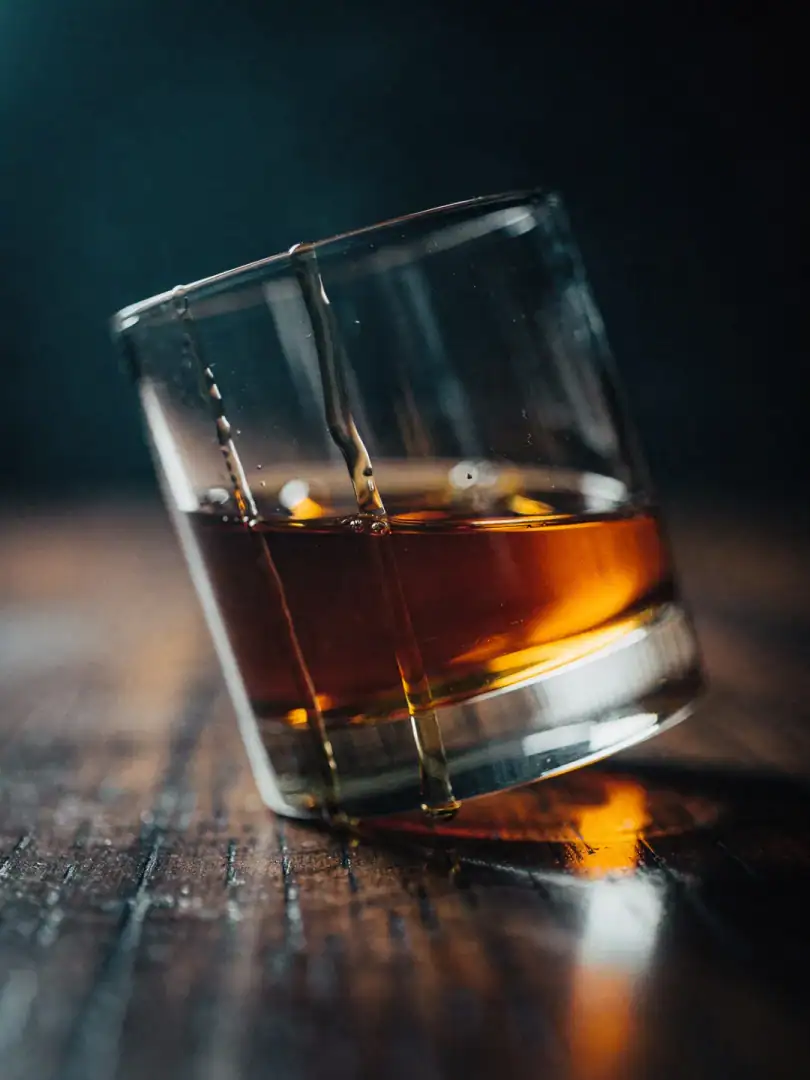
A familiar sign of this are the "tears" or "legs," the thin streaks that run down the glass wall after you've swirled it. They arise from a physical interplay of alcohol and water at the surface. They give a rough indication of alcohol content and viscosity, but nothing more. They say nothing about quality.
From sweet to dry: how the impression develops
A sip of whisky changes while it stays in your mouth, and this development is fascinating to observe. Often there's a touch of sweetness at first, say from caramel or honey, followed by the real complexity with fruit, spice, or smoke, and finally the impression often tips toward bitter or dry before you swallow.
This sequence isn't a fixed map on the tongue, as the old myth of sweet up front and bitter at the back would have it. All taste buds essentially detect all basic tastes; the sequence unfolds over time, not across space, as the sip spreads through your mouth.
Alcohol as a spice, not a disruption
With stronger whiskies, especially at cask strength, you'll feel a distinct warmth or even a slight burn on the tongue. This isn't a flaw but a sensation in its own right that's part of the tasting, much like heat from chili. Too much of it, though, masks the finer notes, which is why a drop of water often reveals more than less does with very high-proof whiskies.
Pay deliberate attention to where in your mouth you feel this warmth and how long it lingers. Together with sweetness, fruit, and texture, this gives a fuller picture than flavor alone.
In short, what the palate tells you
Sweetness usually comes first. Then follows the depth: fruit, spice, maybe smoke. At the end, dryness or bitterness often announces itself. Texture runs throughout, oily or thin, creamy or watery. Warmth comes from alcohol, not from flavor, even though the two can easily blend together.
In the end, what matters most is comparing against yourself. Does a whisky taste different on the second sip than the first? Does the sweetness linger briefly or long? Does the warmth eventually become bothersome, or does it stay pleasant? Anyone who asks themselves these simple questions with every glass will, over time, build a reliable sense of their own.
Train this sense with simple comparisons: the same whisky neat versus with a drop of water, a young malt against an old one, a bourbon against a Scotch. Such paired comparisons often sharpen the palate faster than many individual tastings without a point of reference.