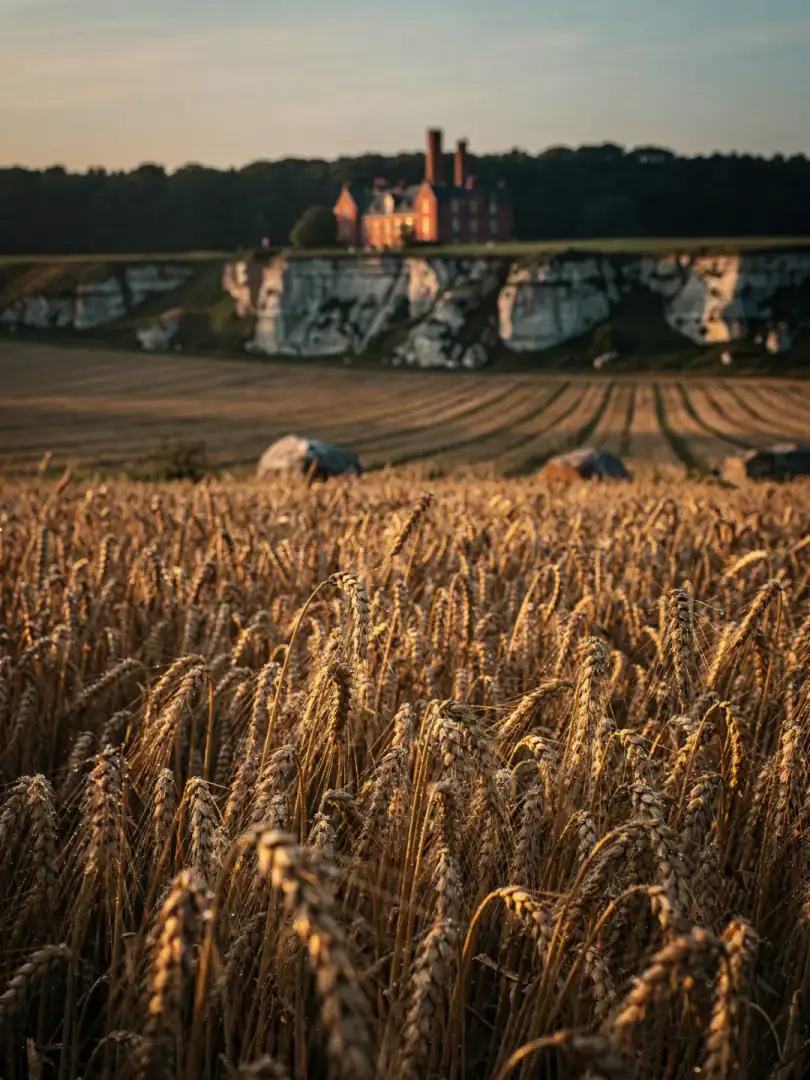
Rye on Limestone
Raw Material
In the fields of Lääne-Viru, rye grows far more than wheat. This isn't a matter of farmers' taste, but of the soil. The ground above northern Estonia's limestone is thin, stony, and dries out quickly. Rye is pretty much the only crop that grows reliably here.
Beneath the thin layer of humus lies what's known as rendzina. This soil type forms directly on weathering limestone and is widespread in Estonia. It's rich in lime and well-draining, but poor in organic matter. The Ice Age only exposed this soil around ten thousand years ago.
Rye copes with this poverty of soil where wheat would long since have given up. Its roots reach deep into the stony glacial till. The glaciers of the last Ice Age left this layer behind over the limestone. There, the roots find moisture that has long since evaporated from the surface.
This grain brings less sugar to the table than potatoes or corn. Instead, it delivers an earthy, slightly spicy base note. In the finished vodka, this reappears as a fine grain aroma, quite different from the softer, sweeter potato vodkas found further south in the Baltics.
For the distilleries in and around Tallinn, this remains a guiding principle to this day. Liviko markets Viru Valge explicitly with grain from Estonian fields, not imported raw material.
In the end, the raw material always comes down to a matter of origin. A good grain year or a bad one, you taste it in the glass, even if no label makes that promise outright.
A thin, dark soil directly above the limestone, rich in lime but poor in nutrients.
The root: Rye roots pierce through this layer within a few weeks, searching deeper for water.