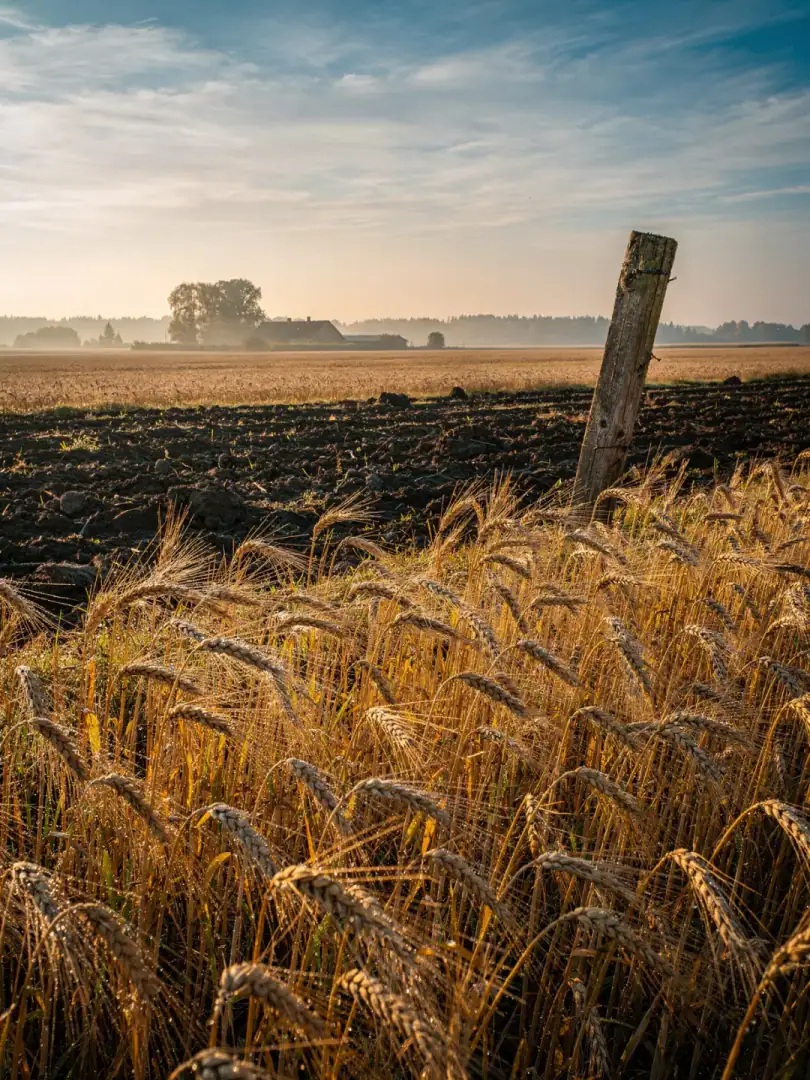
Zemgale, the Breadbasket
Raw Material
South of Riga begins Zemgale, a vast, flat plain. Latvians have long called it the country's breadbasket. Wheat and rye grow here in heavy, lime-rich loam left behind by the last Ice Age. In summer, the wind sweeps almost unimpeded across the fields, for this landscape has hardly any hills worth mentioning.
In 2018, Latvia harvested around 1.4 million tons of wheat and 81,000 tons of rye, along with 426,000 tons of potatoes. The figures reveal how the country has developed since Soviet times: away from the potato, more toward grain. For Stolichnaya, Riga's best-known vodka, that's no coincidence. The traditional recipe calls for precisely this blend of wheat and rye — no other combination.
The rye lends a faint sharpness that shows up in the finished vodka as a warm tingle on the finish. The wheat, by contrast, makes the distillate softer and slightly sweeter. Potato vodka tastes earthier and heavier on the tongue, and that is precisely not the goal in Riga. EU Spirits Regulation 2019/787 requires labeling of the raw material only when it is neither potato nor grain. For a wheat-rye vodka from Riga, that requirement therefore doesn't apply.
The soil of Zemgale explains why the grain grown here is so robust. Lime-rich glacial till, pushed together by glaciers over millennia, retains both water and nutrients equally well. Where the loam thins out, for instance toward the edges of the Daugava lowlands, potatoes tend to grow instead. They cope better with sandier, lighter soils than the more demanding rye.
dark, humus-rich loam of the Zemgale plain, enriched with lime from Ice Age glacial deposits
The root: Here, wheat and rye draw their nutrients, and the grain grows strong and rich in starch.