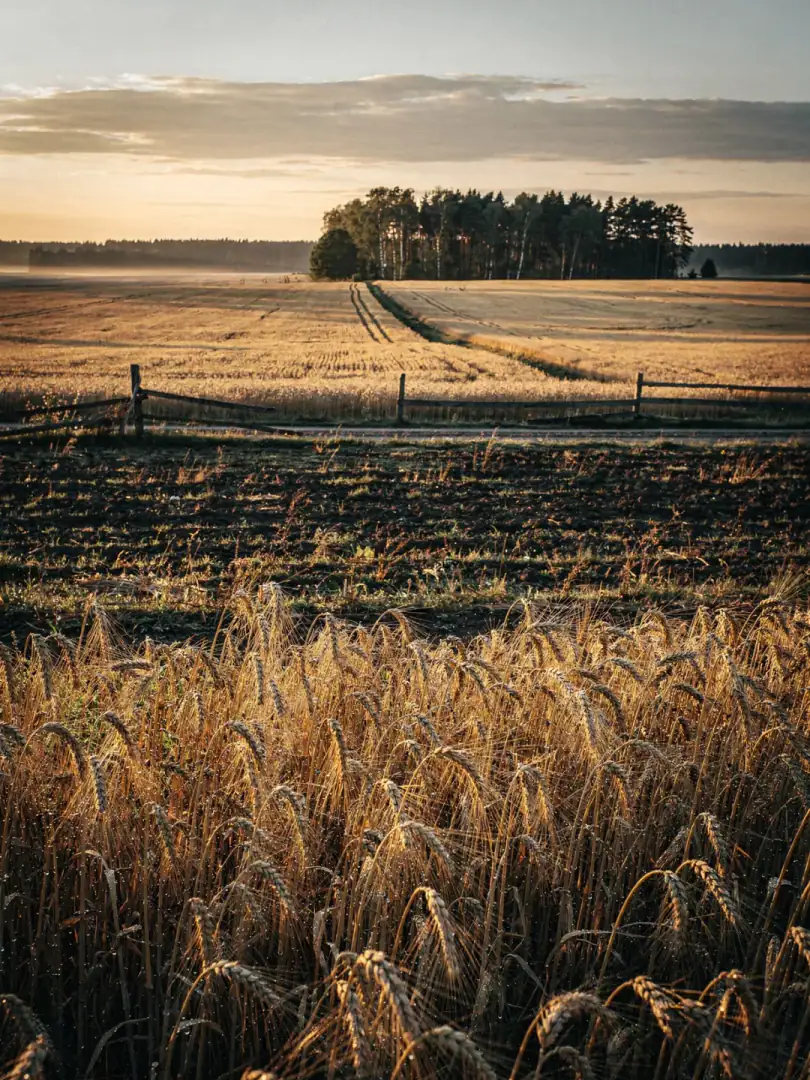
Rye on Clay Moraine
Raw Material
Flat and fertile, the Central Lithuanian Lowland stretches around Kaunas, the country's most intensively farmed landscape. The last Ice Age left behind a level moraine landscape here. Its soils are clayey and only lightly leached, considerably more fertile than the sandy, often boggy northwest of Lithuania.
What grows best in these fields is rye. Lithuania's winters are long and often bitterly cold, and the growing season stays short. Wheat tolerates this less well than rye, which reliably produces ears even on cooler, less rich soils and makes better use of the short summers.
For centuries, rye has therefore served as the country's bread grain. Dark Lithuanian black bread accompanies almost every meal and is almost always made from it. Anyone who grows up with it knows the slightly sour, earthy taste of the grain long before ever tasting vodka.
Stumbras still calls its spirits grain vodka to this day. According to the distillery, production follows classic methods that have barely changed since 1906. Rye brings more to the process than pure starch for fermentation: it gives the finished vodka a slightly spicy, almost peppery note that pure wheat or corn vodka usually lacks.
How deep this influence runs becomes clear when you look beneath the ears of grain. Three layers from the Ice Age support the field, each with its own role for the rye's roots.
In late summer, when the ears stand golden, this plain reveals its origins: a flat landscape, smoothed by ice, that demands little besides rye, potatoes, and sugar beets.
Weakly podzolized clay on the Ice Age moraine plain, rich in humus and finely crumbly.
The root: Here the rye germinates and finds most of its nutrients in the first weeks.