Column & Proof
Distillation & Rectification
Potatoes cannot simply be fermented like grain. Their starch is locked in the tuber's solid cells and must first be converted into fermentable sugar through steaming and enzymes, a step that isn't needed with rye or wheat.
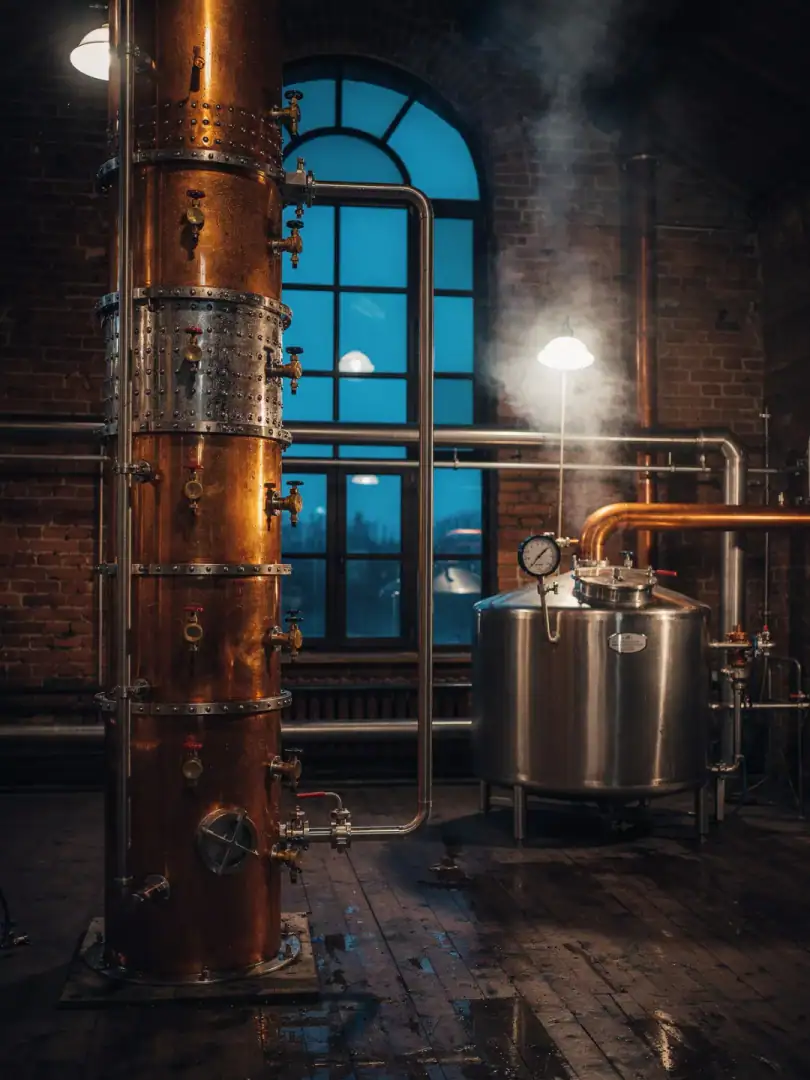
Only afterward is yeast added, and the mash ferments for several days into a weak, potato-scented raw alcohol. Traditional manor distilleries used simple pot stills for this, while modern operations have relied since the early 20th century on tall column stills that distill in multiple successive stages. Both methods pursue the same goal: extracting as pure an alcohol as possible from the potato mash.
This rectification separates ethanol from fusel oils and flavor compounds that would otherwise mask or distort the potato flavor, pushing the alcohol content up step by step. At the end of the column stands an almost flavor-neutral neutral spirit with well over 90 percent ABV. Even Wyborowa from Poznań still passes through such a column today before being diluted to drinking strength.
Under EU law, vodka must contain at least 37.5 percent alcohol, but in Poland it's usually sold at 40 percent, sometimes slightly higher. The high-proof neutral spirit is diluted with the region's filtered groundwater to drinking strength, typically 40 percent, before being bottled.
How many times a batch runs through the column varies from distillery to distillery and often remains a trade secret. What's certain is that at the end of the chain from Poznań's surrounding countryside stands a vodka that barely recalls the earthy potato it once grew from.