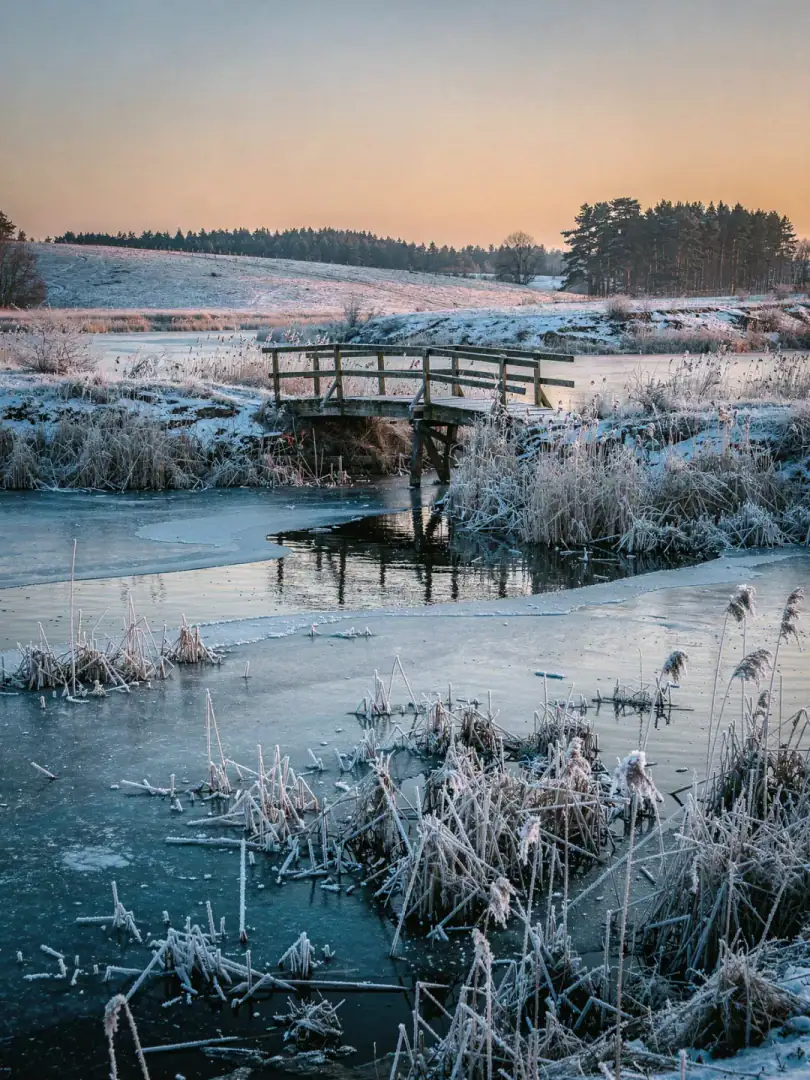
Lakes & Frost
Water & Climate
West and north of Poznań lies the Pojezierze Wielkopolskie. This hilly region is dotted with hundreds of lakes formed by melting glacial ice. The groundwater beneath seeps through thick layers of sand and gravel. These filter it naturally before it resurfaces in wells and small streams.
The Warta itself rises far to the south and flows right through the middle of Poznań. Historically, it was the lifeblood of the city and its factories. Distilleries along the river used the water to cool their stills. Once filtered, it was also used to dilute the high-proof raw spirit down to drinking strength.
The climate in the Nizina Wielkopolska is continental. It brings cold, often snow-poor winters and dry, warm summers, with the lowest rainfall in the entire country. For the potato, this poses a risk, as summer drought reduces the harvest. The cool winter, by contrast, traditionally kicked off the distilling season.
Without cooling in the modern sense, many manor distilleries followed the rhythm of the seasons. After the potato harvest in autumn, distilling began. The frost helped clarify the alcohol further, since water and fusel compounds behave differently at low temperatures than in warmth.
This interplay of sandy ground, clear groundwater, and harsh winters still shapes how work is done in the region today. Anyone driving through the lake district around Poznań still sees the combination that once made the city's vodka possible: water, cold, and lean fields.