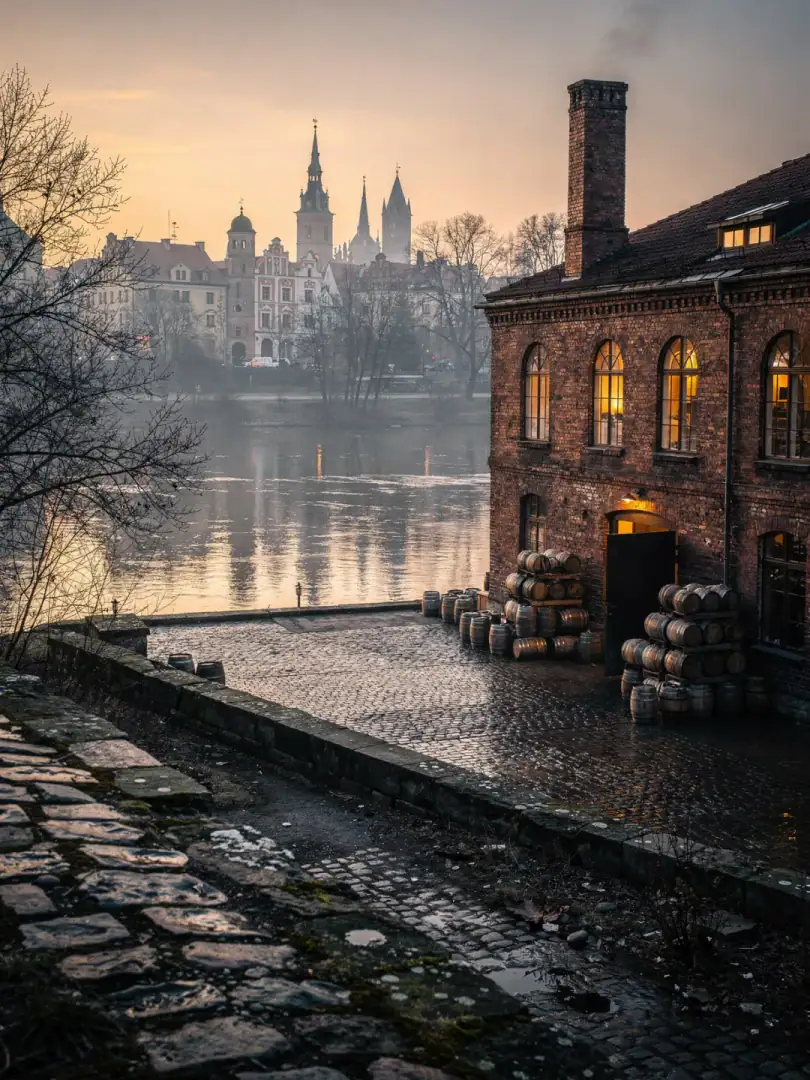
Factory & River
Region & History
On the banks of the Warta, right in the heart of Poznań, the air smelled of freshly distilled spirit in 1823. Hartwig Kantorowicz had built a factory there that was unusually modern for its time, with large copper stills and its own laboratory to ensure the purity of the alcohol.
That same year, a Polish newspaper launched a competition for the country's finest clear vodka. When the jury tasted Kantorowicz's spirit, only one word came to mind: "wyborowa," roughly meaning "the exquisite one" in English. The name stuck to the bottle and became a brand that still exists today.
At the time, Poznań lay under Prussian administration, with private distilleries and merchant families allowed to build brands. In the Russian-governed part of Poland farther east, the tsarist state pushed back against private trade and, toward the end of the 19th century, introduced a state monopoly on spirits. This border shaped whose names were allowed to appear on labels.
In the countryside, many estate owners built their own distilleries, backed by the nobility's old propination right to distill spirits and sell them to their own tenants. These small manor distilleries processed rye and, above all, potatoes from the surrounding fields, contributing over the decades to the region's reputation as the breadbasket of vodka.
From 1873 onward, Wyborowa was first exported beyond Poland's borders, and in 1927 it became the first vodka ever to receive an international trademark. The city's name stayed attached to the drink, while the fields around it kept growing potatoes that still supply the local distilleries today.