Sand & Tuber
Raw Material
Around Poznań lies the Nizina Wielkopolska. This flat landscape dates back to the last ice age and has rather poor, sandy soil. That's often too little for wheat, but plenty for the potato. This is precisely why the region is still considered the center of Polish potato farming today.
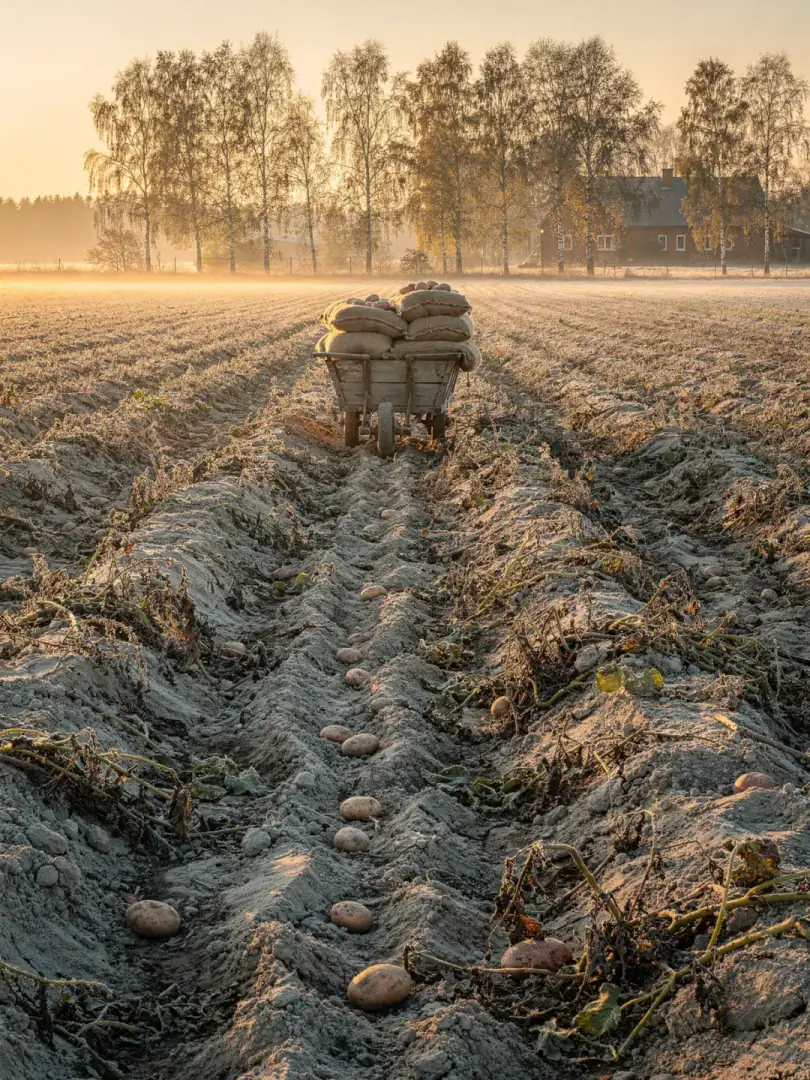
The tubers grow in a thin, humus-poor layer of sand. It holds water poorly, but warms up quickly and is easy to work. Farmers in the area have relied on hardy varieties for generations. These cope with dry summers and lean soils, rather than chasing maximum yields at any cost.
Some of this harvest still ends up in vodka production today. The maker of Luksusowa states that its ziemniaczana, its potato vodka, uses only tubers from Wielkopolska and Pomerania. So the raw material stays within the region, even though the factory itself is not located in Poznań.
Potato gives vodka a different body than rye or wheat. It feels rounder and heavier on the tongue, often with a slightly sweet, earthy undertone reminiscent of boiled jacket potatoes. Anyone who tastes both types side by side will usually notice the difference on the very first sip.
Rye grows in the same lean fields. In Wielkopolska, though, it remains second choice behind the potato, unlike in the rye-rich regions farther east. This division between field and bottle is one of the reasons the potato has stayed so closely tied to vodka here.
Humus-rich but light sandy layer, as found widely across the Nizina Wielkopolska.
The root: Potato tubers loosen easily from this soil but need regular rain, since the sand barely retains water.