Distilled Four Times
Distillation & Rectification
The journey from rye grain to wódka is a long one, and it starts with a mash. The milled grain is mixed with water and enzymes, heated until the starch converts into fermentable sugar, then yeast is added. After a few days of fermentation, a cloudy, mildly alcoholic liquid emerges, one that barely smells or tastes like wódka yet.
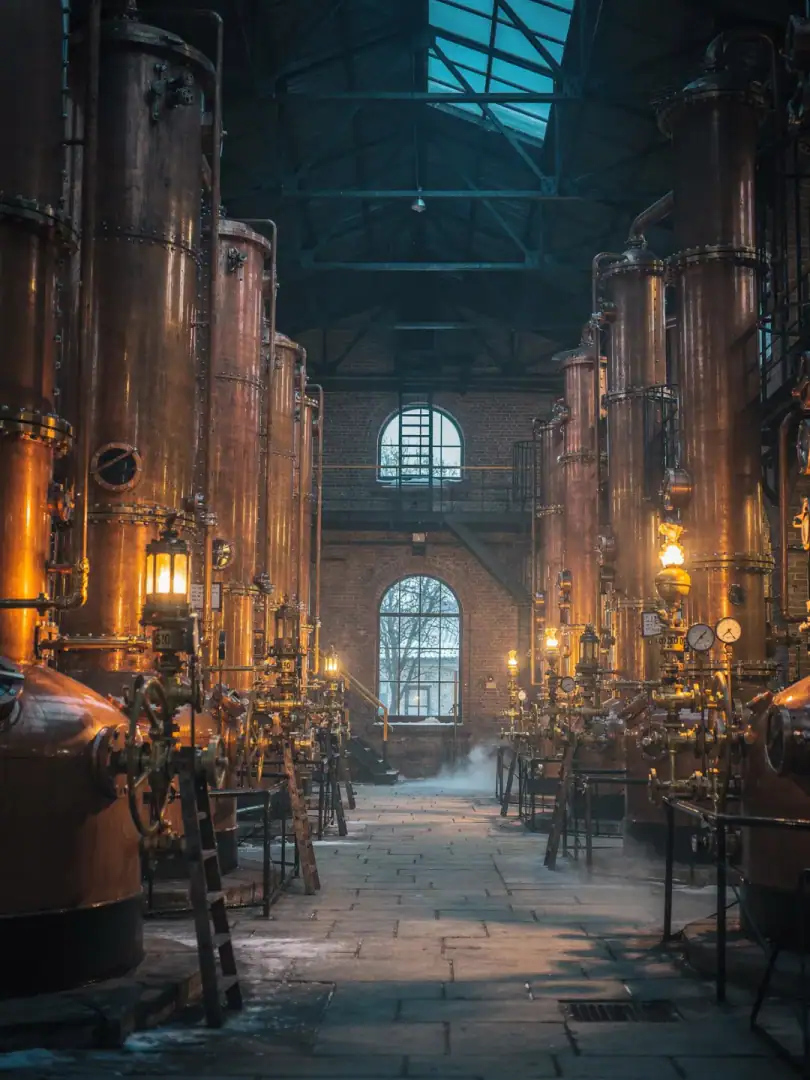
Only distillation separates the alcohol from everything else. In Żyrardów, the spirit is distilled four times before it's considered finished, noticeably more than most other wódkas, which typically run through the column just once or twice. Each additional pass strips away more aroma, leaving the spirit purer but also more neutral.
Neutral is the goal here, not a side effect. By law, wódka must reach at least 37.5 percent alcohol, though most brands sit around 40 percent. To get there, the raw spirit is rectified: in tall columns, alcohol vapor rises, cools repeatedly on trays, and evaporates again, until what remains is an almost pure spirit at around 96 percent.
Warsaw once had a dedicated building for exactly this final step. The old Koneser factory housed a rectification plant, where raw spirits from several distilleries were refined to drinking purity before being bottled under brand names like Wyborowa or Luksusowa. Today, that very building houses the Museum of Polish Vodka.
Only after rectification is water added again, to bring the pure spirit down to drinking strength. This can't be rushed, or the liquid clouds or the aromas settle unevenly. Master distillers often give this final step even more time than the distillation itself.