Artesian Wells
Water & Climate
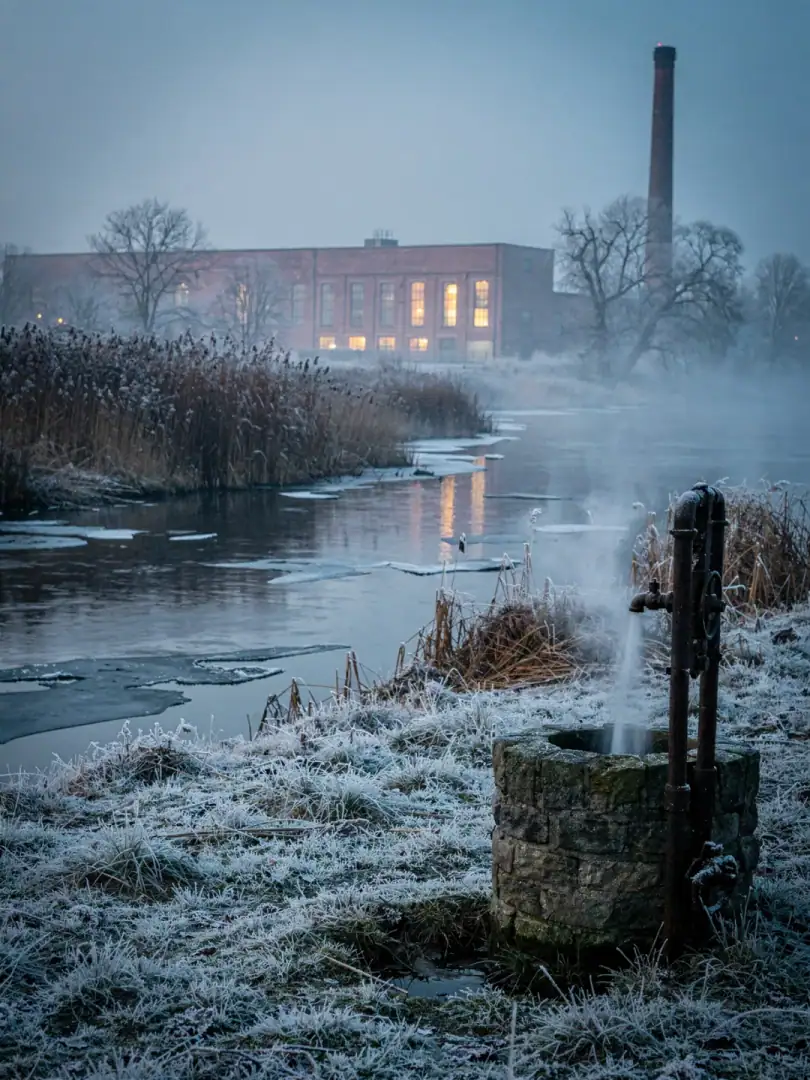
To understand Masovian wódka, you need to look down as well as across the fields. In Żyrardów, the distillery's water doesn't come from the mains. It's drawn from the town's own artesian wells, deep underground. Artesian means the water sits under natural pressure and rises on its own, no pump required.
That's no accident, it's a deliberate choice of location. The Masovian lowlands sit atop thick Ice Age layers of sand and gravel. They soak up rainwater like a sponge and filter it over decades. By the time it reaches the surface, the water has traveled a long way through sand, clay, and rock. That filtration is exactly what makes it usable for the mash without further treatment.
Warsaw sits on the Vistula, Poland's longest river. For centuries it has split the city into a left and a right half. The old Koneser factory was deliberately built on the Praga bank, close to the water. Back then, grain and finished wódka traveled by river, not by road.
The climate inland is more continental than along the Baltic coast. It brings cold, often snowy winters and warm summers, with little in the way of a long transition between them. For rye, that means a short but reliable growing season between frost and harvest. For the distillery, it sets a clear annual rhythm: grain comes in during autumn, distilling happens through winter.
Water matters right to the very end: it dilutes the high-proof raw spirit down to drinking strength, usually between 40 and 45 percent. Every distillery guards its source almost like a trade secret. In Żyrardów, it's woven into the brand's story nearly as tightly as the rye field itself.