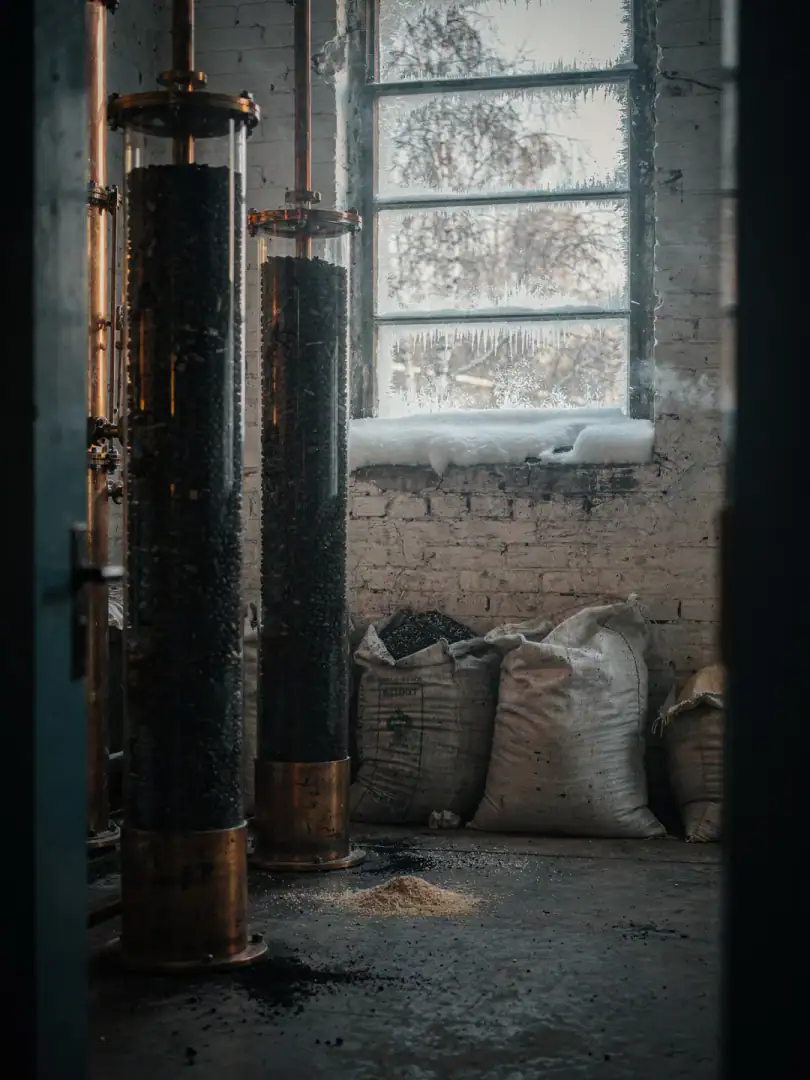
Activated Carbon & Its Effect
Filtration
After rectification, the spirit is nearly pure, but faint traces of fusel oils and other fermentation byproducts remain. These are what give a poorly filtered wódka a sharp, sometimes oily finish. Filtration exists to clear out exactly that, nothing more.
In Żyrardów, the finished spirit passes through activated carbon before bottling. The carbon acts like an extremely fine sieve made of carbon with a vast internal surface area: molecules responsible for off-notes cling to it, while ethanol and water pass straight through.
Other Polish distilleries rely instead on quartz sand or multi-stage silver filters; historically, pure birch charcoal was also common, and it's still used in parts of Eastern Europe today. The effect is similar, only the path there differs: more or less contact time, finer or coarser grain.
What filtration can't do is turn a mediocre raw spirit into a good wódka. It removes flaws, it doesn't create character. The taste of rye or potato that some brands deliberately preserve is already present in the distillate before filtration, not created by it.
Some producers chill the spirit heavily before the final filtration pass, known as cold filtration. At low temperatures, fatty acids and other cloudy compounds solidify and are more easily caught, giving the finished wódka greater clarity in the glass, though it changes little about the underlying flavor.
The old Koneser factory in Warsaw relied on similar principles back in the 19th century, using huge filter batteries in the rectification hall before the individual brands were bottled. Little has changed in the craft since then, only the equipment is now smaller and more precisely controlled.