Rye & Soil
Raw Material
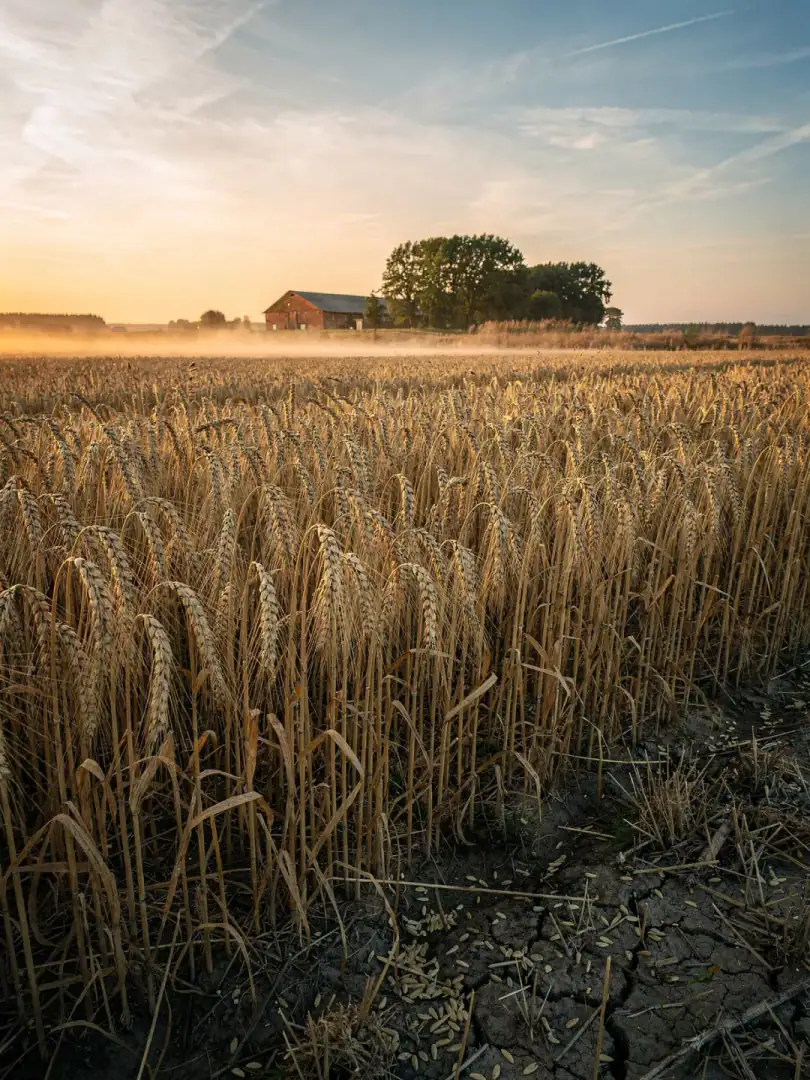
Across the flatlands of Masovia, rye has held its ground against wheat for centuries, for a simple reason: it asks less of the soil. Where wheat calls for the best sites, rye thrives even where sand shows through and water drains away fast. Around Żyrardów, that's the norm: glacially shaped lowland, without a hill in sight. The soils here demand patience more than power.
The variety at the heart of almost everything here is called Dańkowskie Diamond. It was bred specifically for rye cultivation in sites just like these. The grain yields little protein but plenty of fermentable starch, a trait that matters far more to distillers than to bakers. Belvedere sources its grain, by its own account, from individual farms in the surrounding area. Often it comes from a single field and a single harvest per vintage, rather than a large collective mill.
Beneath the topsoil lies sandy loam left over from the last Ice Age. Below that comes boulder clay, deposited by glaciers tens of thousands of years ago. This layering shapes the harvest more than any given year's weather. Rye roots reach deep, far deeper than wheat's, so they can still find moisture long after the top layer has dried out in summer.
The result shows up later in the glass. Rye wódka tends to feel firmer and slightly spicy, sometimes with a hint of bread crust. Potato wódka from the northeast, by contrast, comes across creamier and heavier. Taste the two side by side, and the difference becomes clear fast: it doesn't start in the still, but in the field.
In autumn, once the fields are harvested, these same soils determine what gets sown again the following year. Rye tolerates rotation with potatoes or oats and needs little fertilizer. That's one reason it has held on in Masovia's poorer soils for centuries, even as wheat and rapeseed have come to dominate elsewhere in Poland.
A humus-rich mix of sand and loam, darkened by generations of rye farming.
The root: This is where the grain germinates, though the nutrients suit rye far better than wheat.