Kolejka & Zagrycha
Drinking Culture
Wódka arrived in the Slavic lands in the 16th century and quickly became a drink for every class, from peasant to nobleman. In Warsaw, seat of the royal court and the Sejm since the 16th century, toasts were a fixed part of every major celebration, delivered standing, glass raised high.
A toast was often followed by a shared "Niech żyje!", roughly "Long may they live!", directed at whoever the toast honored. Refusing it broke a social rule and was considered rude, even insulting. Out of this pressure grew "przynuka", the mutual coaxing and gentle insistence to take just one more glass.
At old manor house celebrations in the Masovian countryside, some hosts went further still: anyone who broke the group's drinking rules was handed a penalty glass, the "karniak", and had to down two glasses at once in the middle of the room, under the watchful eyes of every other guest.
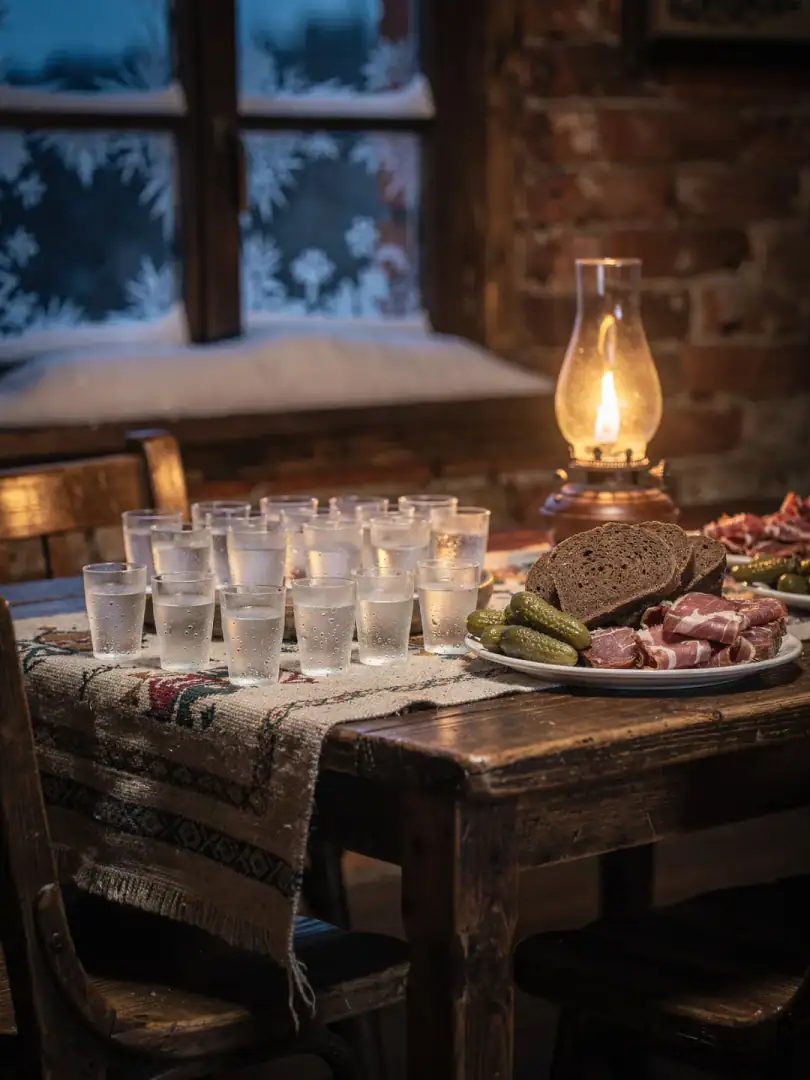
The classic rule for wódka still holds today: ice-cold, downed in one go, never sipped. Right after comes the zagrycha, a small bite, usually something sour or fatty, that tames the burn in the mouth. Drinking without zagrycha is considered incomplete, almost like coffee without the cup.
Little remains of the old courtly rituals; the rigid choreography of toast, counter-toast, and penalty glass belongs to the history books now. What has survived is the underlying attitude: wódka is drunk together, in company, never alone and never hastily on the side.
In Żyrardów and Warsaw, this rule still holds: whoever buys the first round orders for the whole table, and no one drinks until every glass is filled. It's a small echo of those old manor house celebrations, just without the penalty glass.