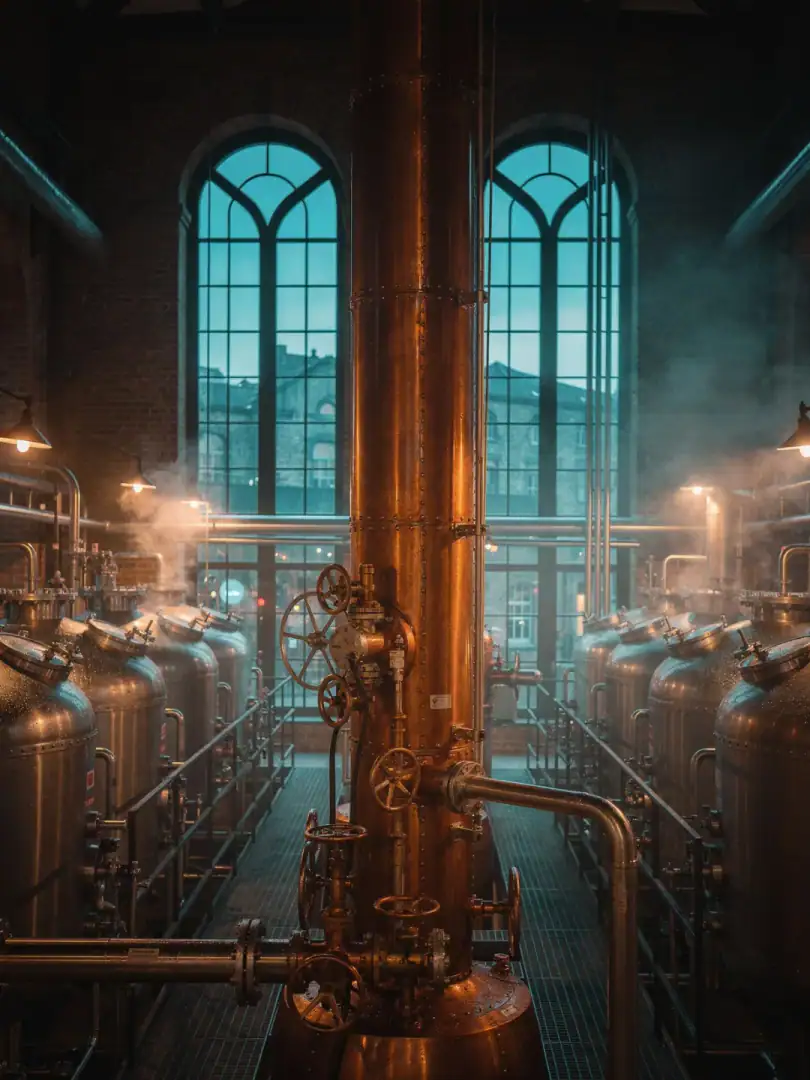
Column & Macerate
Distillation & Rectification
Milled rye and water from the region first come together to form a mash. Yeast ferments it before it moves into the column still. Unlike pot-still distillation, the raw alcohol here passes through multiple plates of a rectification column. Step by step, it separates the alcohol from fusel oils until nearly pure ethanol remains.
At Polmos Białystok, the factory founded in 1928, this neutral spirit is processed further. For Żubrówka, it's infused with a macerate of bison grass. The EU designation of origin for the herbal vodka from the North Podlachian Lowland dictates precise values. It must contain at least 7 milligrams of coumarin per liter, and no more than 4.5 grams of sugar per liter. These thresholds keep the flavor within a tight frame.
EU Spirit Drinks Regulation 2019/787 requires a minimum of 37.5 percent alcohol for vodka in general. In practice, the drinking strength is usually higher. If the base material isn't potato or grain, the label must state this. For Podlachia's rye vodka, this question rarely matters, since grain remains the base here.
How many times a batch passes through the column ultimately determines its purity. The more passes, the more neutral the spirit becomes. It's on this neutral foundation that the bison grass later builds its own character. Only after rectification, not before, does the vodka from Białystok gain its distinct personality.
The number of distillation runs matters too. Some batches pass through the same column two or three times before being cleared as the base for Żubrówka or Absolwent. Only after that comes the filtration that gives the vodka its final polish.