Charcoal, Not Myth
Filtration
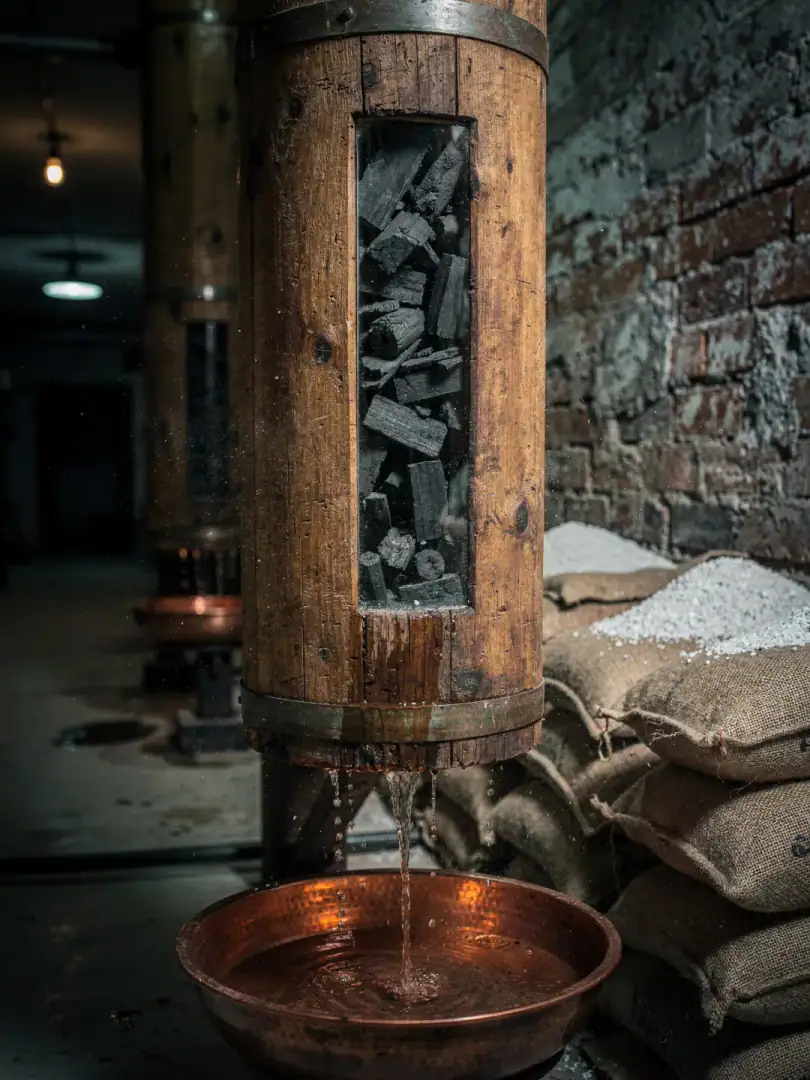
After rectification, the spirit is nearly neutral. Traces of fusel oils and other flavor compounds still remain, though. Birch charcoal is pressed into layers and the vodka slowly passes through it. It binds a portion of these residues to its porous surface, a simple adsorption process, not a magic trick.
Quartz sand is also used in the distilleries around Białystok. It typically serves as a mechanical filter before the charcoal stage, catching larger particles. Cold filtration is mainly used to prevent haze. Such haze forms at low temperatures, when fatty acids from the grain start to flocculate.
What filtration can't do is turn a mediocre raw distillate into a good vodka. It only smooths what the rectification column has already largely accomplished. Anyone who claims that charcoal alone is what makes a brand like Żubrówka special is mistaking marketing copy for chemistry.
Historically, the charcoal came from birch wood harvested from the local forests. The same stands also supplied firewood for the villages. Today, the charcoal used in the columns is mostly produced industrially. But the principle of adsorption remains exactly the same as it was a hundred years ago.
In Białystok, these steps follow one another directly, within the same factory where rectification also takes place. Only after passing through the charcoal is the spirit infused with the bison grass macerate for Żubrówka. Before that, it would still be too raw for this finishing touch.
How long the vodka spends passing through the charcoal determines the fineness of the result. Too short a contact time leaves harshness behind; too long strips the grain of its character. The distilleries in Podlachia have built up their own know-how on this over decades.