Rye in the Sand
Raw Material
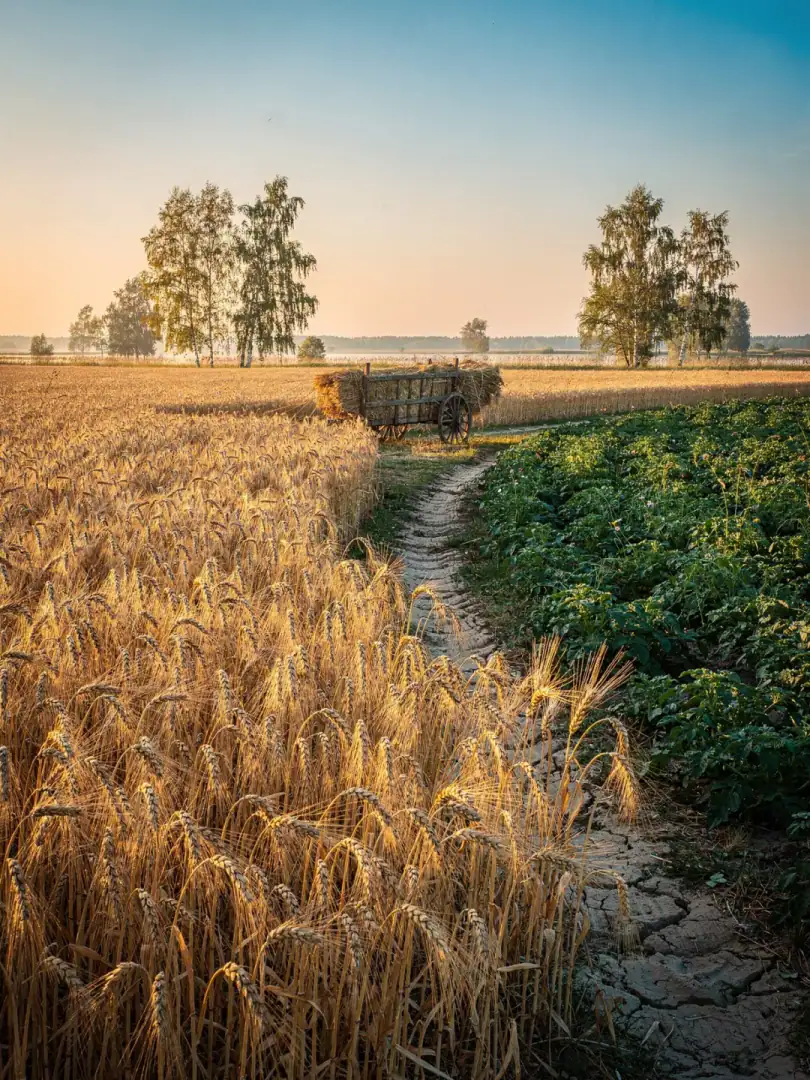
Wheat struggles in the fields around Białystok. The soil here is a legacy of the Ice Age: pale sand interspersed with pockets of clay, poor in nutrients and quick to dry out. Rye, on the other hand, thrives in exactly these conditions. Its roots reach deep enough to draw out what wheat would lack in this thin soil. That's why it has been the grain of Podlachian farmers for centuries.
The Nizina Północnopodlaska, the North Podlachian Lowland, is itself a product of the last Ice Age. Under EU protected designation of origin, even the bison grass for Żubrówka must come from here. Glaciers of the Vistulian glaciation left behind sandy moraines and vast outwash plains. In between lie the river lowlands of the Narew and Biebrza, with their peat soils. This scarcity forced rye cultivation for generations, before potatoes joined the mix in the nineteenth century.
Potatoes complement the rye especially in the wetter hollows near the Biebrza marshes. There, the peat soil holds water that would otherwise rot the grain. Together, these two raw materials explain why Podlachian vodka rarely tastes of just one ingredient. It tastes of the entire landscape in between: thin, wet, and yet fertile.
For the flavor, this means less body than wheat vodka delivers. In exchange, a drier, slightly spicy base note remains, one that survives even rectification. Anyone who sees the grain fields in late summer quickly understands why rye bread and rye vodka are considered siblings in Podlachia. Both grow from the same lean soil.
The climate reinforces this difference further. Short, cool summers suit hardy rye perfectly well. On the very same fields, wheat barely yields a harvest in bad years. This reliability is exactly what made rye the safe bet for Podlachian agriculture, generation after generation.
pale, nutrient-poor podzol earth from the last Ice Age, permeable and quick to warm
The root: The lean soil leaves little choice: rye manages here, wheat barely does.