Wheat & Chernozem
Raw Material
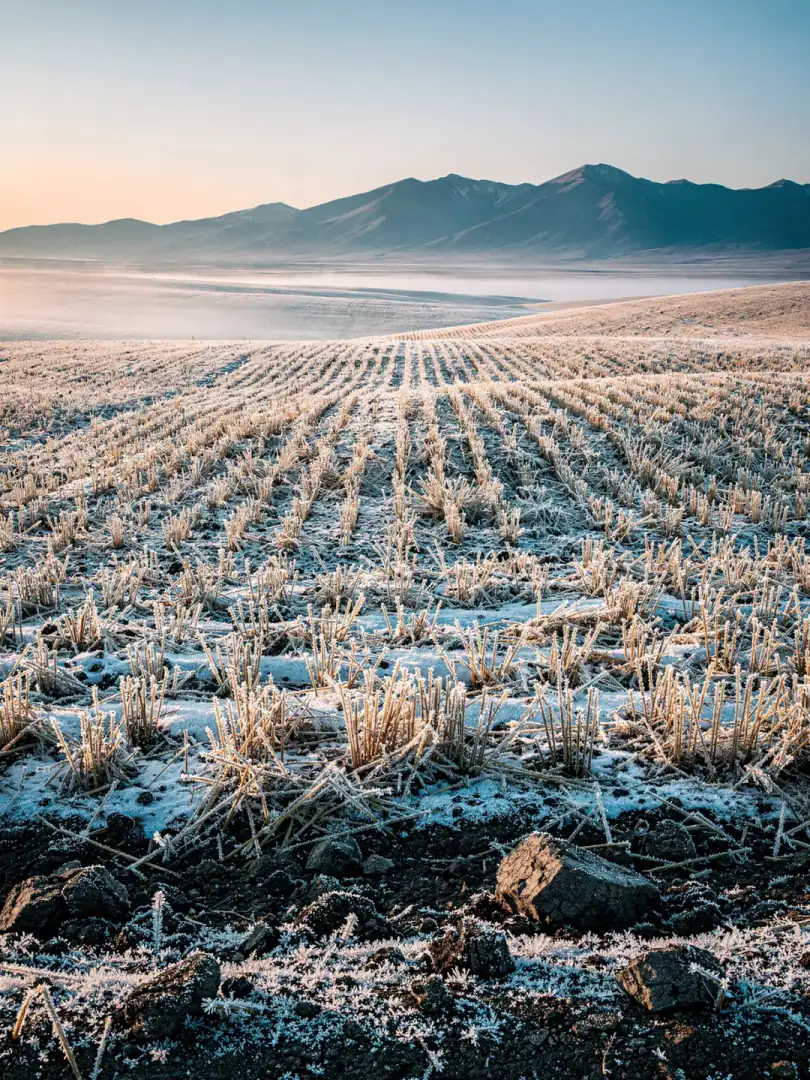
Anyone driving through the Kulunda Steppe in the Altai foothills in late summer will see wheat fields stretching to the horizon. Part of the grain that later becomes Siberian vodka comes from exactly this area. The soil here ranks among the most fertile in the world, deep black and rich in humus.
This chernozem, black earth in Russian, stores water and nutrients exceptionally well, which is crucial in a region with a short summer. Farmers have only a few frost-free months before temperatures drop below zero again. That's why hardy winter wheat varieties dominate here, sown in autumn and surviving under a blanket of snow before ripening quickly during the brief Siberian summer.
The maker of Mamont Vodka says it sources its white winter wheat from exactly this region rather than from distant grain belts. The grain is malted and fermented before passing through the column still, which comes up later on this journey.
The distillery in Mariinsk that produces Beluga vodka also advertises grain from the neighboring Altai region. According to the producer, the malt spirit is made from carefully selected regional grain, transported across the Eurasian steppe.
The result tastes different from a potato-based vodka, as is common in parts of Poland. Grain grown in cold, fertile black earth brings a dry, slightly earthy note that shapes Siberian brands right through to the tasting glass.
Potatoes grow less commonly in Siberia than in European Russia, since the short growing season favors grain. Rye does occur as well, but wheat from the chernozem remains the raw material that the region's best-known brands promote.
A deep black chernozem horizon, rich in organic matter from centuries of steppe grass.
The root: Stores water and nutrients for the short Siberian summer, directly available to wheat roots.