Grass & Tradition
Bison Grass and Żubrówka
A blade of grass in the bottle, a scent of freshly mown meadow and vanilla: bison grass vodka is one of the best-known members of the flavoured category. Its history stretches from Polish forests to a decades-long sales ban in the US.
What bison grass gives the vodka
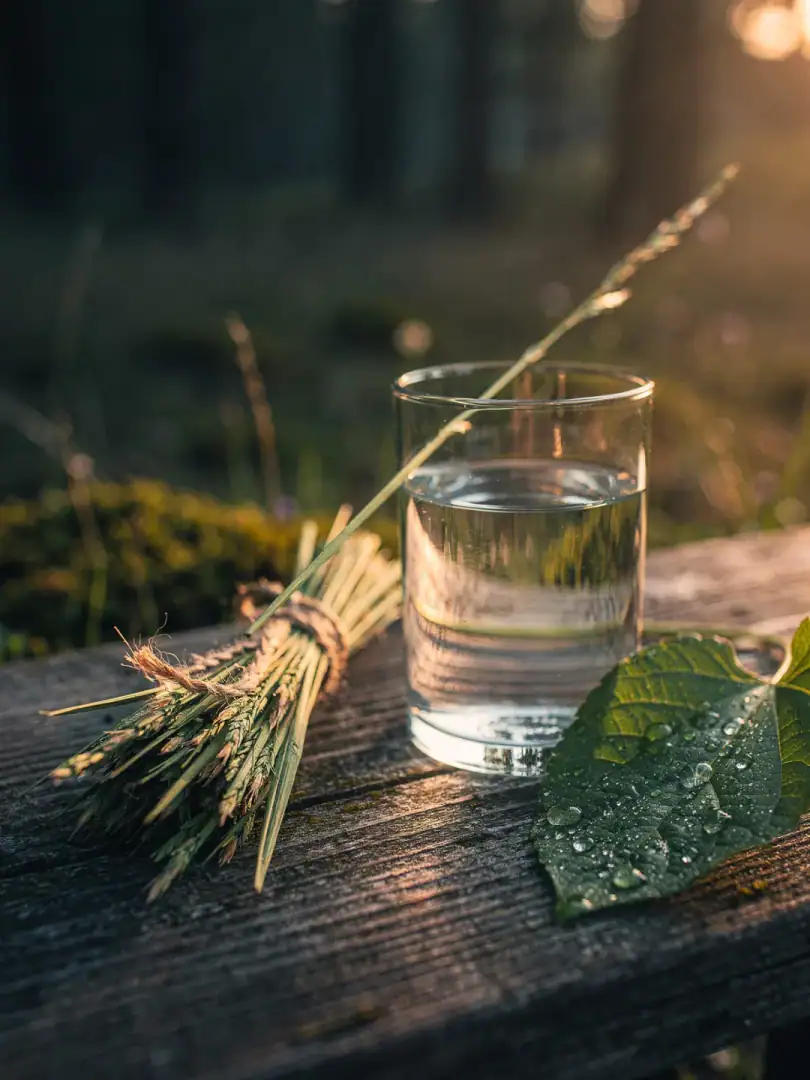
The grass that gives it its name, botanically Hierochloe odorata, grows wild at the edges of the Białowieża Forest in eastern Poland, where European bison once roamed the undergrowth. Dried blades give the distillate a scent of hay, vanilla and a hint of almond. Traditionally, a single blade of grass even sits inside the bottle, more a mark of recognition than a flavour necessity.
The characteristic aroma comes mainly from coumarin, a flavour compound the plant produces naturally. Coumarin tastes sweetly of hay but is considered a burden on the liver in larger amounts, which is why the EU caps its level in spirits at 10 milligrams per litre. Producers must meet this limit before the bottle can even reach the shelves.
Żubrówka: from folk drink to export brand
Under the name Żubrówka, this bison grass vodka has been produced in Poland since the 16th century, named after the European bison, Polish żubr, which lives in the same forest as the grass. What began as a regional speciality became an internationally known brand in the 20th century, one that made bison grass popular beyond Poland too, for instance as an ingredient in the apple cocktail Szarlotka, named after the Polish apple cake.
For decades, many drinkers across Central Europe knew Żubrówka as their very first encounter with flavoured vodka at all. The combination of a clean spirit and an almost herbal, faintly sweet note set it clearly apart from neutral vodka and paved the way for later flavours like lemon or pepper.
Why the bottle looks different in the US
In the United States, the regulator polices coumarin more strictly than the EU does and bans the substance entirely in food. The classic recipe with real grass extract was therefore off-limits for import for decades, even though the drink had long been considered safe in Europe and sold by the millions there.
Since 2011, there's been an American version that relies on a coumarin-free, artificially replicated flavour compound and comes without the blade of grass in the bottle. It comes close to the original in taste but remains, legally speaking, its own recipe. Anyone wanting to try the original bison grass vodka with a real blade is best off reaching for the European bottle.
Bison grass as a protected origin
Alongside the Żubrówka brand, there's an officially protected variant: Wódka ziołowa z Niziny Północnopodlaskiej, a herbal vodka from the North Podlasie Lowland, flavoured with bison grass extract. This designation is registered as a protected geographical indication in the EU and may only be used by producers from exactly this region following exactly this recipe.
This protection shows that bison grass vodka has long been more than just a single brand. It stands for an entire region with its own herbal tradition, where the flavour isn't added on afterwards but has been part of the recipe for centuries. Anyone reading the protected designation is buying not just any bison grass product, but one with documented origin.
Bison grass in the kitchen and the cocktail glass
Beyond being drunk neat, bison grass also turns up in the kitchen, for example flavouring cream sauces or desserts in Poland and Lithuania. Its scent of hay and vanilla pairs surprisingly well with apples, which is why many recipes combine the two. Dried leaves for a mild tea are common too, quite independent of the vodka.
In the cocktail glass, Żubrówka usually remains the leading ingredient rather than just a background note. Alongside the classic apple cocktail Szarlotka, bartenders today also mix the grass with ginger, pear or citrus fruits to deliberately highlight its hay-like sweetness. Serving it cold matters, since warmth quickly makes the coumarin note come across as overbearing rather than staying subtly in the background.
Anyone trying bison grass for the first time should start small. A small sip neat shows off the full aroma best. Only after that is it worth comparing it in a cocktail.