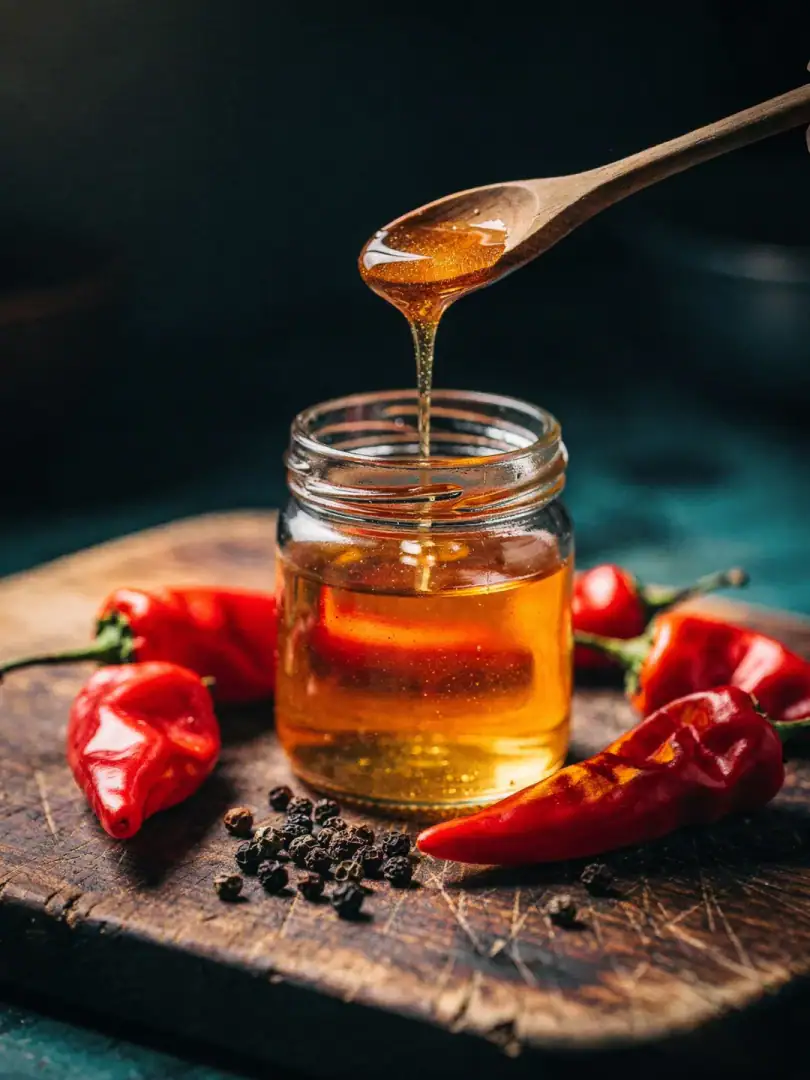
Heat & Sweetness
Pepper and Honey in Vodka
Fiery and sweet in one bottle: pepper and honey vodka are among Eastern Europe's oldest flavoured varieties. Both were long regarded as home remedies for colds before becoming spirit categories in their own right.
Pertsovka: Russia's fiery tradition
For centuries, Russian households have steeped red chilli peppers or black peppercorns in vodka, calling the result Pertsovka. The heat infuses into the alcohol within a few days, often accompanied by a slight reddish tint from the pepper. Traditionally, Pertsovka was drunk ice-cold and in small sips, not knocked back quickly.
During the Soviet era, Pertsovka was one of the few officially produced flavoured varieties and was even recommended as a home remedy for colds, a spoonful against a sore throat. This effect is not proven, but the idea still persists in many Eastern European families today, much like hot tea with honey does in German-speaking countries.
Honey-pepper vodka: two opposites in one glass
Combine pepper with honey and you get a spirit that deliberately plays heat and sweetness off against each other. The honey rounds off the heat without masking it completely, so that both flavours remain noticeable in the end. This style is especially common in Poland and Russia, where honey traditionally features in many spirits.
Depending on the recipe, the amount of honey shifts the legal classification: if the sugar content stays low, the drink counts as flavoured vodka; if it rises above the liqueur threshold of 100 grams of sugar per litre, it legally becomes a liqueur. Producers therefore have to think carefully about how sweet their honey-pepper vodka turns out before declaring it.
Why heat works in a cocktail
Pepper vodka made the leap from home remedy to cocktail bar, above all via the Bloody Mary. There, the vodka's heat meets tomato juice, lemon and spices, intensifying the drink's overall savoury character rather than just tacking on an extra note.
Pepper vodka also works neat, for anyone who wants their vodka not neutral but with some bite. Temperature matters here: well chilled, the heat feels rounder, while at room temperature it comes across sharper and sometimes unpleasantly hot.
Making your own: what to watch for
Pepper and honey vodka can also be infused at home, using neutral vodka, fresh chilli peppers or peppercorns, and a bit of honey. It's important to taste regularly, since chilli infuses faster and more strongly than many expect, sometimes just two days are enough for a noticeable kick.
The honey should only go in after the peppers have been strained out, so that sweetness and heat can be dosed separately. That keeps the mix controllable, and anyone who finds it too spicy can dilute it with plain vodka instead of tipping out the whole batch.
Regional variants from pepper to horseradish
Besides chilli and black pepper, some regions also use horseradish or ginger for spicy vodka infusions, giving a more earthy than fruity character. Such variants are especially common in parts of Scandinavia, where horseradish traditionally accompanies hearty food. The effect in the glass resembles pepper vodka but comes across less fruity-hot and more earthily sharp.
In Georgia and Ukraine, some home recipes combine honey with walnuts or dried fruit as well, giving the drink a nutty depth. These variants mostly stay family recipes and rarely make it into international trade. Anyone wanting to try them is most likely to find them at regional markets or small family-run producers, not on an ordinary supermarket shelf.
What unites all these variants is the idea of deliberately pairing heat with a second component, whether sweetness, earthiness or nuttiness. It's exactly this combination that sets pepper vodka apart from simply spicy alcohol and makes it its own small tradition within the flavoured category.