Aging in the barrel
Starka and aged vodka
Not every flavored vodka gets its character from fruit or herbs. Starka draws its character from the oak barrel and years of aging, a counterpoint to clear, young vodka.
What sets Starka apart from clear vodka
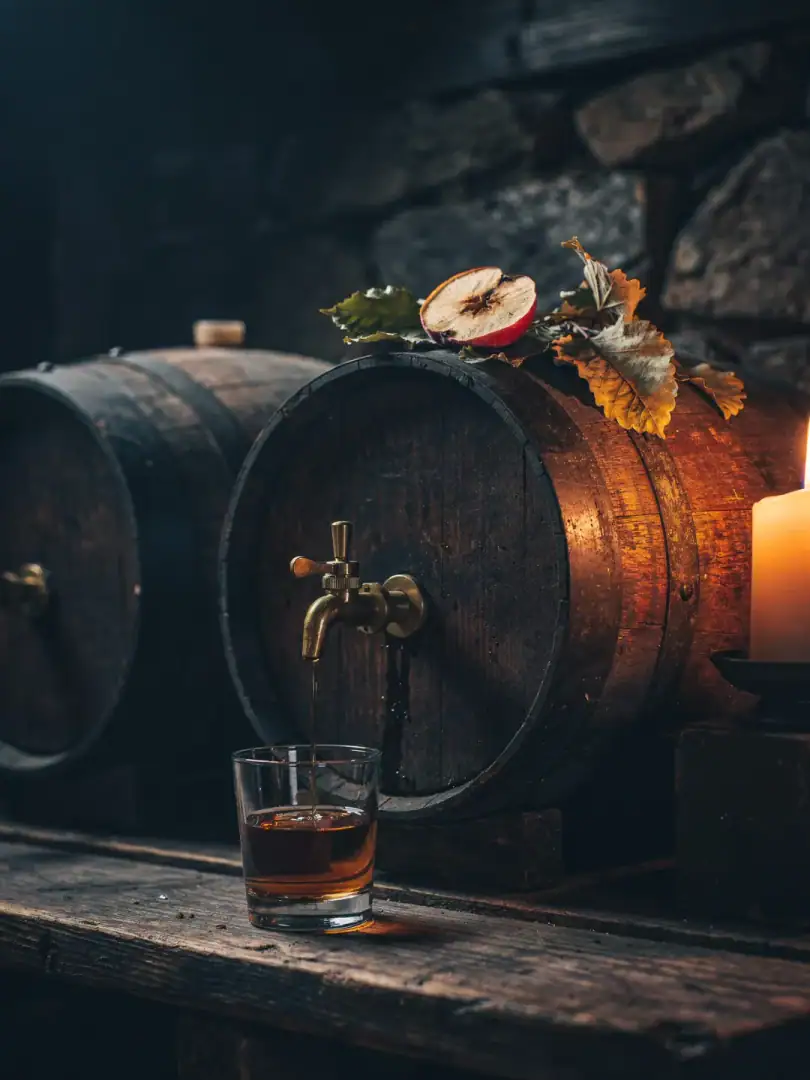
Over the years, this rye-distilled vodka ages in oak barrels, often alongside dried apple or linden leaves and sometimes a splash of wine or brandy: Starka. Barrel aging gives the distillate an amber tint and strips away the typical neutrality of clear vodka.
The name Starka means roughly “the old one” in several Slavic languages, a nod to the spirit's long aging. Unlike whisky, barrel aging in Starka is no contradiction to the vodka category, as long as the added flavorings still fall under the rules for flavored vodka.
A nearly lost tradition
Historically, Starka comes from the region of the former Polish-Lithuanian Commonwealth, where noble families, according to legend, would lay down a barrel at the birth of a daughter and open it only at her wedding. After World War II, traditional production largely fell into obscurity in Poland, while similar recipes lived on in altered form in the Soviet Union.
Only in the past two decades have Polish distilleries begun reviving old recipes and deliberately aging Starka in oak barrels again. The new bottles often carry an age statement on the label, much like Cognac or whisky, to showcase the long aging period.
How to drink aged vodka
Thanks to the barrel notes, Starka tastes rounder and more complex than clear vodka, with hints of vanilla, dried fruit, and a touch of tannin from the wood. Many people therefore drink it like a brandy, in small amounts at room temperature, rather than ice-cold in a shot glass.
Still, Starka also works chilled if it's meant to serve as an aperitif, since cold mutes the barrel notes and makes the spirit feel lighter. As with any aged drink, personal taste ultimately decides which temperature shows off the flavors best.
Why barrel aging remains rare
Barrel-aged vodka remains a niche overall, since the long aging period ties up capital and many brands focus on quick turnover. Vodka traditionally thrives on freshness and neutrality, not years of maturation, which is why only a few producers take on this concept.
For fans of aged spirits, Starka remains an intriguing borderline case nonetheless: it shows that the vodka category allows more room than the pure, clear image from advertising suggests, and that aging doesn't automatically have to remain the domain of whisky or rum.
Starka compared with other aged spirits
Starka isn't alone among aged vodka styles. Russia and Ukraine also have similar barrel-aged approaches. They usually go by different names and stay regionally limited. What they share is the idea of treating vodka like a spirit meant to age. That clearly sets them apart from everyday clear vodka.
The comparison to whisky is tempting, but stays imprecise. Whisky usually ages much longer and from different grains. Starka, by contrast, starts from a neutral rye distillate. Only the barrel gives it color and depth. In the end, it still remains in the vodka category.
For collectors, this exact blend is what makes it interesting. They get a vodka with whisky-like complexity. At the same time, the price is often lower than real whisky. That makes Starka an exciting entry point into aged spirits. Those who try it with an open mind discover a flavor world all its own.
Bartenders, too, are increasingly discovering Starka for cocktails. Its barrel notes pair well with rum recipes. So an old spirit finds its way into new contexts. Tradition meets current trends in the process.