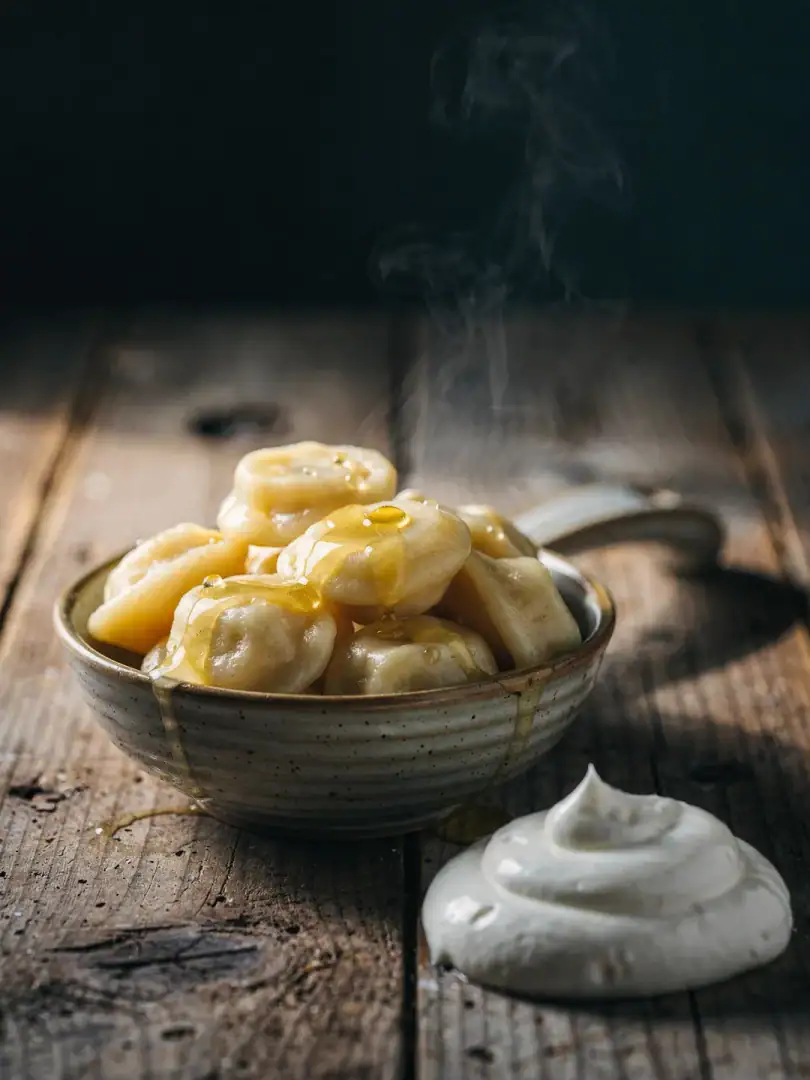
Warm dumplings
Pelmeni, pierogi, and warm dishes
Alongside cold bites, warm dishes belong on the vodka table: filled dumplings such as Russian pelmeni or Polish pierogi. This stop explores their origins, the difference between the two, and why warm dishes shape the evening differently than cold zakuski.
Pelmeni: little parcels from Siberia
Pelmeni are small dumplings, usually filled with minced meat, boiled in salted water and served with sour cream or butter. Their roots likely lie in the Urals and Siberia, with influences from Central Asia and Chinese cuisine, where similar filled dumplings have long been known. Their thin dough sets them apart from coarser dumplings. Good pelmeni can be recognized by dough that doesn't tear during cooking.
Traditionally, pelmeni were made in large batches during winter and frozen outdoors in the cold, a natural freezer for stockpiling. This large-batch production is why pelmeni are still regarded as a group meal today, often prepared together at one table. Whole families sometimes fold hundreds of pieces in a single afternoon.
Pierogi: the Polish relatives
Pierogi are larger than pelmeni and, instead of just being boiled, are often additionally pan-fried in butter. Fillings range from potato with quark to sauerkraut with mushrooms to sweet versions with berries, which are considered more of a dessert. The dough tends to stay a bit thicker than that of pelmeni. This makes pierogi somewhat more filling per piece.
In Poland, a strict distinction is made between savory and sweet pierogi, while almost exclusively savory versions are served with vodka. As with pelmeni, a bowl of sour cream is almost always part of the deal, often topped with fried onions or bits of bacon. Some restaurants serve several fillings on one plate at once.
Why warm dishes change the evening
Cold zakuski like pickled cucumber or speck can sit on the table for hours and suit an evening with many short courses. Warm dishes like pelmeni, on the other hand, call for a set moment, usually as a filling centerpiece partway through the evening. They need to come straight from the stove, or they quickly lose their appeal.
That's why pelmeni or pierogi tend to appear only after a few glasses have already been drunk and hunger for more than small bites starts to grow. They mark a turning point: from purely drinking with an accompaniment to a proper meal. After this point, drinking usually slows down.
More warm side dishes from the region
Alongside dumplings, cabbage rolls, fried potatoes with bacon, or a hearty soup like borscht all belong to the warm side of vodka cuisine. All these dishes share the same purpose: giving the evening substance once cold bites alone no longer suffice. One large bowl is often enough for the whole group.
For an evening at home, one warm item usually suffices, say, frozen pelmeni from an Eastern European grocery store, rounded out with the cold zakuski from earlier stops on this journey. How this all comes together into a complete plan is shown at the final stop of this journey. Elaborate homemade cooking isn't required for this.
Making your own or buying ready-made
Shaping fresh pelmeni and pierogi by hand takes time and practice. Many families gather especially for this and fold them together at the kitchen table. This often turns the preparation itself into a small celebration. Leftovers freeze easily and can simply be cooked later.
For a quick evening, frozen versions from an Eastern European grocery store work perfectly well. They cook in just a few minutes and, with butter and sour cream, taste almost homemade. Even experienced cooks often reach for the ready-made package for this reason. It barely changes the flavor of the evening.