The North drinks differently
Scandinavian smörgåsbord and snaps
In Northern Europe, it isn't vodka alone but often the related snaps that accompanies a large, cold buffet, the smörgåsbord. This stop shows how this buffet is arranged and what sets aquavit and snaps apart from classic vodka.
What makes a smörgåsbord
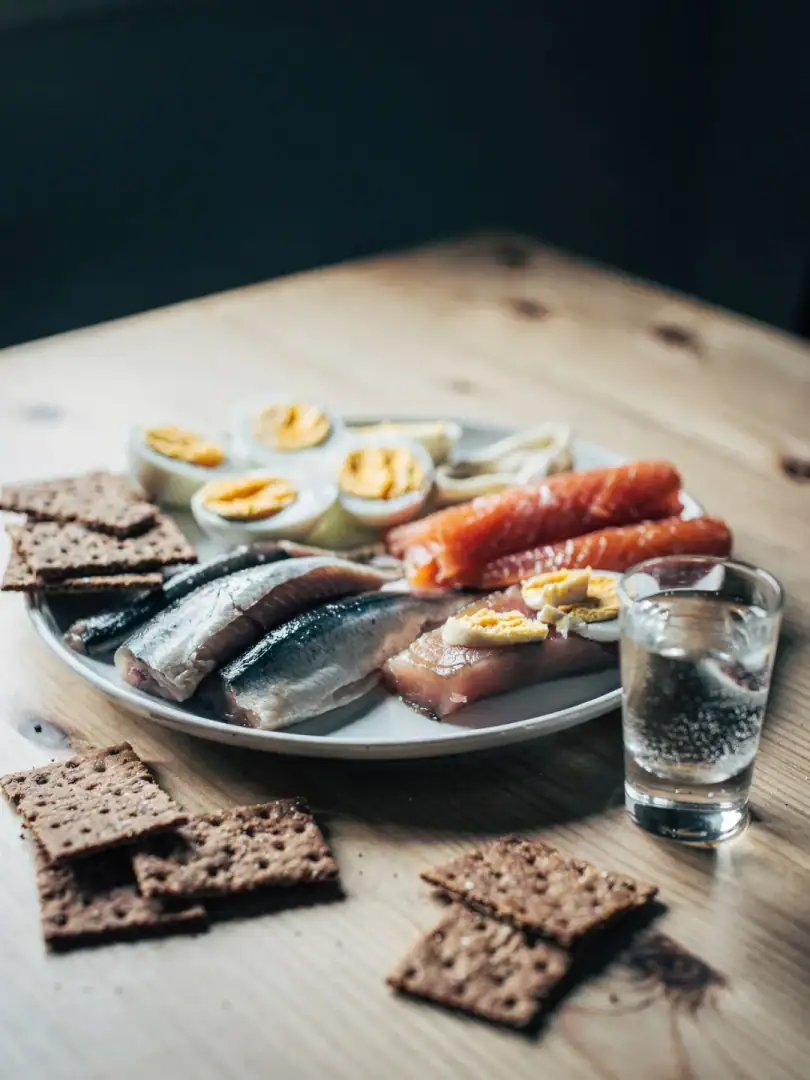
A smörgåsbord is a large, cold buffet from Sweden. Today it's laid out across Scandinavia for festive occasions such as Christmas or Midsummer. The table holds several types of herring, smoked salmon, cold roast, cheese, and various kinds of bread, all at once. Each guest serves themselves and assembles their own plate. Several small plates rather than one large one are considered customary here.
The order isn't random. You start with fish, move on to cold meat and egg dishes, and finish with cheese and sweet accompaniments. A small glass of snaps can be poured for each of these courses, often flavored to match the dish. Anyone who mixes up the order quickly marks themselves as a beginner at the table. Experienced guests often recognize the sequence just from a glance at the spread.
Aquavit and snaps: vodka's relatives
Aquavit, like vodka, is usually distilled from grain or potatoes. Afterward, spices such as caraway, dill, or anise are added, giving it a notably bolder character. In Scandinavia, snaps is more of a way of drinking than a fixed spirit. It refers to any short, ice-cold sip from a small glass, whether aquavit or clear vodka.
The difference from Eastern European vodka drinking lies mainly in the flavoring. Russian and Polish vodka usually stays neutral. Many Scandinavian snaps, by contrast, carry their own distinct spice character from the outset, chosen to match the particular fish dish. Dill aquavit with herring is a well-known example. Tasting both styles side by side, the difference is immediately obvious.
Drinking songs and set rituals
In Sweden, smörgåsbord is often accompanied by short drinking songs known as snapsvisor. They're sung before everyone drinks together. Only after the song and the toast of skål, meaning roughly "cheers", is the glass emptied. Anyone who drinks too soon is gently called out by the group. Some songs last only a few seconds, others stretch over several verses.
This ritual resembles the Russian toast before each glass, even though the content and tone sound completely different. In Scandinavia, communal singing tends to take center stage. In Russia and Poland, a short, often personal toast matters more. Both rituals, however, slow down the pace of drinking in a similar way.
What can be recreated at home
A full smörgåsbord takes preparation and plenty of ingredients. But even a small selection, two kinds of herring, smoked salmon, and crispbread, conveys the character of this tradition. Chilled aquavit or a neutral vodka in small glasses pairs well with it.
Comparing the Scandinavian and Eastern European zakuski traditions reveals the same basic idea behind different seasoning choices. Both rely on cold, salty, or sour dishes as a fixed part of an evening with a high-proof drink. Neither tradition treats the food as a mere afterthought to the drink.
Cheese and sweets to finish
A smörgåsbord usually ends with cheese, often paired with lingonberry preserve or mustard fruits. Sometimes a sweet pastry or berry compote follows. With this final course, people usually drink only coffee, no more snaps. The shift from savory to sweet happens smoothly.
This clear sequence sets the smörgåsbord apart from a purely drinking-focused evening. It remains a meal with a drink alongside it, not drinking with food alongside it. This exact balance is what many guests find so appealing about the Scandinavian table. Anyone who reaches the cheese too early easily misses one of the earlier courses.