The whole process
How is vodka made?
Vodka is made from fermentable starch or sugar, usually grain or potatoes. A mash is fermented, distilled multiple times, and usually filtered, until what remains is pure, almost flavorless alcohol, which is finally diluted to drinking strength.
From raw material to mash
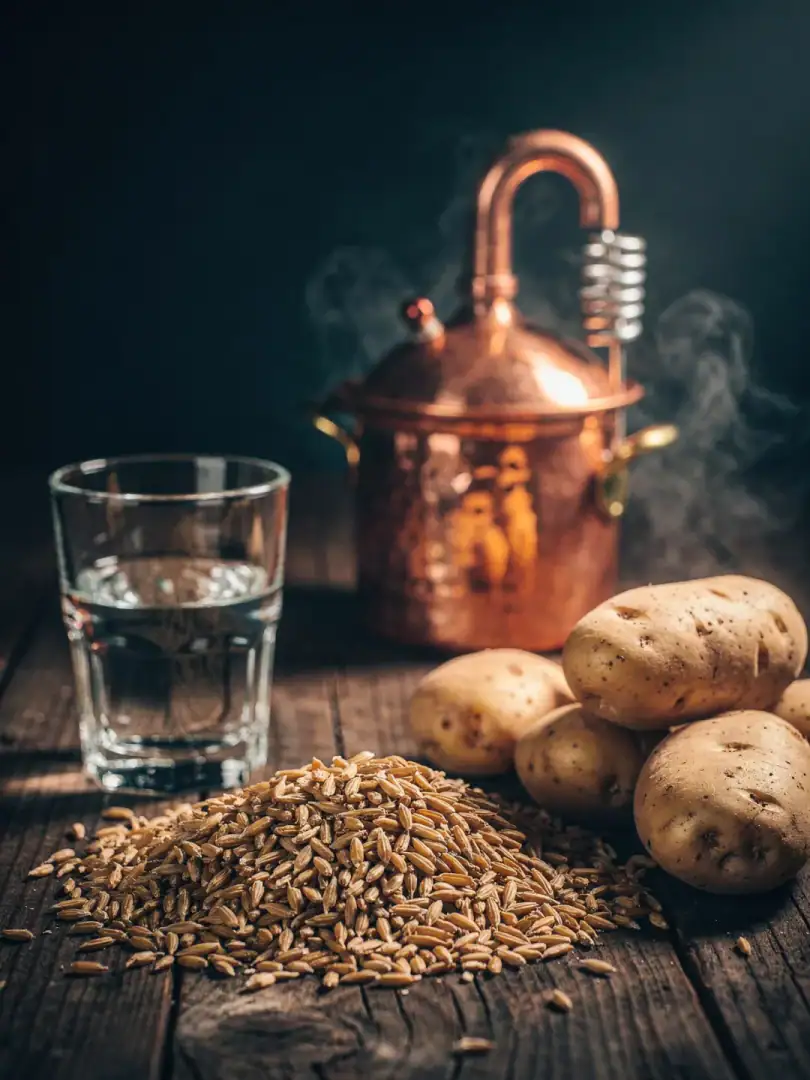
At the start is a raw material that provides starch or sugar. In Eastern Europe this is usually rye, wheat, or potatoes, in France sometimes grape residues, in the USA often corn. Some smaller distilleries also use sugar beets or whey, as long as enough fermentable sugar or starch is present. The EU Spirit Drinks Regulation (EU) 2019/787 allows almost any agricultural raw material for vodka, but requires labeling if it doesn't come from grain or potatoes.
Starch cannot be fermented directly, yeast needs sugar. That's why the milled grain or crushed potato is mixed with water and enzymes and heated. The enzymes break the long starch chains down into simple sugar. The result is called mash: a pulpy, slightly sweet liquid that serves as a growth medium for fermentation. Without this step, the yeast in the next stage would essentially have nothing to feed on.
Fermentation turns sugar into alcohol
Yeast is added to the cooled mash. The yeast metabolizes the sugar and releases alcohol and carbon dioxide in the process, a process also used in beer and wine production. After two to four days, the sugar is largely used up, and what's left is a so-called wash with seven to ten percent alcohol. How quickly this happens depends heavily on temperature and yeast strain.
This wash doesn't yet taste like vodka, but rather like mild, cloudy beer. Besides alcohol, it also contains fusel oils, esters, and other fermentation byproducts that would give the drink flavor. For vodka this is undesirable, since the goal is the purest, most neutral alcohol possible. It's precisely these byproducts that the subsequent distillation separates out.
Distillation separates alcohol from the rest
The wash is heated until the alcohol evaporates, well before the water boils. The vapor is collected and liquefied again, with the alcohol content rising with each pass. Classic pot stills achieve this over several runs, while modern column stills reach high purity in a single, continuous pass. Both paths technically lead to the same goal, just with different amounts of effort.
At the end of rectification, the fine distillation in the column, the result is alcohol with up to 96 percent alcohol by volume. This is nearly pure ethanol, with practically no inherent flavor. It's exactly this neutrality that distinguishes vodka from whisky or rum, which deliberately work with a less pure, flavor-carrying distillate. The next stops on this journey go into both distillation methods in detail.
Filtering, diluting, bottling
Before bottling, the high-proof alcohol usually passes through a filter, often activated charcoal. It's meant to bind any last traces of flavor and cloudiness, though its benefit is limited when the starting distillate is already very pure. Some producers additionally filter through quartz sand or silver, mainly as a selling point. How effective such additional filters are depends heavily on the alcohol they start with.
Finally, the alcohol is brought to drinking strength with treated water. The EU requires vodka to have at least 37.5 percent alcohol by volume, though many brands bottle at 40 percent. After a short resting period to let the mixture settle, the finished vodka is bottled and sealed. Only this final step turns pure industrial alcohol into a drinkable end product.
Why the process is similar worldwide
However different individual distilleries may look, the basic principle remains the same worldwide: ferment, distill, filter, dilute. Whether in a small craft distillery in Poland or a large industrial plant in the USA, every operation pursues the same purpose. An agricultural raw material is meant to become the purest possible alcohol.
The following stops on this journey go through exactly these steps one by one, from the mash through both distillation methods to the question of how much substance is really behind the numbers on the label. Once you understand the basic principle, you'll recognize the same technical logic in every bottle of vodka.