Creamy and Traditional
Potato Vodka
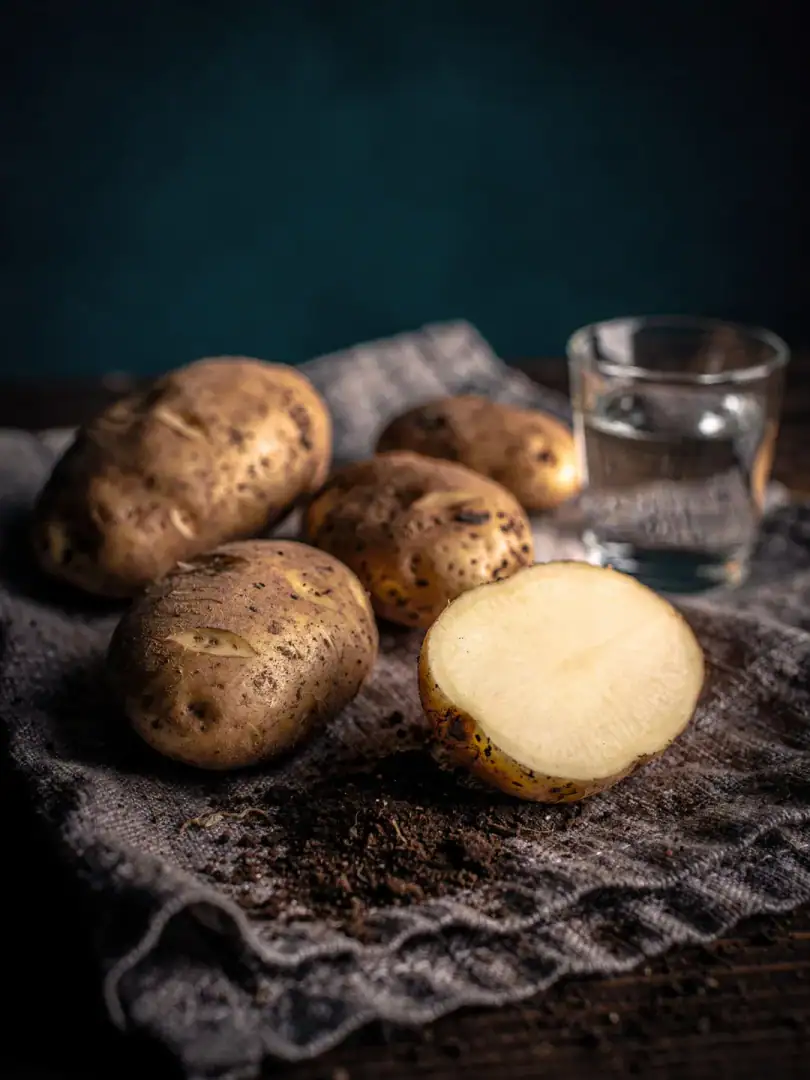
Potato vodka is considered the most traditional, and at the same time the most labor-intensive, raw material path. A ton of potatoes yields less alcohol than the same amount of grain, but the tuber brings a creamy, oily mouthfeel to the finished spirit. This stop explores why potato vodka still has its devoted following.
Why Potatoes Are More Demanding
A ton of potatoes yields noticeably less alcohol than the same amount of grain. The reason: potatoes consist largely of water, and their starch content is comparatively low. To obtain the same amount of alcohol, a distillery needs correspondingly more raw material, more storage space for the perishable tuber, and more energy for processing. Historically, this paid off mainly where potatoes grew in abundance and grain was scarce or more valuable, for example in parts of Poland, Germany, and Scandinavia. The growing cycle is another factor: potatoes are harder to store over many months than dry grain, which forced many distilleries to produce seasonally and within shorter windows.
Even today, potato vodka is therefore usually more expensive to produce than grain vodka, both in raw material costs and in the energy needed for storage and transport. Brands that stick with it anyway market this explicitly as a promise of quality rather than a drawback, emphasizing the extra effort as part of their brand story. Anyone taking on this added effort today does so almost entirely out of conviction, not economic necessity.
The Creamy Mouthfeel of the Tuber
Potatoes contain different fatty acids and sugars than grain, and these show up in the texture of the finished vodka. Tasters often describe potato vodka as heavier and oilier on the tongue, with a slightly earthy, sometimes nutty undertone. The effect shows up more strongly in the mouthfeel than in the actual aroma. That's why it partly survives even in very pure vodka, and even experienced tasters tend to judge it by texture rather than scent. Some producers deliberately amplify this effect by rectifying less intensively, leaving the vodka with more of its original character.
This weight on the tongue is what most clearly distinguishes potato vodka from the lighter grain varieties. Anyone wanting to really taste the difference between raw materials for the first time often reaches for potato compared directly against wheat, since the contrast here is greater than between two different grains.
Traditional Origins in Poland and Germany
In Poland, potato vodka ranks alongside rye as one of the two historic standard varieties. It, too, falls under the protected designation Polska Wódka, provided the potatoes come from Polish farms and the entire processing takes place within the country. In Germany, the tradition of potato distilling reaches back to the 19th century, when many rural regions processed surplus potato harvests into alcohol, partly for personal use, partly for sale at urban markets. Well-known potato vodka brands from both countries still use traditional varieties bred specifically for a high starch content, rather than ordinary table potatoes.
This agricultural origin, rather than a factory one, remains central to the image of many potato vodka brands and is emphasized accordingly in their marketing, often with images of fields and harvest time rather than distillation columns. For many buyers, the word "potato" alone feels more artisanal and down-to-earth than an anonymous grain blend, an impression that advertising deliberately plays into.
Potato Compared with the Next Stop
Where potato stands for weight and earthiness, the next stop heads in a different direction: corn produces a noticeably lighter, often slightly sweet vodka. It also raises a question many buyers wonder about, namely whether it's suitable for a gluten-free diet, and how much truth there is to that claim. This shift in raw material also marks a shift in continent: where potato and rye represent Europe, corn is above all associated with one country, the United States.