Corn and Gluten
Is Corn Vodka Gluten-Free?
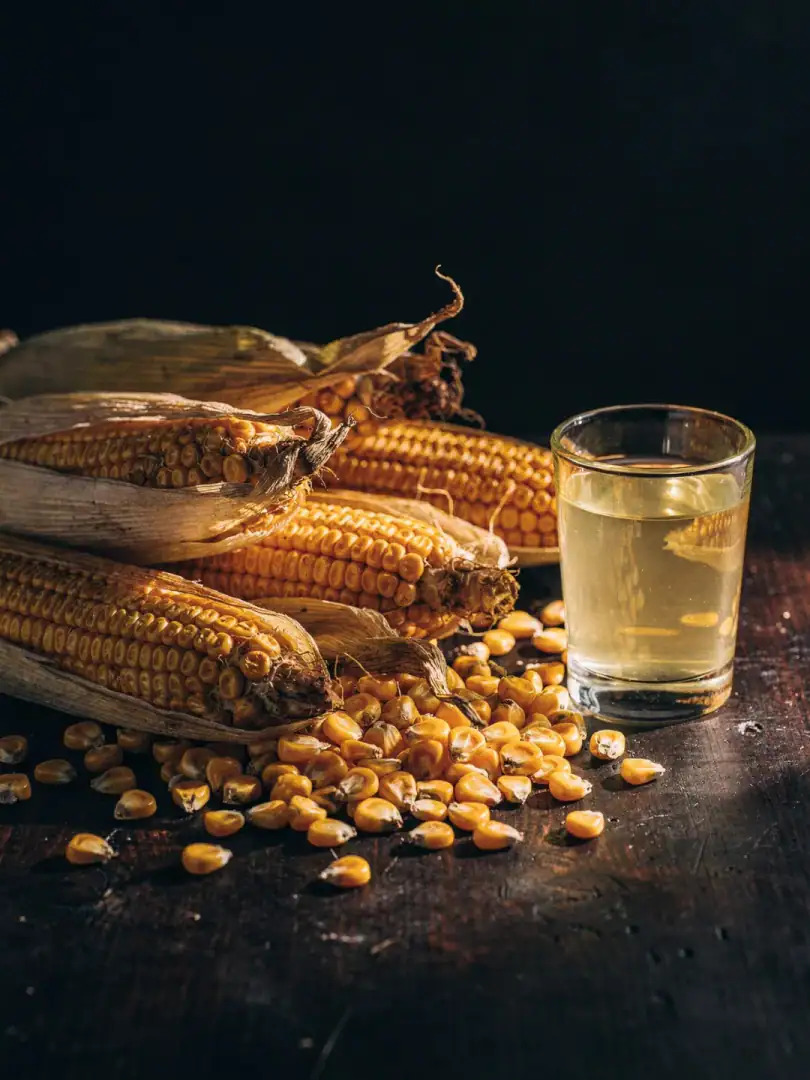
Corn is the most important vodka raw material in the US and lends the spirit a light, slightly sweet note. Because corn is botanically gluten-free, corn vodka is often marketed as a gluten-free option. This stop explains what's true about that claim and what distilled alcohol actually has to do with gluten.
Corn as America's Standard Raw Material
In the US, corn is the obvious raw material for vodka, thanks to its large-scale cultivation and low price. Well-known American brands explicitly advertise domestically grown corn, often paired with imagery of family farms and regional agriculture in the Midwest. In terms of flavor, corn tends to bring a light sweetness, more subtle than wheat, without the spicy edge of rye or the weight of potato. Because cultivation in the US is highly industrialized, corn prices usually sit well below those of wheat or rye. Major brands often pass this cost advantage directly on to consumers.
Legally, US vodka is governed by 27 CFR Part 5: neutral spirits must be distilled at a minimum of 190 proof, or around 95 percent. It is bottled at a minimum of 80 proof, or 40 percent, with no distinctive character, aroma, taste, or color. The law doesn't specify which raw material must be used—corn is simply the most economical choice in a country that grows more corn than any other. This neutrality requirement applies regardless of the raw material and explains why American vodka tends to taste more restrained on average than many European varieties.
Why distilled alcohol contains almost no gluten anyway
Distilled alcohol contains virtually no gluten left, regardless of the grain it comes from. The protein responsible doesn't evaporate during distillation and stays largely in the solid residue, which is either discarded after distillation or used as animal feed. Even vodka made from wheat or rye is therefore considered, from a scientific standpoint, practically gluten-free once distilled. Celiac disease associations generally classify distilled spirits made from gluten-containing grains as safe. This holds true as long as no gluten-containing ingredients, such as malt syrup or flavorings, are added after distillation. This scientific consensus is supported, among other things, by analyses that failed to detect relevant traces of gluten in distilled spirits even with highly sensitive testing methods.
Corn vodka therefore rarely offers a genuine chemical advantage over grain vodka. But it does eliminate any uncertainty from the start: where no gluten-containing grain is processed, there's no need to worry about cross-contamination in production or about flavorings added afterward that could, in some cases, still contain traces of gluten.
Who the difference still matters to
People with diagnosed celiac disease or strong gluten sensitivity often prefer gluten-free raw materials like corn, potato, or grape as a precaution. This holds true even when the scientific data on distilled grain vodka is reassuring. This caution is understandable, since cross-contamination during production or unclear additives can never be entirely ruled out, especially with flavored varieties containing added flavorings. In restaurants and bars that pay attention to gluten-free options, corn vodka therefore appears on menus more often than wheat vodka, even though the actual difference in the finished drink is minimal.
For everyone else, the choice between corn and grain vodka is primarily a matter of taste, not health. The label reading gluten-free often means something different from what it implies legally and scientifically. Those who are unsure will find an explicit gluten-free notation on many labels these days, going beyond a simple statement of raw material and signaling additional testing by the producer.