Soft and Pure
Wheat Vodka
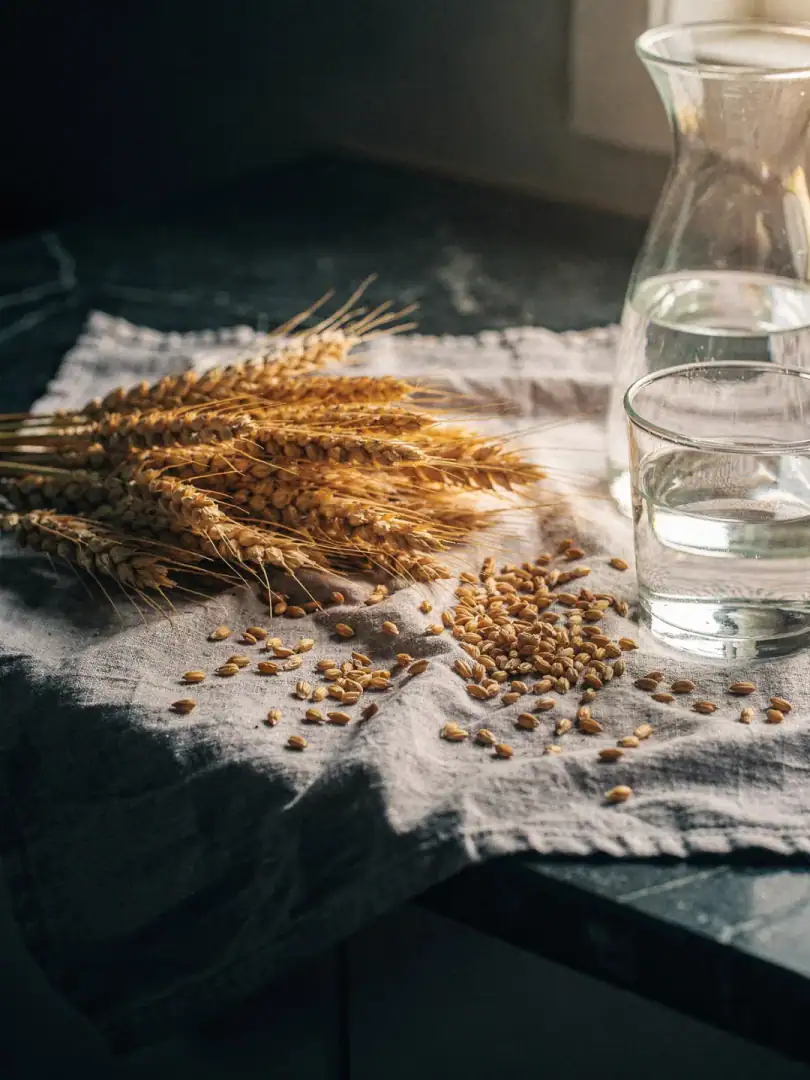
Wheat produces arguably the softest, roundest vodka of all. The grain is richer in starch and lower in protein than rye, making it easy to ferment into a very pure alcohol. This stop explains why many well-known premium brands rely on wheat and how it differs from rye and potato.
Why Wheat Ferments So Easily
Wheat kernels contain plenty of starch and comparatively little protein and fat. That makes them ideal for a clean fermentation. Yeast converts the starch almost entirely into alcohol without producing many by-products that would later have to be laboriously distilled out. For distilleries, that means a more efficient process, less waste, and an alcohol that carries fewer rough edges from the very start than, say, a rye or potato mash. This also shows up in shorter fermentation times.
This advantage has made wheat the preferred raw material for many international premium brands, from Sweden to France. Where efficiency and an especially smooth result matter, the choice often falls on wheat over rye or potato, particularly among brands that produce in large volumes worldwide and must guarantee consistent quality. In Germany and Austria too, wheat ranks alongside potato as one of the most common raw materials for grain spirits and vodka.
The Difference Shows Up in the Finish
Compared directly with rye, wheat vodka often comes across as rounder and slightly sweet, with a gentler finish rather than a peppery bite. Some tasters describe a subtle note reminiscent of vanilla or fresh pastry, though it only remains noticeable in less heavily rectified versions. At very high purity, wheat and rye vodka become much more similar, so the difference really only comes through in traditionally distilled labels.
Mouthfeel often differs more noticeably than the actual flavor: wheat vodka is frequently described as silkier and less oily than potato vodka, but also less bold than a traditionally distilled rye vodka. It's precisely this silky feel on the tongue that leads many bartenders to prefer wheat vodka for cocktails where the alcohol shouldn't dominate. When tasting vodka neat, most people only notice the difference on the second or third sip, once the tongue has adjusted to the alcohol's sharpness.
Wheat in Well-Known Brands
Several internationally known labels explicitly build on wheat, often as a selling point for purity and consistency. Swedish producers, for instance, promote homegrown winter wheat from the same region where the distillery is located, presenting origin and flavor as one unified story. French brands likewise cite wheat from their own breadbasket as an argument for softness and an especially clean flavor profile. In the US, individual craft distilleries apply the same principle with locally grown wheat, setting themselves apart from the corn vodkas that dominate the mass market.
Such producer claims are marketing, not independent verification. But they do accurately describe a real property of wheat: a reliably neutral, easily fermentable raw material suited to a smooth end product, one that leaves little room for error in production.
Wheat as a Starting Point for Comparison
Because wheat vodka is considered especially neutral, it often serves as a reference point in tastings: rye is compared against it for its spiciness, potato for its creaminess, and corn for its subtle sweetness. Anyone wanting to understand the differences between raw materials therefore often starts with a simple wheat vodka as a baseline and works outward toward the bolder variants from there. This comparative logic also explains why many tasting flights begin with wheat before moving on to more unusual raw materials such as grape or molasses. Such comparisons also reveal just how strongly expectation and labeling can shape a taster's first impression.