Sweet and unusual
Vodka from grapes, fruit, and molasses
Not every vodka comes from a grain field. Grapes, apples, and above all molasses from sugar production have supplied a substantial share of the world's vodka output for decades. This stop explains why these raw materials gained importance and where they differ from the classic grain base.
Grape vodka as an unusual special case
The best-known example sits on every supermarket shelf. Cîroc, from France, is distilled from grapes—specifically the white wine varieties Ugni Blanc and Mauzac Blanc. The bottle therefore carries a note about the raw material, exactly as the EU regulation requires for vodka not made from grain or potatoes.
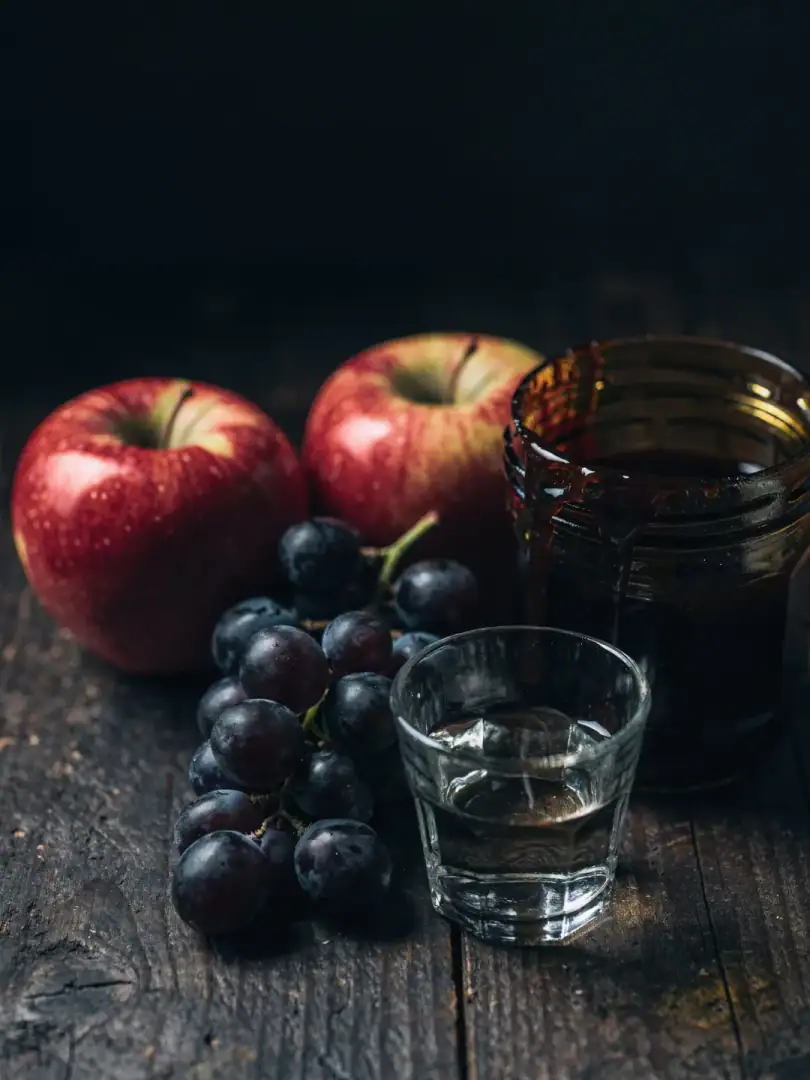
Grapes are normally associated with wine or Cognac, yet the same fruit can just as easily be fermented and distilled into vodka. A handful of well-known French brands deliberately choose grapes over grain. In doing so, they aim to set themselves apart from the classic Vodka Belt tradition and to emphasize a particularly smooth base reminiscent of wine. Under EU law, this is permitted without restriction, as long as grapes are clearly stated as the raw material on the label. This choice is also a deliberate signal to a target audience that treats wine and spirits similarly and values a recognizable agricultural origin.
In terms of taste, grape vodka often carries a delicate, barely perceptible fruitiness, which largely disappears with very high rectification. The difference from grain vodka therefore lies more in marketing and texture than in a clearly noticeable aroma. Its origin story rooted in winemaking leads many buyers to expect something different at first. A simple price comparison reveals little here, since grape vodka isn't automatically sold at a higher price despite the elaborate fruit base.
Molasses: the unassuming mass-market raw material
When sugar is produced from sugarcane or sugar beet, a thick, viscous residue remains: molasses. Because it's cheap, available worldwide, and easy to ferment, many large, budget-friendly vodka brands use it as their base—often without prominently advertising the fact.
The same labeling requirement applies to molasses vodka as to grape vodka: if no grain or potato is used, the actual raw material must appear on the label. Anyone who reads the fine print can easily tell whether a cheap vodka comes from grain or from sugar leftovers, even though the two are often nearly indistinguishable in taste. For consumers who care about origin, it's therefore always worth glancing at the back of the bottle rather than just the big logo on the front.
Fruit vodka: between niche product and label trickery
Apple, pear, and other fruit vodkas are rarer than grain or molasses versions, but they turn up mainly at Nordic and Central European niche distilleries, often as small special editions alongside the core range. Such editions tend to target collectors and connoisseurs rather than everyday cocktail use. Unlike a fruit brandy, fruit vodka doesn't put fruit aroma front and center—the focus remains on neutral distillation, with the fruit merely supplying the fermentable sugar.
It's important to distinguish this from flavored vodka: there, neutral grain or potato alcohol is flavored afterward with fruit aroma, whereas genuine fruit vodka derives its alcohol directly from the fruit. Both versions may taste of the named fruit, but only one actually fermented that fruit—a distinction that must be reflected legally in the precise designation.
Why these raw materials still matter
Grapes, fruit, and molasses show that vodka, despite its reputation as a purely grain-based drink, allows for a wide range of raw materials. In the end, quality depends less on the starting fruit than on the care taken during fermentation, distillation, and water addition—the subject of the next stop on this journey. Anyone torn between two similarly marketed bottles at the store will therefore find the truly decisive information less often in the raw material than in production details that rarely take center stage.