Softened by water
Water in vodka
Alongside alcohol, vodka consists mostly of water—often more than many buyers assume. The quality of this water affects smoothness and mouthfeel at least as much as the grain or potato content. This stop shows how filtration and water source change the result in the glass.
Why vodka is mostly water
After distillation, alcohol sits at around 96 percent, far above any drinking strength and unsuitable for direct consumption. Only through the deliberate addition of water does the alcohol content drop to the usual 37.5 to 40 percent, sometimes a bit higher in certain countries. Depending on the final strength, water therefore makes up well over half of the bottle's contents, even though labels almost exclusively advertise the alcohol's raw material and leave the water unmentioned. For most laypeople, this comes as a surprise. In the public imagination, vodka is associated almost entirely with its solid raw material, rarely with a liquid that remains invisible at first glance.
This dilution isn't watering down in the negative sense, but a necessary production step. Without it, vodka in its sold form would hardly be drinkable at all, instead behaving like a high-proof industrial alcohol that irritates the mucous membranes rather than delivering enjoyment.
Why some brands promote their water source
Some producers, especially from Scandinavia and the Baltics, make their water source a central selling point. One Finnish brand has advertised glacier water from its own underground aquifer for years; an Icelandic distillery uses spring water from volcanic rock. These producer claims are rarely independently verifiable, but they aim at a real effect: soft, low-mineral water tends to yield a rounder vodka than hard, lime-rich tap water. Such geographic selling points deliberately echo the emphasis on origin found in winemaking, even though vodka, as a neutral spirit, isn't actually known for terroir.
Water high in calcium or magnesium can make the finished vodka taste slightly metallic or harsh. That's why most large distilleries rely on elaborately treated, demineralized water anyway, regardless of whether the origin story appears on the label or not. Otherwise, fluctuations in water quality would directly affect every batch. This control over water quality is regarded within the industry as one of the most reliable ways to ensure consistent flavor across years and across different production sites.
Filtration through birch charcoal and other materials
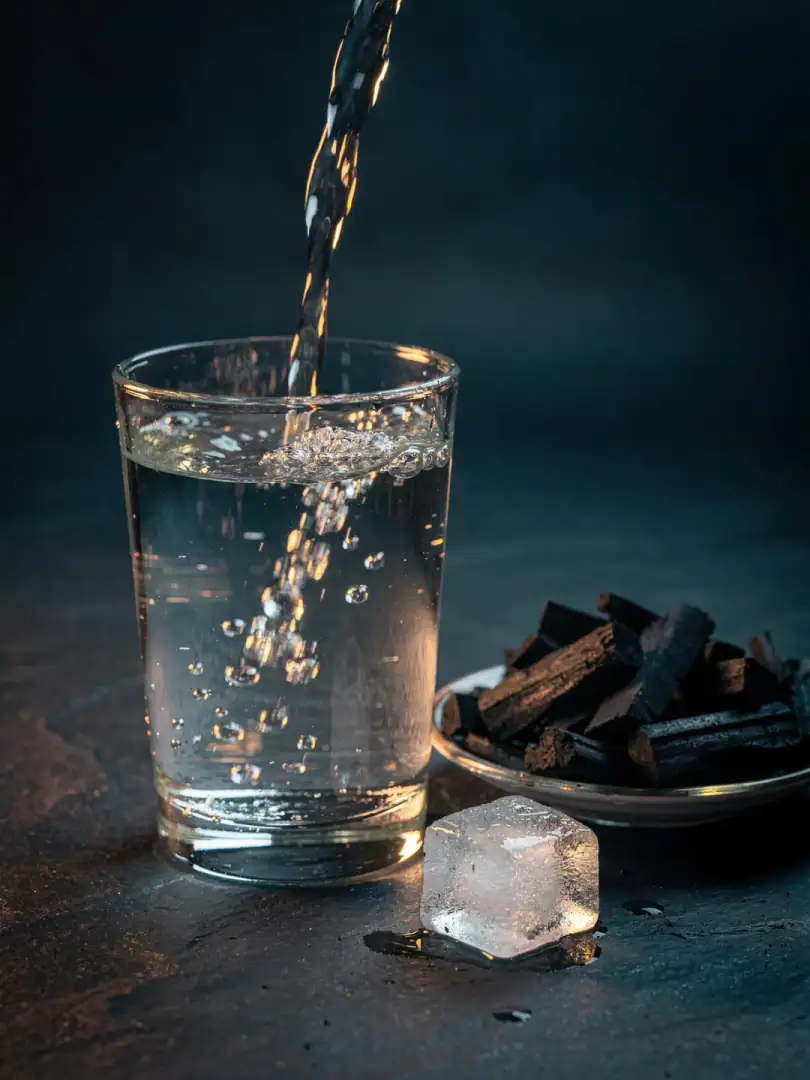
Besides water quality, filtration after dilution also shapes many traditional recipes. In Russia and Eastern Europe, distilleries often filter diluted vodka additionally through birch charcoal, a process meant to bind impurities and further smooth out the flavor. Other producers use quartz sand, silver ions, or multiple stages of charcoal filtration, similar to household water filters, just on an industrial scale. The number of filtration passes is also often cited as a mark of quality—say, filtered five or seven times—even though the added effect becomes barely measurable after the first few passes.
How much such filtration methods actually change the flavor is a matter of debate among experts. What's undisputed is that they form part of the brand story for many vodkas and are frequently cited in advertising as a mark of quality, even though the effect isn't always clearly demonstrable in blind tastings, and some perceived differences owe more to expectation than to the tongue.
Water as the link between East and West
Whether a vodka leans more toward the eastern or western style depends heavily on the distillery. Some place value on a visible raw-material and water character, others commit consistently to complete neutrality. Water thus forms something like the quiet bridge between both traditions: unassuming, yet equally decisive in every bottle. This very contrast is the focus of the next stop.