Potato, Grape, Whey
Raw Material
Potatoes, grapes, maple sap, whey: in Idaho, California, and Vermont, the raw material for vodka doesn't grow in the same field. Each region uses what grows right on its doorstep. A single grain, the way rye or wheat dominates in Eastern Europe, is rarely the rule in the American craft scene outside Texas.
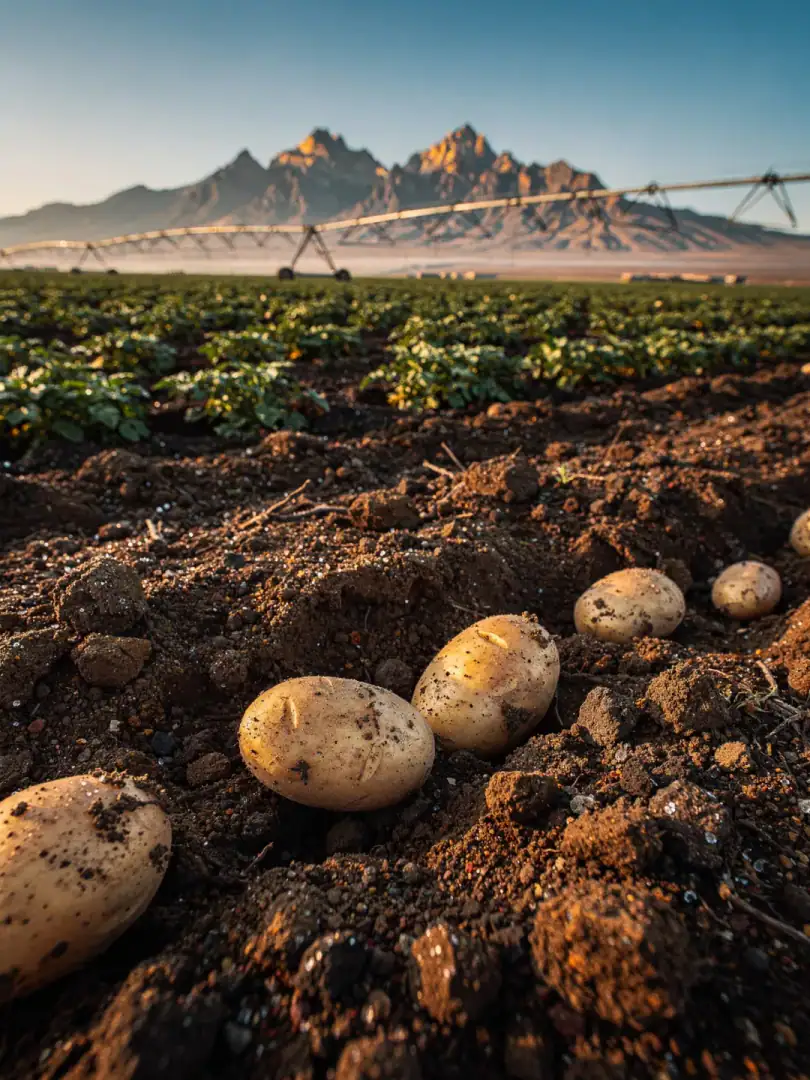
Around the small town of Shelley and in the Teton Valley, distilleries like 44° North and Grand Teton Distillery grow their own potatoes, mostly Burbank and Russet varieties. The soil of the Snake River Plain consists of fine, wind-blown loess over volcanic basalt rock, a legacy of ancient lava flows. The loose topsoil lets the tubers grow round and even. The porous rock beneath drains water quickly, which is why the fields depend on irrigation from the Snake River Aquifer. Potato mash is also starchier and more viscous than grain mash, which demands extra effort during mashing.
In Alameda, near San Francisco, Hangar 1 distillery takes a different route. Viognier grapes are distilled in a copper pot still. A neutral wheat spirit from the column still is then added. Only the blend of both streams produces the finished vodka, with a subtle fruity note that comes from the grape rather than the grain.
In Vermont, Vermont Spirits distillery uses a raw material that otherwise ends up down the drain at cheesemaking plants: whey. It's the lactose-rich byproduct of cheesemaking from local dairies. Fermented and distilled, it yields a vodka the distillery markets as Vermont White. The name is a nod to the milk the whey originally came from.
fine, wind-blown silt soil with traces of volcanic ash
The root: Loose enough for the potato to grow round and flawless.