Six Times Through Copper
Distilling & Rectification
It starts with a mash of yellow corn, water, and yeast. It ferments for several days until it becomes a milky, slightly sweet liquid with a low alcohol content. Only then does the actual distilling begin.
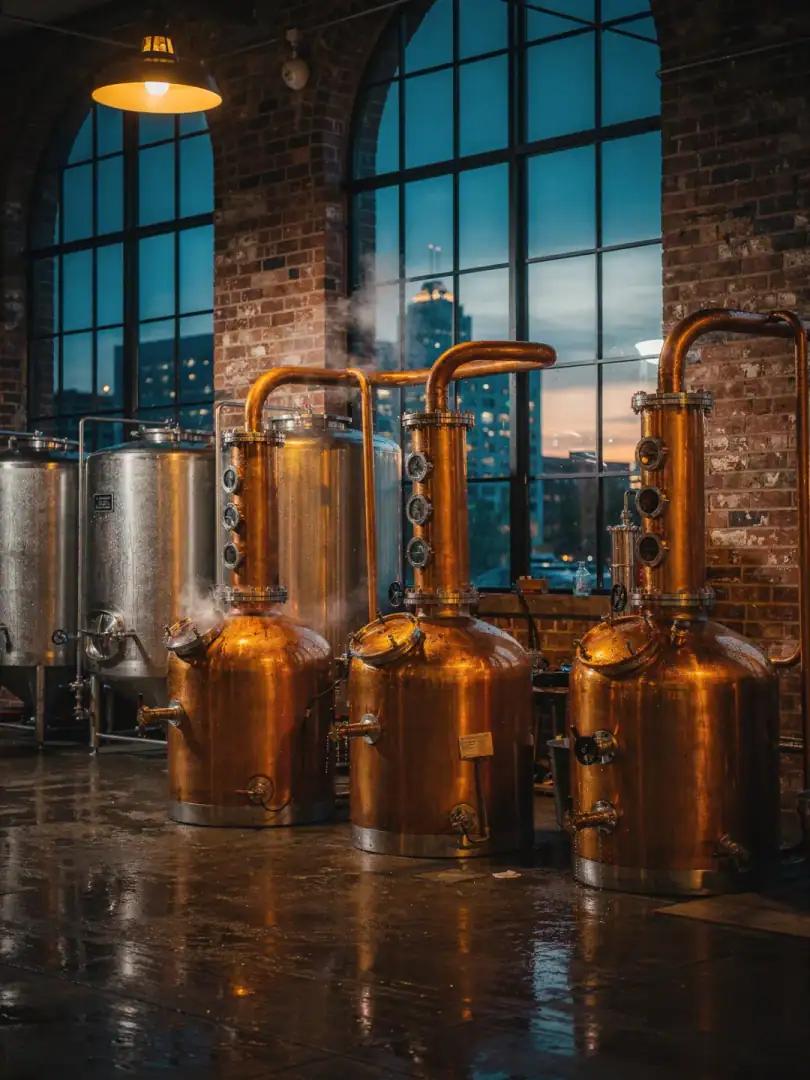
Most major vodka brands produce their alcohol in tall rectification columns running continuously. Tito's Handmade Vodka, by contrast, relies on old-fashioned copper pot stills, which process just one batch at a time. That's unusual for a vodka distillery — this kind of equipment is more commonly associated with whisky or cognac production.
According to the company, the mash passes through the stills six times before the alcohol emerges as a largely flavor-neutral base spirit. Each pass separates the heads and tails of the distillate — the light, volatile fractions and the heavier ones — leaving only the clean heart. That's exactly what makes the alcohol so pure.
The US Alcohol and Tobacco Tax and Trade Bureau (TTB) mandates, under 27 CFR 5, a minimum strength of 40% ABV for vodka — known in the US as 80 proof. Without meeting this minimum, a product can't legally be sold as vodka there. Tito's and Deep Eddy Vodka are both bottled at exactly this strength, with no barrel aging and no added color.
Since a 2020 reform of TTB regulations, vodka in the US no longer has to be flavor-neutral by definition. Producers are now permitted to add small amounts of sugar or citric acid. The Texas brands largely steer clear of this, instead promoting the purity of their multiple-distilled corn base.