Limestone and Heat
Water & Climate
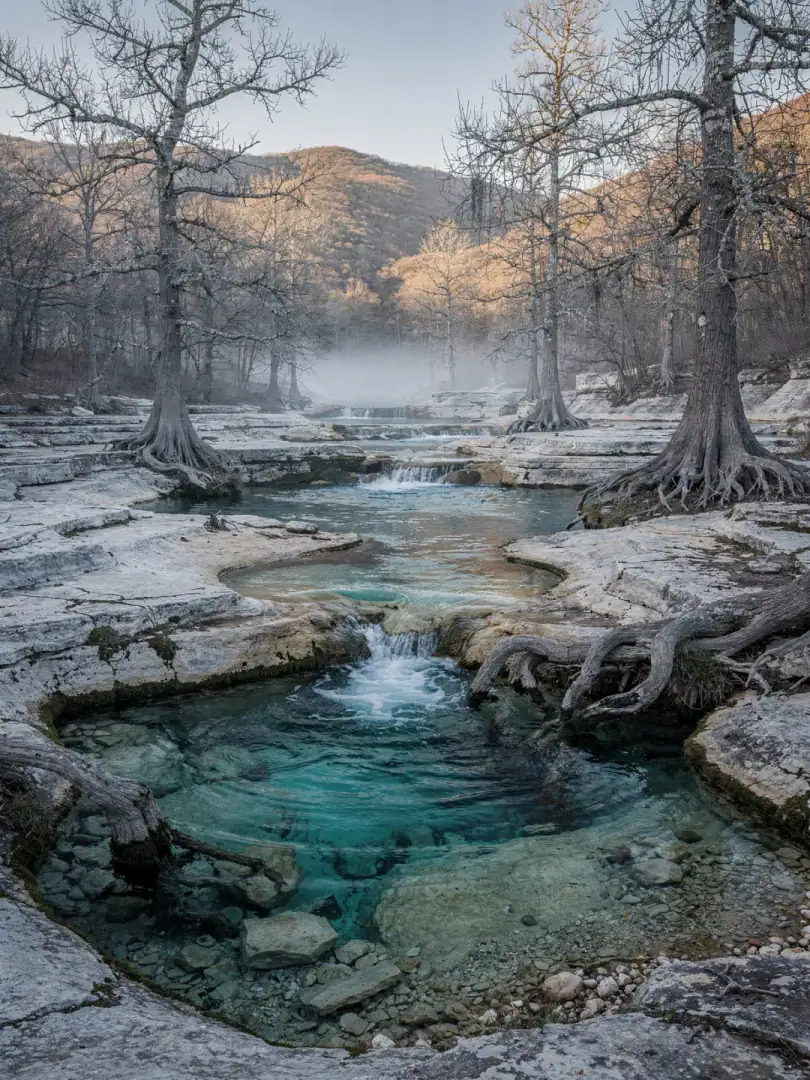
Austin sits right on the border between the Texas coastal plain and the Hill Country. This hilly limestone region forms the heart of the state. In the middle of the city lies Barton Springs, a large natural spring fed by the Edwards Aquifer that gushes with cool, clear water year-round.
Around a hundred million years ago, a shallow sea covered the region. Over time, shells and sediment from the seafloor formed thick beds of limestone, which still hold the Edwards Aquifer today. Slightly acidic rainwater has dissolved this karst rock over thousands of years, carving cracks, caves, and underground channels through which the water rises, naturally filtered, to the surface.
Rivers such as the Guadalupe and the Pedernales are fed by the same system, staying cooler and clearer than most other Texas rivers. The Colorado River, on whose banks Austin sits, is part of this network too, gathering water from the Hill Country through the chain of Highland Lakes before reaching the city.
This water quality meets a climate that challenges every distillery in the area. Summer temperatures above 38°C (100°F) are the norm, often stretching into runs of more than forty such days in a row. That's a real problem for fermentation. The yeast that turns mash into alcohol only works reliably within a narrow temperature range and dies off in excessive heat.
Texas distilleries therefore have to actively cool their fermentation tanks, an expense that operations in milder climates rarely face. Limestone-filtered water and year-round cooling systems are just as much a part of the texture of Texas vodka as the corn itself.