Charcoal Without the Myth
Filtration
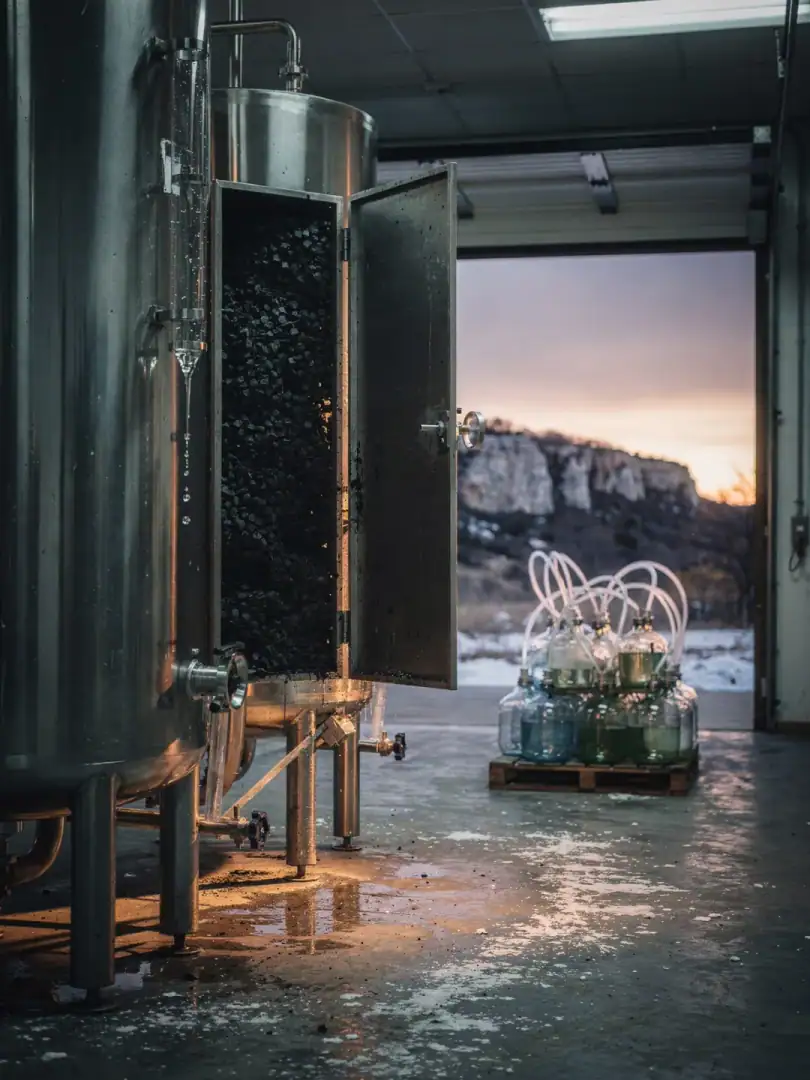
Many vodka brands tout the number of filtration steps they use — through birch charcoal, quartz sand, or silver. This tradition originally comes from Eastern Europe, though there's little hard evidence behind it. Activated charcoal does bind fusel oils and other fermentation byproducts, but the effect drops off sharply after the first few passes. Ten or twenty filtration stages barely change an already clean alcohol in any measurable way.
In Texas, this kind of number-touting is quieter than elsewhere. Other brands love to advertise tenfold or even fortyfold filtration. Tito's Handmade Vodka, in its own marketing, instead highlights its sixfold distillation in copper pot stills. The brand doesn't cite a specific filtration count.
That makes sense. Most of the flavor purity is already created by multiple distillation itself, which separates out the heavier and the highly volatile compounds. A filter cartridge afterward mainly removes final traces and fine haze — it can't rescue a poorly distilled spirit. US regulation 27 CFR 5 doesn't mandate any particular filtration method anyway, only the finished minimum strength and the base ingredients.
Deep Eddy Vodka from Austin follows the same pattern. The alcohol is distilled multiple times and then only briefly passed through activated charcoal, rather than being marketed on filtration steps. The brand leans more on its added fruit flavors in its marketing than on the purification process itself.
Even so, Texas vodka still passes through activated charcoal before bottling. Its main job is to keep the liquid crystal clear, preventing fine particles that might otherwise show up as haze under heavy chilling. That matters for a drink that's almost always served ice-cold in Texas, often straight out of the freezer.