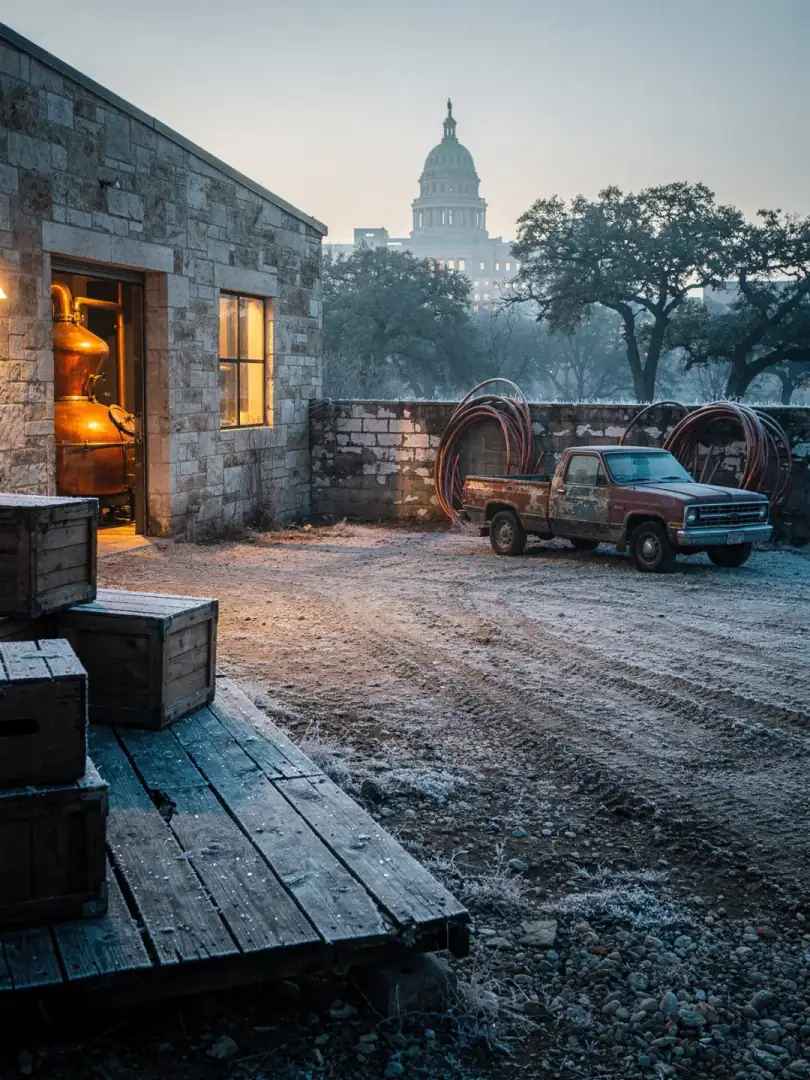
First Legal Distiller
Region & History
In the spring of 1997, Bert "Tito" Beveridge sold his first case of vodka in Austin. Born and raised in Texas, he had studied geophysics and worked for years in the oil and gas industry before setting up a small copper still in a converted workshop on the edge of town. To cover startup costs, he racked up around $88,000 in debt across nineteen credit cards.
Beveridge had already been giving friends flavored vodka as gifts before turning it into a business. He secured the first license issued for a spirits distillery in the modern era of the state of Texas: his Mockingbird Distillery in Austin has since been recognized as the first legally operating distillery in the state's history. He made his vodka from corn rather than potato or wheat, naming it after his nickname, Tito.
Success didn't come immediately. It wasn't until 2001 that Tito's Handmade Vodka won a double gold medal at the San Francisco World Spirits Competition, one of the industry's most respected judging events. The award brought the small Austin distillery its first attention beyond Texas and opened doors to bars and stores across the country.
Two decades later, that copper still had grown into a corporate powerhouse. According to Nielsen market data cited by the brand itself, Tito's has been the best-selling vodka in the United States since 2020; in 2024, its parent company, Fifth Generation, reported revenue of around $2.6 billion. With this growth, Austin gained its first truly global spirits name.
Tito's wasn't alone for long. In 2010, Clayton Christopher, Gary Crowell, and Chad Auler founded Deep Eddy Vodka in Austin, named after the city's oldest swimming pool on the banks of the Colorado River. In 2015, the founders sold the company to Kentucky-based spirits group Heaven Hill; production remains in Texas to this day.