Corn Instead of Potato
Raw Material
Tito's Handmade Vodka isn't distilled from rye or potato, but from yellow corn. In Texas, that choice makes perfect sense. The state is one of the country's major corn-growing regions, especially in the dry uplands of the Panhandle in the northwest.
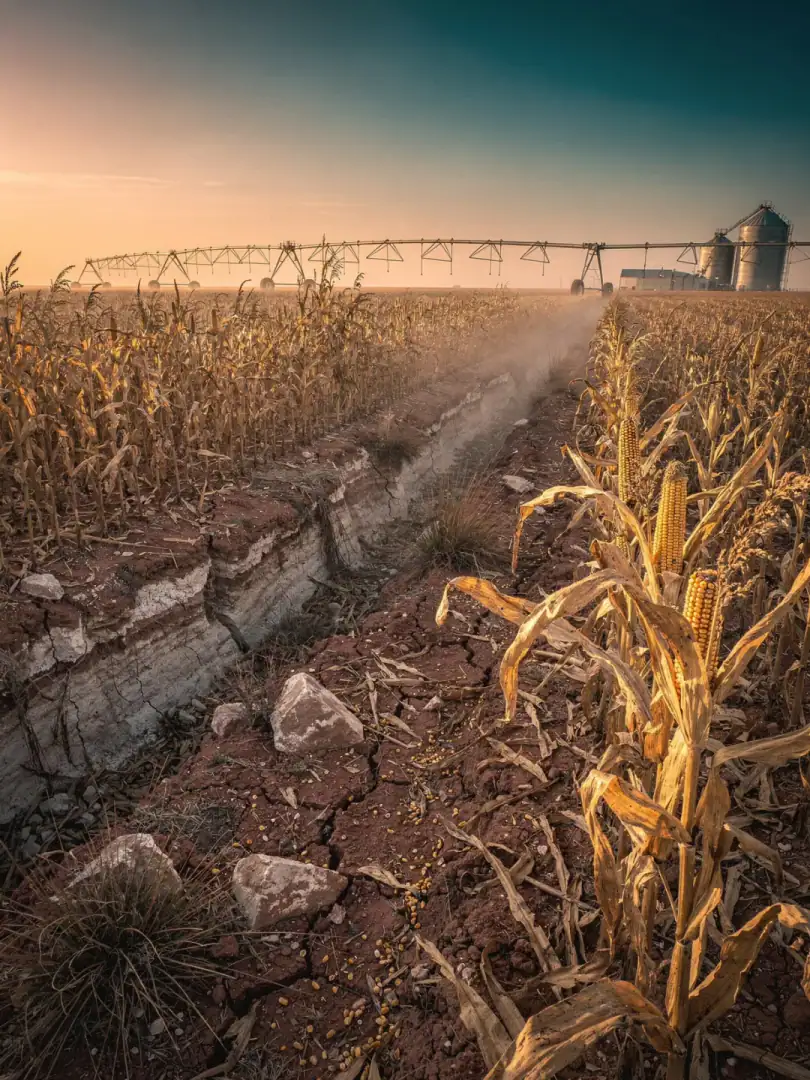
According to the company, a large share of its grain comes from Texas farms. Distillation takes place at the Mockingbird Distillery in Austin. The corn grows on a high plateau that receives almost no natural rainfall. Groundwater alone keeps the fields alive.
Beneath the fields lies a sandy, humus-poor loam. Below that sits a hard, pale limestone crust that farmers call caliche. This hardened calcium carbonate layer is typical of the semi-arid soils of the Southern High Plains. It tends to hold water rather than let it drain through. Only further down does the sand-and-gravel body of the Ogallala Aquifer begin, from which irrigation water is pumped. Its water table has been dropping faster than it can recharge for decades — a serious problem for agriculture across the Texas High Plains.
Corn gives vodka a different base note than rye or potato. Rye lends a spicy, almost peppery bite. A corn distillate, by contrast, tends to feel rounder and slightly sweet, not unlike some American whiskeys made from the same grain. That mild sweetness survives even repeated rectification as a subtle undertone. Some tasters even describe the result as faintly buttery — an association vodka in the US happily shares with bourbon, even though, unlike bourbon, it never sees the inside of an oak barrel.
For an American brand, the choice of corn was also a statement. In Texas, corn stands for homegrown agriculture, not purchased industrial alcohol shipped in from the Midwest.
Wind-blown, humus-poor topsoil of the Southern High Plains, where the corn first puts down roots.
The root: Here the plant draws what little available nutrients and fleeting post-rain moisture it can find.