Aged Hops
Hops
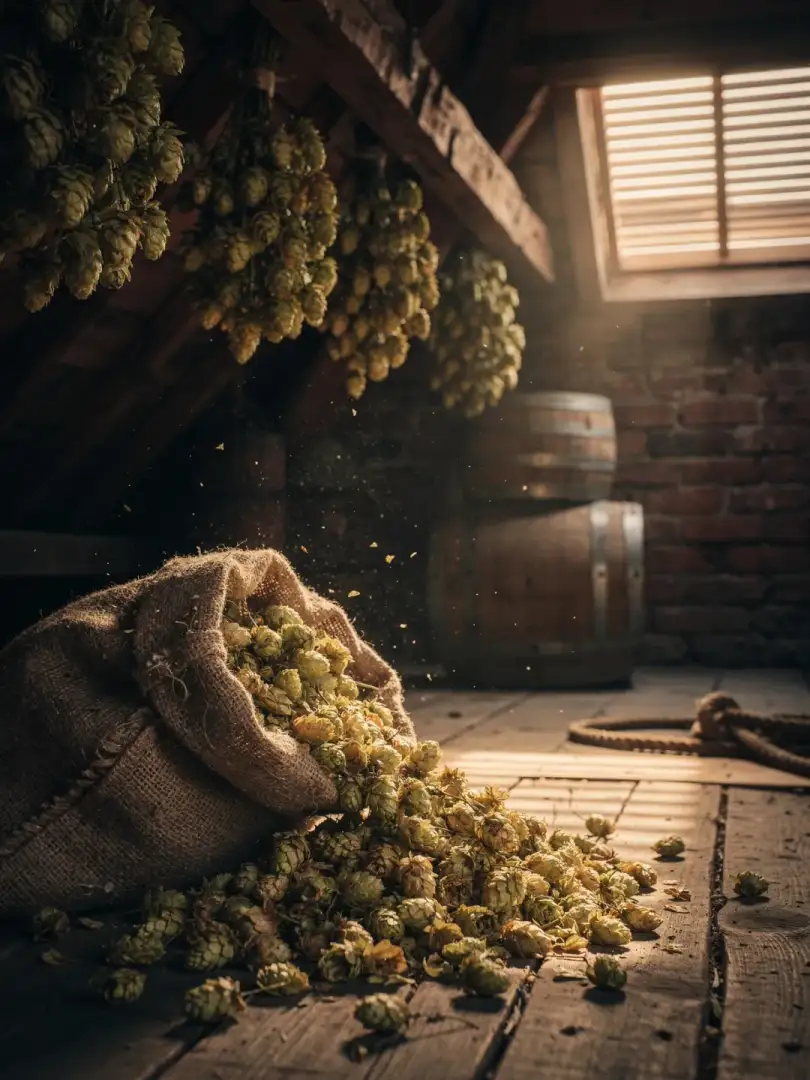
How bitter is Lambic? Hardly at all, because brewers use aged hops that have lost almost all their bittering power. These hops are stored for several years until their aroma fades, serving only as protection against unwanted microbes by that point.
The style guideline sets Lambic at 0 to 10 IBU. IBU is the scale for bitterness, and 10 is very mild. By comparison, a German Pils sits at 22 to 40. So when drinking Gueuze, you taste acidity and fruit, but no hop bitterness.
There are no hop gardens in Brussels. Belgian hop cultivation is concentrated in Poperinge in the west of the country, far from the capital. The varieties a Brussels brewery uses come from there or from other growing regions.
Brasserie de la Senne works differently. According to the brewery, their pale Taras Boulba comes in at just 4.5% ABV yet is boldly hopped and dry on the finish. Here, hop bitterness and aroma take center stage, not their preservative function. Bitterness is measured in IBU, and Taras Boulba sits well above any Gueuze. That's why many guests gladly switch to a hoppy beer after a glass of Lambic.
Both approaches sit side by side in one city. One beer lives off aged hops and wild yeast, the other off fresh aroma. To taste the difference, set a Gueuze and a Taras Boulba next to each other.